Xi’an Hiking Exploration: From City Landmarks to the Qinling Secret Realm—My Personal Routes and Experience Sharing
Having lived in Xi’an for a long time, you’ll discover that the city’s charm extends far beyond the history within its city walls. For me, the greatest joy is being able to switch from the hustle and bustle of the metropolis to completely different natural retreats within just an hour or two on weekends. As a hiking enthusiast, I’ve accumulated experience on various routes, from leisurely strolls to challenging self-discovery. Today, based on my personal experiences, I want to organize a hiking guide around Xi’an for you, hoping to help you find the route that best suits you.
1. First Choice for Beginners: Zhongnanshan (Nanwutai) – “The Accessible Palace in the Clouds”
My Experience
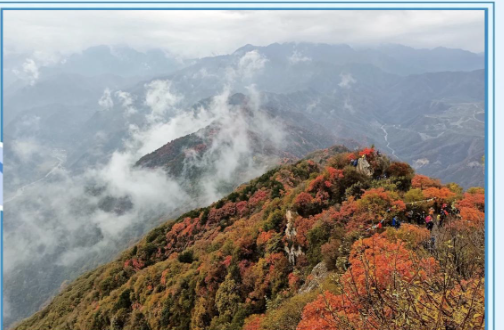
If you ask me which mountain I visit most often and most recommend for first-timers in Xi’an, I would answer without hesitation: Zhongnanshan (Nanwutai), affectionately called the city’s “backyard garden” by locals. Its biggest advantage is being “easily accessible and offering a complete experience”. It’s about an hour’s drive from the city center with smooth roads. Although it involves climbing, the main path consists of well-maintained stone steps, placing low demands on fitness and gear—a pair of comfortable sports shoes is sufficient.
My secret tip: Always start early. Arriving at the foot of the mountain before 6:30 AM gives you a high chance of encountering dreamlike seas of clouds, with mist weaving through the mountain ridges and bamboo forests, making you feel like you’ve stepped into a fairyland. The round-trip hike takes about 2.5-3 hours with moderate intensity, perfect for families and friends on a weekend light hike.
Key Info
The hiking trail is clear, primarily consisting of stone steps. A round trip from the city can easily be done in a single day.
2. Spectacular Scenery: The Qinling Northern Foothills Alpine Meadows – “Stepping into a Summer Cool Oil Painting”
My Experience
When the summer heat becomes unbearable, heading deep into several alpine meadows in the Qinling Mountains is my go-to choice. With a higher average altitude, the summer temperature here is much lower than in the city, making it a natural air conditioner. I have a special fondness for “Liuyu Meadow”, hailed as the “Altay of the Qinling”. Every June and July, wildflowers bloom everywhere, with herds of white sheep grazing leisurely on the carpet-like grassland against a backdrop of seemingly reachable fluffy white clouds. The open scenery is incredibly healing.
The loop trail is about 10 km, requiring 5-6 hours with some elevation gain. Standing on the meadow, you truly understand what a “pasture in the clouds” means.
Key Info
Meadow trails offer more wilderness charm, with some sections being quite steep. Trekking poles are recommended. Ganhua Stream Meadow and Huayang Meadow are also excellent choices with similar appeal.
3. The Ultimate Challenge: Mount Huashan – “A Dialogue with Courage and Endurance”
My Experience
I mention Mount Huashan last because it is far from an ordinary hike; it’s a pilgrimage requiring thorough preparation. As the “Number One Precipitous Mountain under Heaven,” its challenge is real. I once spent an entire day starting from the North Peak, passing through the Central and East Peaks, finally reaching the West Peak. Countless times along the way, I was awestruck by the sheer cliffs and万丈深渊 (bottomless chasms) beneath my feet. At the narrowest points, only one person can pass at a time, demanding your complete focus.
Although utterly exhausted, standing atop the West Peak summit, looking down at the mountain range stretching beneath, the sense of conquest and the soul-stirring impact of the magnificent view are unparalleled. Please note, this is absolutely not suitable for hiking beginners. Honestly assess your fitness.
Key Info
Hiking the entire route is a massive test of stamina. Most people combine it with cable cars up and down to experience sections. The terrain is extremely perilous—safety must always be the top priority.
Route Quick-Reference and Comparison
To help you decide faster, I’ve summarized the key information for these routes below:
|
Route Name
|
Hiking Difficulty
|
Hiking Duration
|
Distance/Elevation Gain
|
Suitable For
|
Core Highlights
|
|---|---|---|---|---|---|
|
Zhongnanshan (Nanwutai)
|
★★☆ Moderately Easy
|
2.5-4 hours
|
Mainly stone steps, easy round trip
|
Hiking beginners, families, photography enthusiasts
|
High chance of cloud seas, convenient access, rich cultural atmosphere
|
|
Qinling Alpine Meadows (e.g., Liuyu)
|
★★★ Moderate
|
5-6 hours
|
~10 km loop, ~550m elevation gain
|
Those with some hiking experience who love highland grassland scenery
|
Cool in summer, wildflowers & livestock, open oil painting-like scenery
|
|
Zhuque National Forest Park
|
★★☆ Moderately Easy
|
3-4 hours
|
Can take cable car up, ~8km hike down
|
Families with children, visitors seeking easy scenic views
|
Primitive fir forest, alpine meadow, cable car saves effort
|
|
Mount Huashan
|
★★★★★ Extremely Difficult
|
8-12 hours or longer
|
Long distance, steep slopes, many perilous sections
|
Experienced hikers, mountaineering enthusiasts seeking extreme challenges
|
Absolute peril of the Western Sacred Mountain, sunrise & cloud seas, a once-in-a-lifetime experience
|
Safety and Preparation: Using Experience as Your Guide
In outdoor activities, beauty and risk coexist. Based on these trails I’ve hiked and the increasingly emphasized safety standards in China’s outdoor sports field, here are the most important points I believe in:
-
Gear is the Foundation of Safety: A pair of non-slip hiking boots is paramount, especially on wet days or gravel sections of meadows. Mountain weather is changeable; a windproof jacket and a spare raincoat are essential. Trekking poles can significantly save your knees and maintain balance on descents and steep sections.
-
Supplies are the Guarantee of Stamina: Supply points on the mountains are limited and expensive. I usually carry at least 2 liters of water and high-energy snacks (like chocolate, nuts). The sun is intense at peaks, so sunscreen, a hat, and sunglasses are a must.
-
Time and Weather are Prerequisites: Always check the weather forecast in advance. Avoid going on rainy days, as flash floods can occur in some valley sections. Try to start early in the morning, leaving ample time for the descent to avoid hiking in the dark. For high points like Bingjingding within Zhuque Park, it’s generally required to reach the summit before noon, as the weather becomes more unpredictable in the afternoon.
-
Respect Nature and Know Your Limits: This is the core principle. Don’t blindly attempt routes beyond your ability. On perilous sections like Mount Huashan, ensure every step is firm and focus on your footing. Don’t take photos while walking, and don’t walk while taking photos. If joining group activities, choosing qualified organizations is equally important.
Basic Hiking Preparation Work
-
Physical Condition Preparation: Conduct a simple physical check-up before hiking. For routes with moderate to high difficulty (such as Qinling Alpine Meadows and Mount Huashan), it is recommended to do appropriate pre-exercise (like brisk walking, jogging) 1-2 weeks in advance to enhance physical endurance. Avoid hiking with illnesses such as colds, fevers, or heart discomfort.
-
Gear Preparation Details: In addition to the basic gear mentioned earlier, prepare a small first-aid kit (including band-aids, disinfectant cotton, painkillers, anti-diarrheal drugs, and anti-allergic drugs); carry a portable power bank to ensure the phone has sufficient power for emergency calls; choose breathable and moisture-wicking sportswear, and prepare an extra set of clothes to change into after sweating to avoid catching cold.
-
Route Planning and Information Collection: Confirm the latest route conditions in advance (some trails may be closed for maintenance or due to weather). Download offline maps and mark key locations (such as rest points, supply points, and emergency exits). Inform family or friends of your hiking route, departure time, and expected return time, and keep in touch with them regularly during the hike.
-
Team Preparation: It is not recommended to hike alone, especially in remote mountainous areas. Try to form a team of 3-5 people. Assign roles within the team (such as a leader, a person responsible for supplies, and a person responsible for navigation) to ensure the hike is organized. Discuss hiking rules in advance (such as not falling behind, not straying from the route) to avoid accidents.
Warm Reminders: Do Not Illegally Cross Undeveloped Areas or Ecological Reserves
Qinling Mountains are an important ecological barrier in China, with many areas designated as ecological reserves or undeveloped regions. These areas have complex terrain, hidden dangers such as landslides, falling rocks, and wild animal attacks, and lack basic rescue facilities. Illegally crossing them not only endangers personal safety but also violates relevant national laws and regulations, and may cause damage to the ecological environment.
Therefore, please abide by the following regulations: 1. Only choose officially developed and open hiking routes, and follow the guidance of signs and staff; 2. Do not enter areas marked with “No Entry”, “Ecological Reserve”, or “Undeveloped Area”; 3. If you find others illegally crossing, you can dissuade them or report to the relevant departments (such as forestry and grassland bureaus, public security organs); 4. Take good care of the natural environment during the hike, do not litter, do not damage plants and animals, and maintain the original appearance of the mountains and forests.
Conclusion
From the serene, Zen-like cloud seas of Nanwutai to the vast, unrestrained openness of the Qinling meadows, and the heart-pounding thrill of Mount Huashan, the wilderness around Xi’an hides richly layered surprises. For me, hiking is not just exercise but a way to converse with nature and with myself.
I hope this guide, infused with my personal real experiences, helps you safely and happily begin your own journey of exploring the Qinling. The best scenery is always on the way and in the moment you arrive.
If you have more specific questions about a particular route or want recommendations for hiking in specific seasons (like autumn foliage or winter snow), I’m happy to share more details.