The taxi pulled up at Huaqing Palace’s west gate on a Tuesday in late October, and the first thing that hit me was the smell — a faint, mineral tang of hot spring water hanging in the air like steam over a kettle. Behind the ticket barrier, Mount Li rose in a sudden wall of green and gold, and below it sprawled a small city of glazed roofs and moon gates. I had come for the pools where a Tang emperor’s favourite concubine once bathed. I ended up staying for the mountain, the bullet holes, and a seventy-minute love story performed on water after dark.
Huaqing Palace at a Glance
- What it is: a royal hot-spring palace at the foot of Mount Li, in Lintong District, about 30 km east of Xi’an
- Golden age: the Tang Dynasty, when Emperor Xuanzong and his beloved concubine Yang Guifei wintered here (the site was named Huaqing Palace in 747)
- Also the site of: the 1936 Xi’an Incident, a pivotal moment of modern Chinese history
- Ticket: about 120 RMB for the palace grounds (check official channels before you go)
- Hours: roughly 7:30-18:00, later in summer
- Metro: Line 9 to Huaqingchi station, then a short walk
- Mount Li: on foot or by cable car (separate ticket, official pricing)
- Night show: “Everlasting Regret” (Changhenge), staged on the lake; separate ticket, about 200-900 RMB depending on the seat zone
- Recommended time: 3-4 hours for the palace plus Mount Li; add the evening if you are watching the show
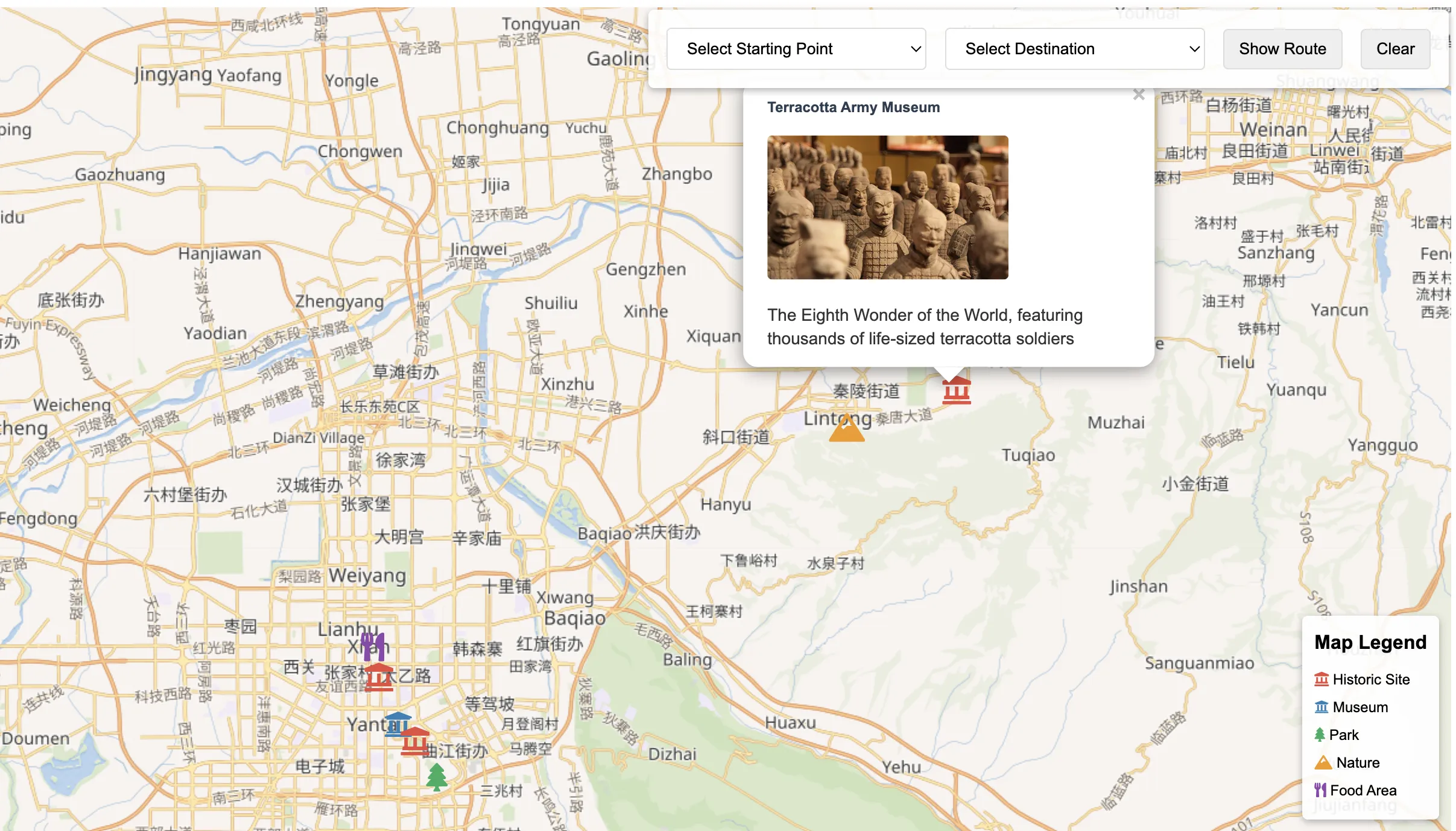
- Pairs with: the Terracotta Warriors, about 15 minutes away
Three Thousand Years of Bathing: The History
The story starts long before the Tang. The hot springs at the foot of Mount Li are the only natural hot springs anywhere near Xi’an, which is why every dynasty wanted them. By the Western Zhou, more than three thousand years ago, they were already famous enough to feature in one of China’s best-known cautionary tales: it was on this very mountain that King You of Zhou lit the beacon fires as a joke to amuse his concubine Baosi, crying wolf at the nobles who were supposed to come to his defence. When real invaders finally arrived, no one came, and the dynasty fell. Legend also has it that Qin Shi Huang, the first emperor, met a goddess at the spring and built a palace over it; a Han emperor later expanded the grounds.
The golden age came under the Tang. Emperor Xuanzong, who reigned from 712 to 756, rebuilt the site on a grand scale and renamed it Huaqing Palace in 747, at the height of the dynasty’s long prosperity. Every winter he moved his entire court here to escape the northern cold, because the spring water rises at around 43°C — perfect for bathing even in February. And he brought with him Yang Guifei, the famously beautiful consort whose bathtub was the small, crabapple-shaped pool known as the Haitang Tang. Bai Juyi’s poem “Song of Everlasting Regret” (809) preserved the scene forever: “On a chill spring day she was granted a bath in the Huaqing Pool; the warm spring waters slid over her creamy skin.” The love story ended in catastrophe: when the An Lushan Rebellion broke out in 755, Xuanzong fled the capital, his own escort forced Yang Guifei to die at Mawei Slope, and the palace was sacked and burned. Only the poem, and later the ruins, remained.
For more than a thousand years the site slumbered as farmland and orchards. Then, in 1936, history crashed back into it. Chiang Kai-shek had taken up residence in the Five-Pillars Hall at Huaqing Palace while pressing his campaign against the communists. At dawn on 12 December 1936, soldiers under the generals Zhang Xueliang and Yang Hucheng surrounded the compound to force him into an anti-Japanese united front. Chiang slipped out through a window — still pointed out to visitors today — and scrambled up the rocky hillside in his nightclothes, hiding in a narrow crevice near the summit until he was found. The pavilion that now marks the spot is called Bingjian Ting, the “Pavilion of the Military Admonition”. The Xi’an Incident, as it is known, was the event that finally made the united front against Japan possible.
The Tang bathing pools themselves were rediscovered by archaeologists in 1982, buried for over a millennium. Today the site is a very Chinese double act: a love story and a coup d’état sharing one walled garden, with hot water still running beneath the flagstones.
My Visit: Following Yang Guifei’s Footsteps
I started, as most visitors do, at the lake. Nine Dragon Lake is the centrepiece of the front garden — a long, still stretch of water with the great Feishuang Hall rising behind it and Mount Li towering over everything. Water lilies, drifting koi, ginkgo leaves turning yellow: the morning was quiet, and I had the reflection of the old hall almost to myself. Near the east end of the garden, spring water runs through an open stone channel, and I dipped my hand in. It was genuinely warm. There is something absurdly pleasant about touching the same spring that emperors and concubines bathed in fourteen centuries ago.
Then came the ruins. The excavated Tang bathing complex is a roofless arrangement of carved stone basins, best seen from the elevated walkways that wind above them. Yang Guifei’s pool, the Haitang Tang, is shaped like a four-petalled crabapple blossom — small, intimate, its edges scalloped like flower petals. I stood over it for a long time, trying to reconcile this modest basin with the poem’s image of a bath that, in the popular imagination, helped topple an empire. Xuanzong’s own pool, the Lianhua Tang, is several times larger, carved to echo a lotus flower, with a floor of blue-black stone. A smaller round pool nearby, the Xingchen Tang, was deliberately left open to the sky — a “star pool”, for bathing beneath the stars.
I finished the garden at the Five-Pillars Hall, where the bullet-pocked windowpanes of 1936 still stare out over the courtyard, then walked up the wooded slope to the Bingjian Pavilion. On the way, I passed the tiered seats of the evening show’s auditorium, empty and expectant in the afternoon sun — a strange thought, that the same hill had once hidden a fleeing generalissimo.
The Palace, Area by Area
The Tang Bathing Pools (Imperial Hot Spring Ruins)
This is the heart of the site, and the reason most people come. Five pools have been excavated: the Lotus Pool (Lianhua Tang) for the emperor, the largest of them all; the crabapple-shaped Haitang Tang, reserved for Yang Guifei; the round, roofless Xingchen Tang, said to date from the time of Emperor Taizong and built for open-air bathing under the stars; plus the smaller Crown Prince’s Pool and Shangshi Pool used by the imperial kitchen staff. Water still circulates through the stone channels that connected the basins, and bilingual signs explain each one. Give the ruins at least forty minutes — this is one of those rare sites where you look at empty stone basins and genuinely feel the people who used them.
Five-Pillars Hall (Wujian Ting)
A modest five-room building at the foot of the mountain, and the place where Chiang Kai-shek spent the night of 11-12 December 1936. The rooms — bedroom, office, meeting room — are preserved with period furniture and photographs. The detail that stops everyone is the windows: the glass of the inner office still carries the bullet marks from the arrest attempt that dawn, a few panes cracked and starred like frost. Standing there, with the garden sounds outside, the history stops being textbook and becomes uncomfortably real.
Bingjian Pavilion (Bingjian Ting)
About twenty minutes’ uphill walk from the hall, a simple pavilion overlooks the spot where Chiang was finally caught. He had fled through a window and climbed the rocky slope to a crevice in a distinctive streaked rock called the Tiger-Stripe Stone (Hubanshi), where he hid until dawn. The pavilion was originally named the “Catch Chiang Pavilion”; it was renamed the Pavilion of the Military Admonition in 1986, a small but telling piece of how China has chosen to remember the event. The walk up is shady and quiet, and the cable-car station for Mount Li sits nearby if your legs have had enough.
Mount Li (Lishan) and the Cable Car
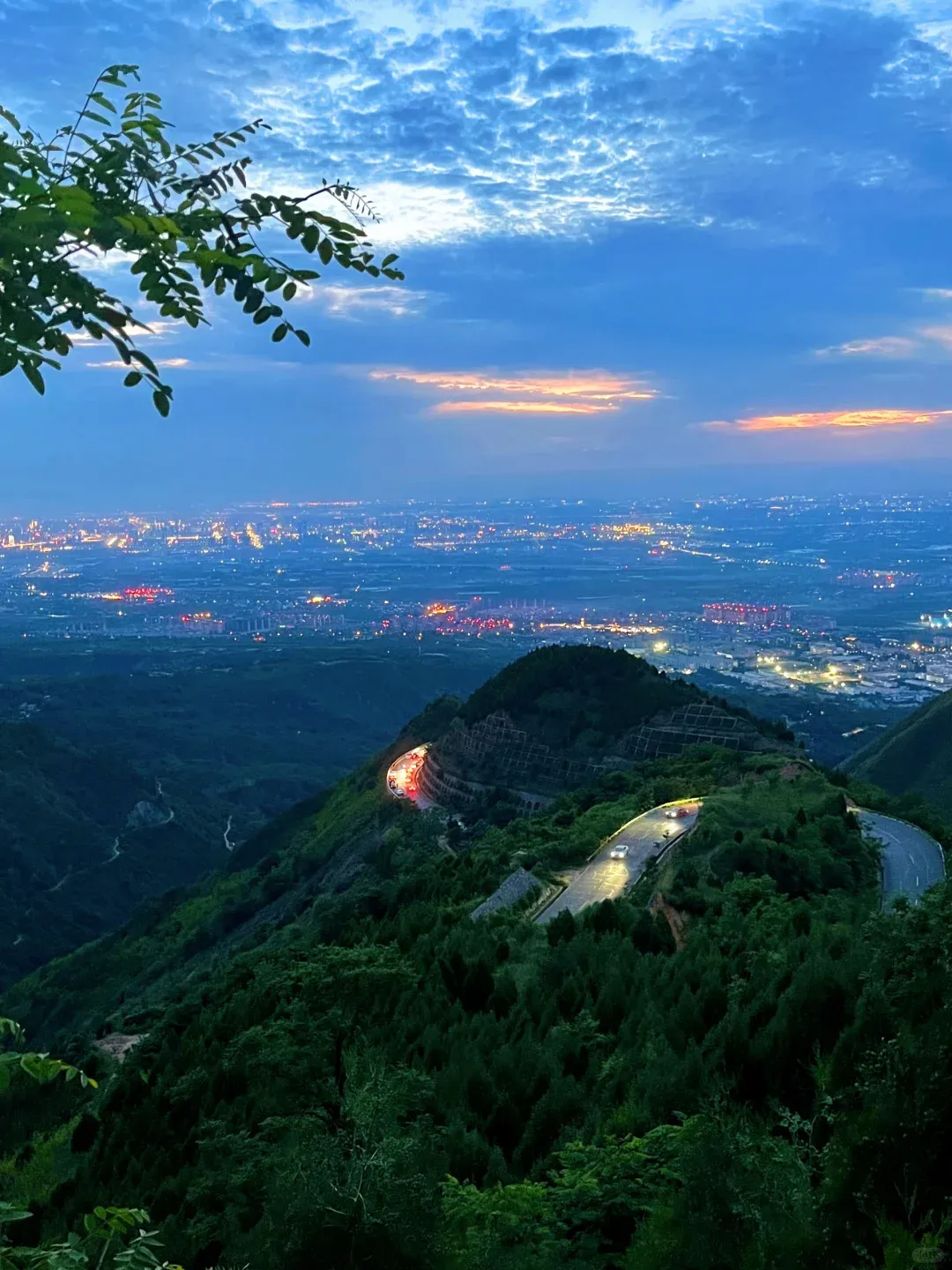
Mount Li rises behind the palace to about 1,300 metres, and the summit is where the story of the Zhou beacon fires actually plays out: a modern beacon tower stands there now, rebuilt, and on a clear day you can see why the ancient kings chose it — the whole Wei River plain spreads out below, with the mound of Qin Shi Huang’s mausoleum a visible grey bump to the north. There are temples on the way up, and the sunset view from here is one of the classic scenes of the region, known as the “Lishan Evening Glow”. You can walk (about one to one-and-a-half hours up) or take the cable car (separate ticket, official pricing). Either way, give the mountain two to three hours.
The “Everlasting Regret” Night Show
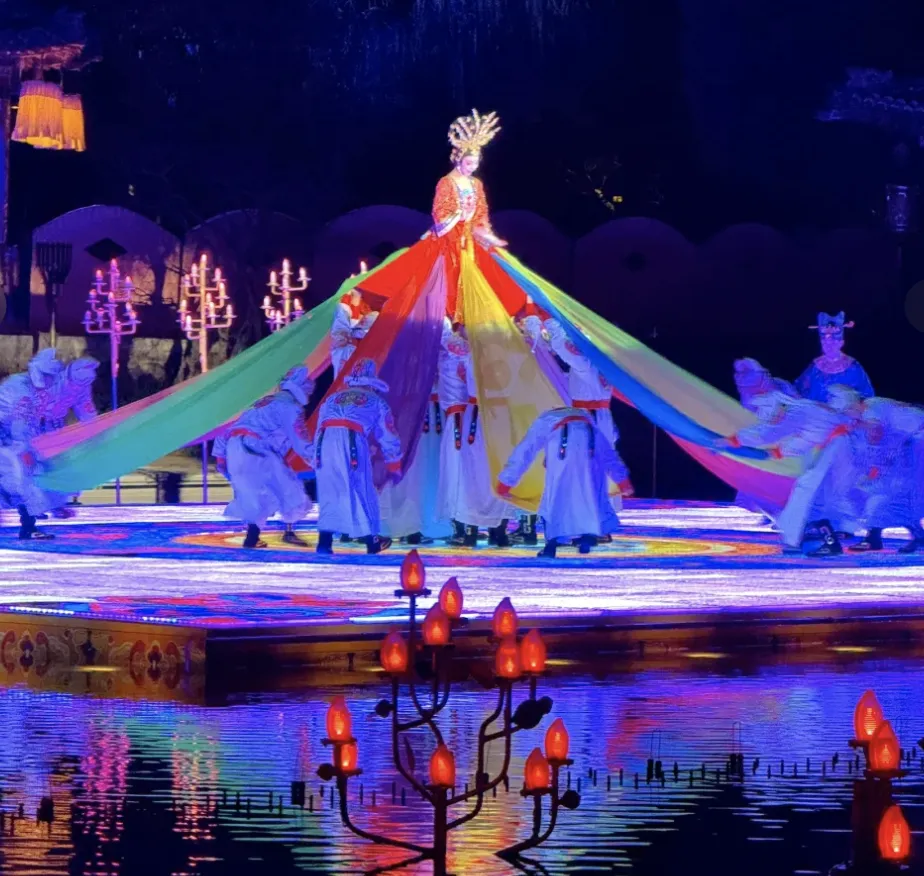
After dark, the garden transforms. The Everlasting Regret (Changhenge) is a large-scale open-air performance staged on the water of Nine Dragon Lake, with Mount Li as a giant backdrop and the palace halls lit around the stage. It runs about seventy minutes and follows Bai Juyi’s poem from the spring bath to the vow at the Palace of Eternal Life — “in heaven let us be birds that fly together, on earth let us be twined branches of one tree” — to the tragic parting at Mawei Slope. Expect crowds, a full orchestra’s worth of sound, fireworks, and a genuinely theatrical retelling of the most famous love story in Chinese literature. Tickets are separate from the palace entrance ticket and are sold by seat zone, roughly 200 to 900 RMB; the show season runs approximately April to October, with two performances on busy nights. Book through the official WeChat mini-program, and be aware that heavy rain can cancel a performance.
Practical Guide: Tickets, Hours & Getting There
Tickets: The palace grounds are about 120 RMB, with the usual discounts for children, students and seniors — carry ID. The Mount Li cable car and the night show are separate tickets, and prices change, so always verify on the official channels before your trip.
Hours: Roughly 7:30 to 18:00, later in summer; the night show has its own schedule and season. Check official announcements for the current year.
Getting there: The easiest way is Metro Line 9 to Huaqingchi station, then a short walk. From the city centre, take Line 1 to Fangzhicheng and change to Line 9 — allow about an hour in total. Bus 游5 (route 306) from Xi’an Railway Station stops at Huaqing Palace on its way to the Terracotta Warriors. A taxi or DiDi from the centre covers roughly 30 km and takes about 45 minutes. From the Terracotta Warriors, local buses and tour shuttles run between the two sights in about 15 minutes.
Getting around inside: The palace grounds are comfortably walkable in an hour or two. The uphill section is the tiring part — take the cable car if you are short on time or mobility. Audio guides and human guides are available at the entrance (fees at official rates).
Planning the show: Buy the show ticket as early as possible in season — good zones sell out days ahead. For more on booking, transport and avoiding the common pitfalls, see our Xi’an travel tips.
Best Time to Visit
Spring (March to May) and autumn (September to November) are the sweet spots: mild temperatures, clear air, and in autumn the hillside turns gold before the “Lishan Evening Glow” sunsets, while Lintong’s famous pomegranates come into season. If you want to do the palace, the mountain and the show in one visit, plan for mid-afternoon arrival: explore the pools, go up Mount Li for sunset, then take your seats for the performance.
In summer it is hot and the show season is in full swing — go in the early morning or the evening and book the show ahead. Winter is the season the Tang court actually came for (the springs run at about 43°C all year), the garden is quiet and the pools steam gently in the cold air — but there is no show, the mountain is chilly, and the hours are shorter.
Photography Spots
- The Haitang Pool from the walkway: mid-morning light picks out the carved scallops of Yang Guifei’s bathtub; shoot straight down.
- Nine Dragon Lake at first light: the Feishuang Hall mirrored in the still water, Mount Li rising behind — arrive near opening time.
- The cable car descent: the whole palace laid out below you, the lake like a blue stone in a green setting.
- The beacon tower at the summit: the wide view north over the plain, with the Qin mausoleum mound on the horizon on clear days.
- The show’s finale: from the central sections the palace and mountain light up together — bring a telephoto or a seat in the middle rows.
Where to Eat Nearby
Lintong has its own local food culture and you can eat well without going back to the city. Outside the palace gates, stalls sell freshly squeezed pomegranate juice in autumn (the local pomegranates are a regional speciality, as are the small, soft fire-crystal persimmons that appear around October), and the town has solid local restaurants serving Shaanxi home cooking. It is simple, filling food — right for a day out.
If you want the full Xi’an feast, though, head back to the city in the evening: the Muslim Quarter’s roujiamo (the “world’s oldest hamburger”) and yangrou paomo (lamb and bread soup you tear up yourself) are the two dishes not to miss. Our Xi’an Food Guide walks through them street by street.
How to Combine Huaqing Palace With the Terracotta Warriors
Huaqing Palace and the Terracotta Warriors are the classic same-day pair: they sit on the same route about 15 minutes apart, connected by bus 游5 (306), metro Line 9 and tour shuttles. The standard rhythm is the palace and Mount Li in the morning, then the warriors in the afternoon — or the reverse if you want the quieter museums at dawn. See the Xi’an Attractions Guide for the full itinerary.
If you are adding the night show, do the warriors first, arrive at Huaqing Palace mid-afternoon, go up the mountain for the sunset, and finish with the performance — but remember the show ends late, so plan your return to the city before it starts. The same circuit also works as a self-contained day trip; our day trips guide covers the transport options in detail.
Common Mistakes to Avoid
- Expecting to bathe in the ancient pools: they are protected ruins — nothing to do but look. For a real soak, stay at one of the hot-spring hotels in Lintong.
- Confusing the show ticket with the entrance ticket: they are separate purchases; in season, good show seats sell out days in advance through the official channels.
- Assuming the show runs all year: it is roughly April to October — don’t build a winter trip around it.
- Having no plan for the way back after the show: it ends late and Huaqing Palace is well outside the city core. Pre-book a car or confirm the last metro and bus times in advance.
- Trusting the “cheap one-day tour” touts near the railway station: the classic tourist-trap pitch, often with shopping stops attached. The metro and the 游5 bus do the same route honestly and cheaply.
Frequently Asked Questions
Can I do Huaqing Palace and the Terracotta Warriors in one day? Yes — they are about 15 minutes apart on the same route. Morning at the palace plus Mount Li, afternoon at the warriors, is the standard order; if you add the night show, reverse the order and book your return transport before the show starts.
Is the Everlasting Regret show worth it? In season, yes. It is a large-scale outdoor performance on the water, with Mount Li as the backdrop, running about seventy minutes. Tickets are roughly 200 to 900 RMB by seat zone and sell out in peak weeks — buy early via the official WeChat mini-program, and remember that heavy rain can cancel the performance.
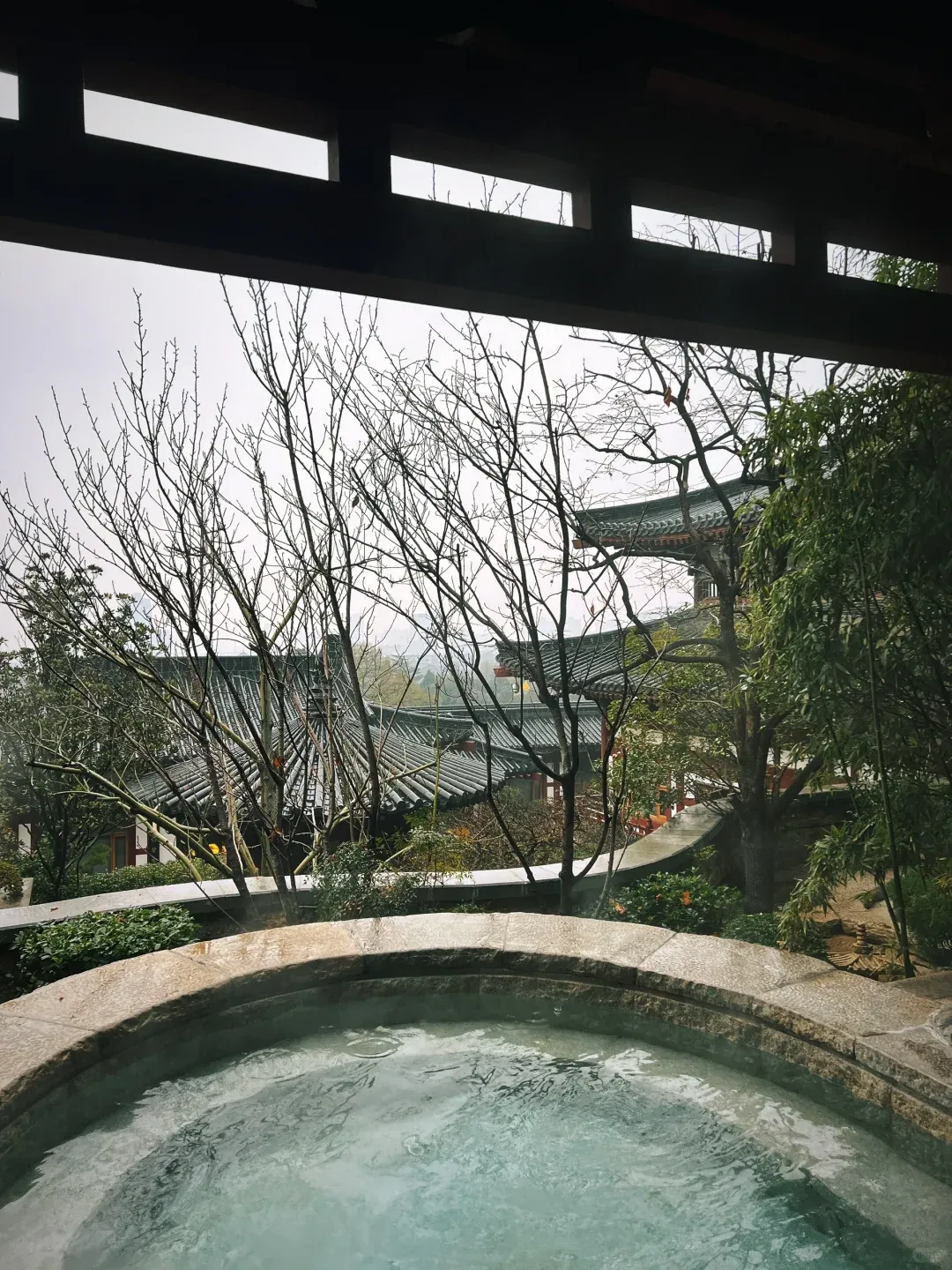
Can I actually bathe in the hot springs? Not in the ancient pools — they are excavated ruins. The hot-spring hotels in Lintong offer real bathing, and inside the garden you can at least dip your hand into the spring water running through the open channels.
How do I get up Mount Li? On foot (about one to one-and-a-half hours up) or by cable car, which has a separate ticket at official pricing. From the summit you get the beacon tower, the temples and the famous view north over the plain. Allow two to three hours up and down.
What is the ticket price and opening time? The palace is about 120 RMB, open roughly 7:30 to 18:00 with longer hours in summer; the cable car and show cost extra. Prices and hours change, so check the official channels before your visit.
My Verdict
I came to Huaqing Palace to see a bathtub, which sounds like a thin excuse for a trip — but the tub happens to sit at the intersection of poetry, empire, and modern revolution, with a mountain behind it and a live show on the lake. Few places in China pack so much into one afternoon. Go early, walk slowly through the pools, take the mountain, and if the season is right, stay for the night show. It will be the most romantic history lesson you ever attend.