The first time I saw Xi’an at night I was jet-lagged past the point of sense, wandering up from the metro at Bell Tower with no real idea where I was going. The city fixed me within ten minutes. The tower had just switched on its lights, gold against a bruised-purple sky, and the whole square carried the hum of a place waking up for its best shift. I sat on the steps with a cup of 酸梅汤 from a cart and decided that night is Xi’an’s true daylight. I’ve been testing that theory for years now, and these are the routes I keep going back to.
When the Towers Light Up
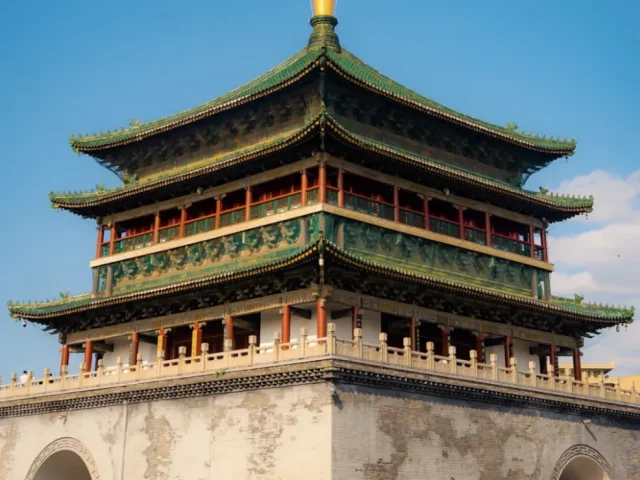
Start at dusk, at the Bell Tower — the city’s dead centre, where Line 2 and Line 6 meet. Climbing it costs about ¥30 (about ¥50 with the Drum Tower a few minutes’ walk away), and the view down the four main avenues at lighting-up time is worth the stairs. The towers switch on around sunset — roughly 20:00 in summer, 19:00 in winter — and stay lit until late. The square between them is where families, skaters and vendors do their evening rounds; no ticket needed, and the people-watching is free.
The Drum Tower, a few hundred metres west, beats out drum performances on the hour through the evening — time a climb to catch one. Between the two towers, the lanes into the Muslim Quarter start filling with carts; follow the smell of grilled flatbread.
The Muslim Quarter After Dark
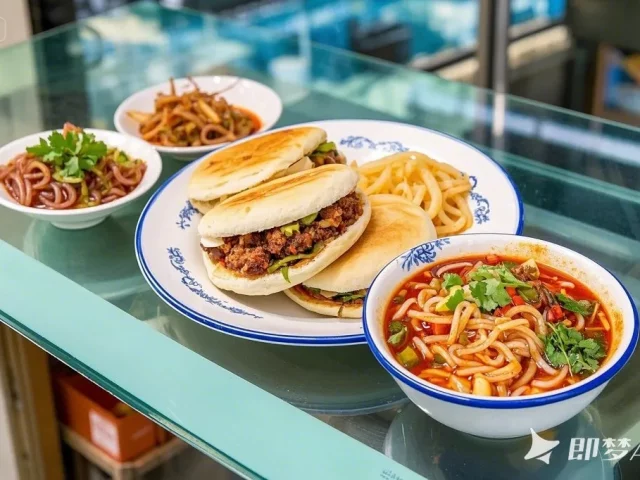
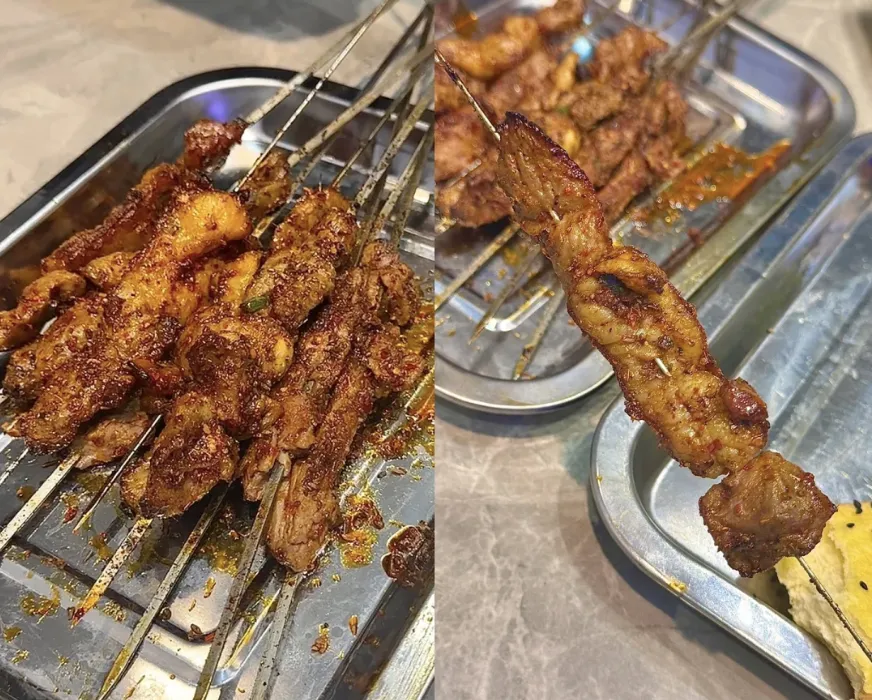
回民街 does its best work after the day-trippers thin out, from about 21:00. The smoke gets thicker, the skewers come off the coals faster, and the lanes off the main drag — 大皮院, 洒金桥 — turn into the version locals actually use. Lamb skewers run about ¥3–5 each; a 柿子饼 costs ¥4; and the 灌汤包 at 贾三灌汤包 holds up at 22:00 as well as it does at noon. Eat late here and you’ll understand why the city sleeps in.
The main drag, 北院门, is the touristed spine, but by 22:00 even it relaxes: the 柿子饼 carts keep frying, the 甑糕 wagons sell off their last scoops, and the 酸梅汤 stands switch from plastic cups to proper glasses.
Datang Everbright City: A Street That Dresses as a Dynasty
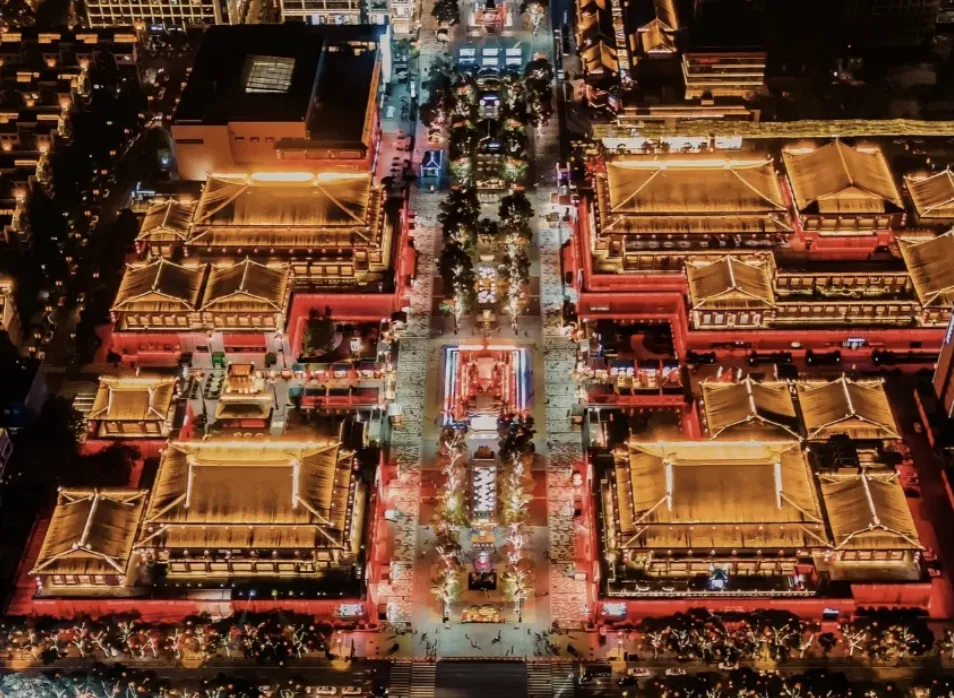
About two kilometres of Tang-era buildings, lanterns and neon run south from Big Wild Goose Pagoda. It’s free, it stays lively until around 23:00, and it’s the most photographed street in Xi’an for good reason — the buildings are lit like a stage set and the crowds treat it like one. Street performers work its length; the “unfalling lady” balancing on a hidden wheel draws the biggest ring of phones. Get there by Line 3 (Dayanta station) or Line 4, and start from the north, at the pagoda’s fountain square. The fountains run evening shows roughly every two hours from 19:00, with the 21:00 performance the busiest — check the day’s schedule before you go.
The City Wall After Dark
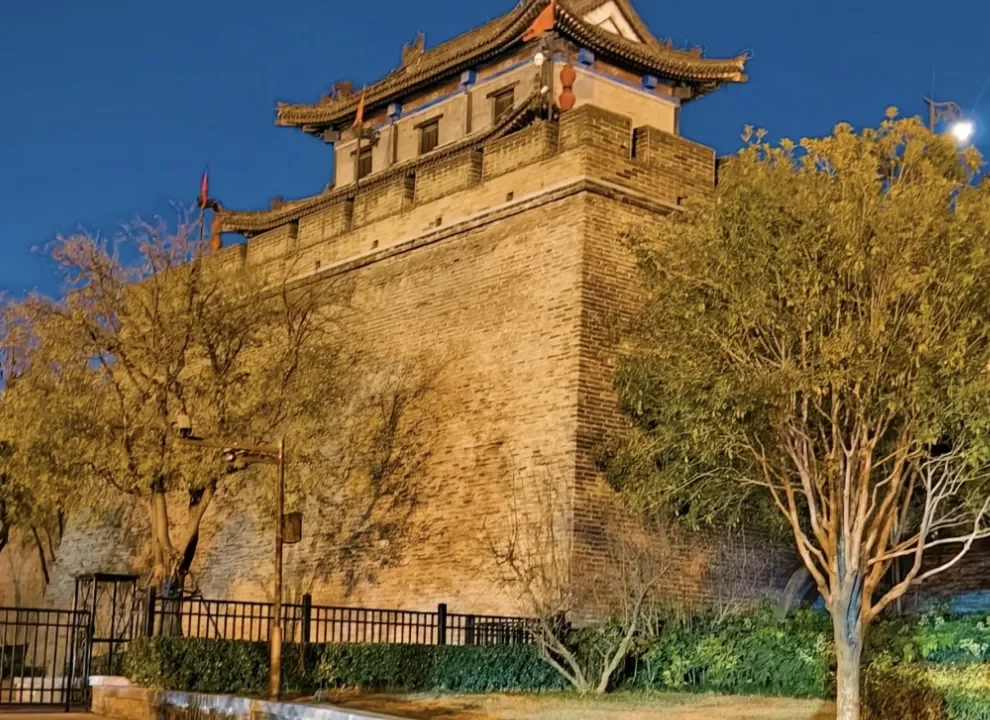
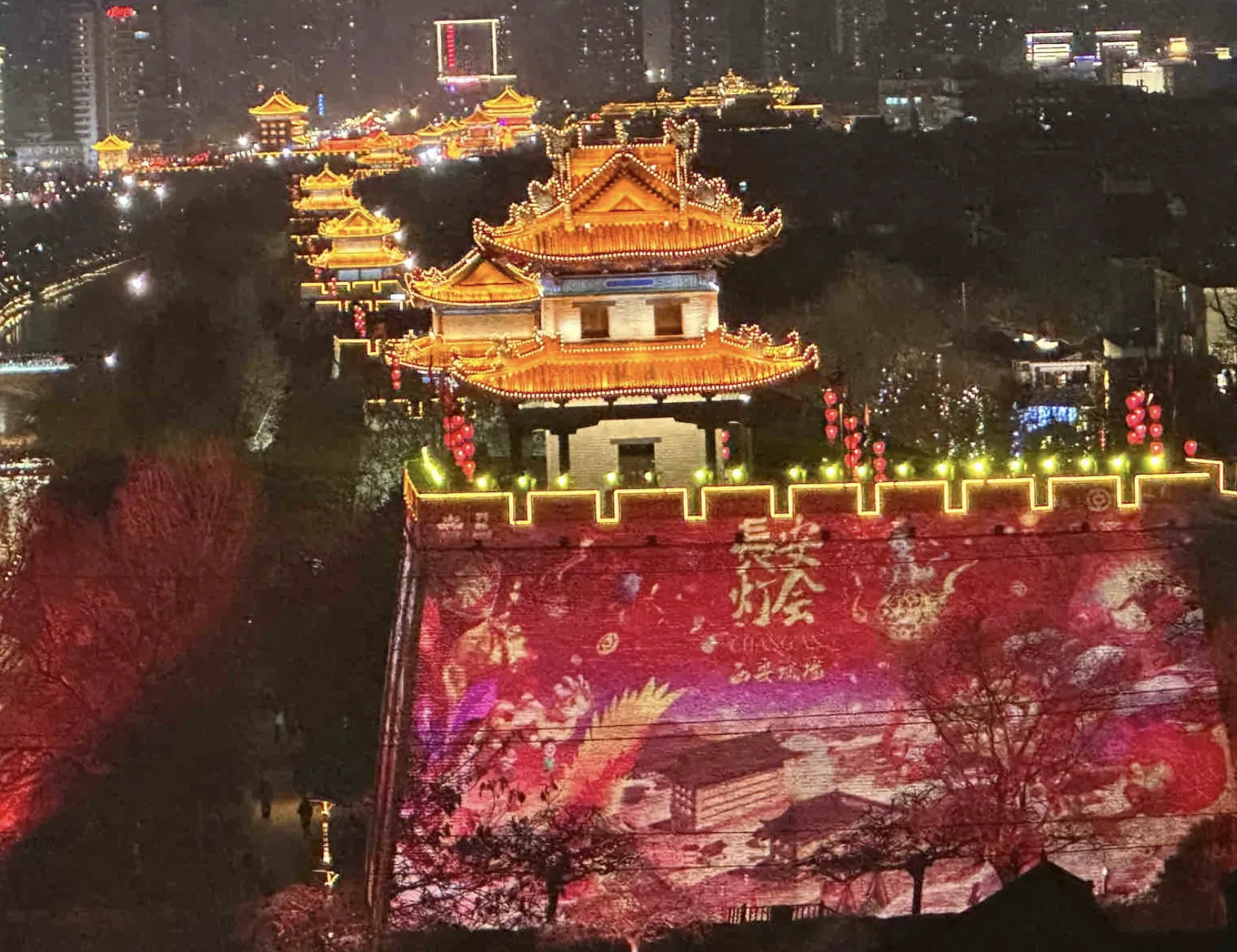
By day the wall is a tourist circuit; by night it turns into something calmer and stranger. Enter at Yongning Gate (South Gate), pay about ¥54, and rent a bike (about ¥45 for three hours). The southern and western sections, facing the modern skyline, are best after sunset, when the corner towers glow and the traffic below becomes ribbons of light. The wall stays open until 22:00 in summer — ride before 21:30 so you have time to return the bike. The watchtowers stay lit long after, and the view back toward the Bell Tower from the south wall is one of the city’s best night photographs.
Night Markets Beyond the Quarter
If the Muslim Quarter feels too much like a stage, Xi’an runs a second show. 东新街, north of 新城广场, is the old night-food street — stalls and low tables that only get going after 22:00, serving 烤肉 skewers and 炒面 for about ¥25 a plate until the small hours. 永兴坊 by Zhongshan Gate, the walled snack park, stays lit with 摔碗酒 performances and 子长煎饼. And if the weather turns, the hotpot chains around 小寨 and 大雁塔 take walk-ins until midnight — order the 鸳鸯锅 and let the night sort itself out.
If You Want a Show
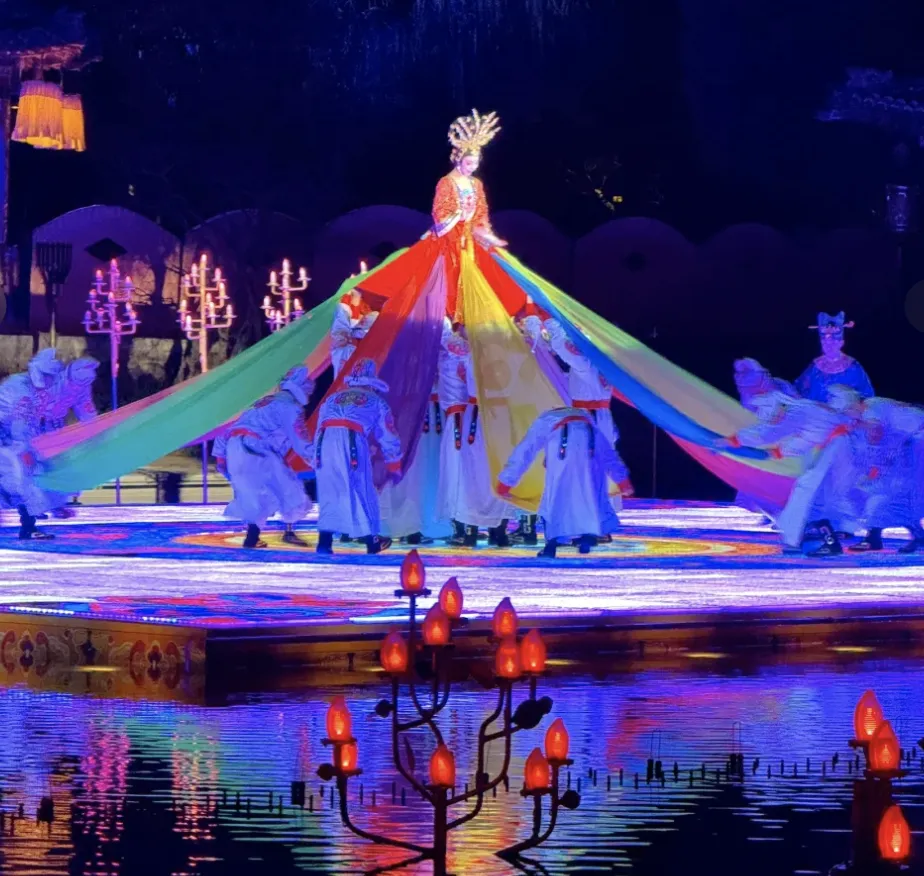
The big one is 长恨歌 (Song of Everlasting Sorrow), staged on the lake at Huaqing Palace about 40 minutes east of town — a seventy-minute outdoor production with flames, a full lake stage and a thousand dancers, tickets from about ¥250 and climbing steeply with the seat. Book ahead; it sells out on summer evenings. Closer in, 大唐芙蓉园 (Tang Paradise) runs its own night show for about ¥120, and the 青曲社 crosstalk club near the Drum Tower packs in loud 相声 nights for about ¥100–200 — mostly Mandarin, but the energy survives translation.
Practical Notes
- Metro Lines 2, 3 and 4 run until about 23:30; after that, taxis cluster around Bell Tower and the Muslim Quarter gates — hail on a main avenue, not a side lane.
- Most of this route is free — budget for food and transport only.
- Summer nights stay warm until midnight; winter needs a heavy coat, and the wall is windier than the streets below.
Tips
- Start at the towers at dusk and end at Datang Everbright City — the lights get better the later it gets.
- Watch the fountain show from the north side of the square, not the middle, and you’ll see the whole arch.
- 回民街 at 22:00 is calmer and better than at 19:00; don’t rush the night.
- Carry a thin jacket even in July — the wall wind and fountain spray cut through summer shirts.
- Photographers: take the Drum Tower from the west, framed by the tiled roofs of the Muslim Quarter, in the last blue hour of dusk.
Waiting for the last train back at Bell Tower station, a security guard glanced at the photos on my phone and nodded. “夜西安好看吧,” he said — Xi’an looks good at night, doesn’t it? He was right. The best part is that none of it needs planning; the city switches itself on, and all you have to do is walk into it.