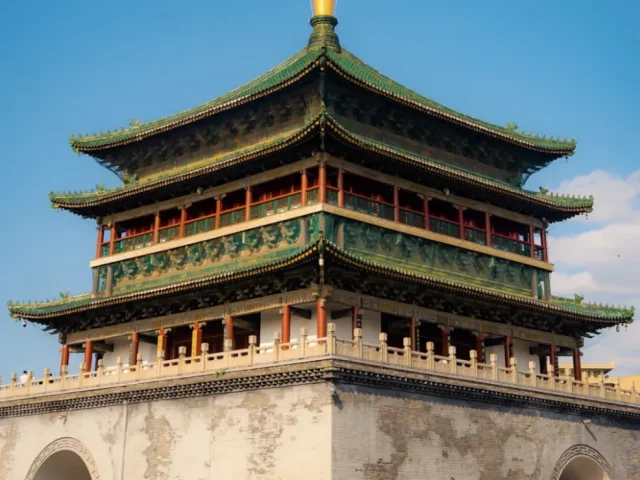
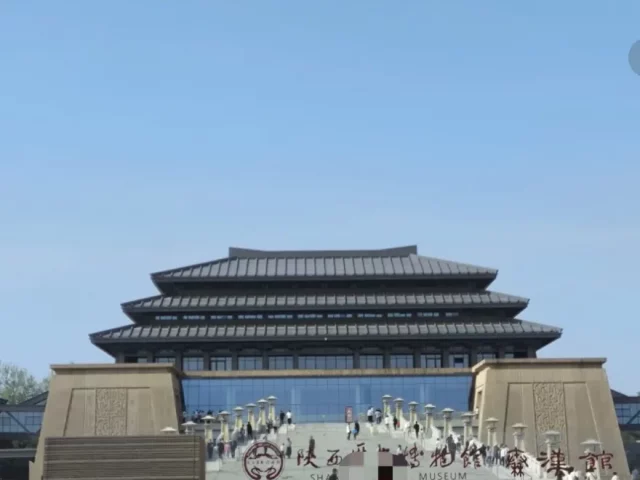
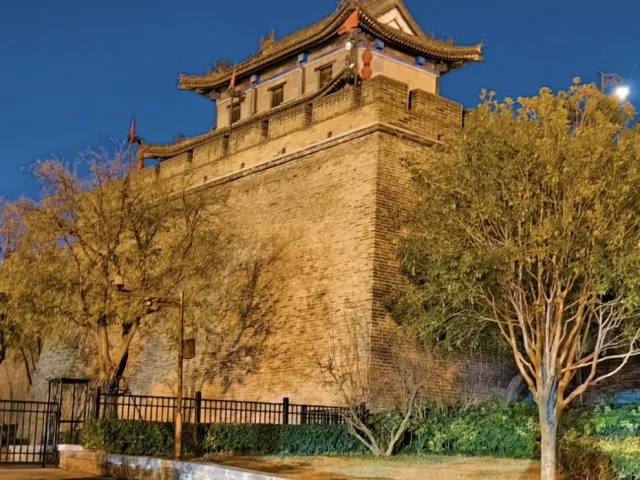
Getting into the Shaanxi History Museum took me longer than getting to China. For two weeks I tried to book a free entry slot: every morning, every afternoon, every day a week ahead — all gone, every date greyed out in the reservation mini-program. Then, at half past ten one night, I opened the app again out of pure habit and watched a Sunday-morning slot blink into existence. I clicked before my brain caught up. The museum opened in 1991, and it has never stopped being the hardest ticket in Xi’an — a city that also contains the Terracotta Army. The obstacle course is worth it. What waits inside is the best argument I know for why Xi’an matters at all.
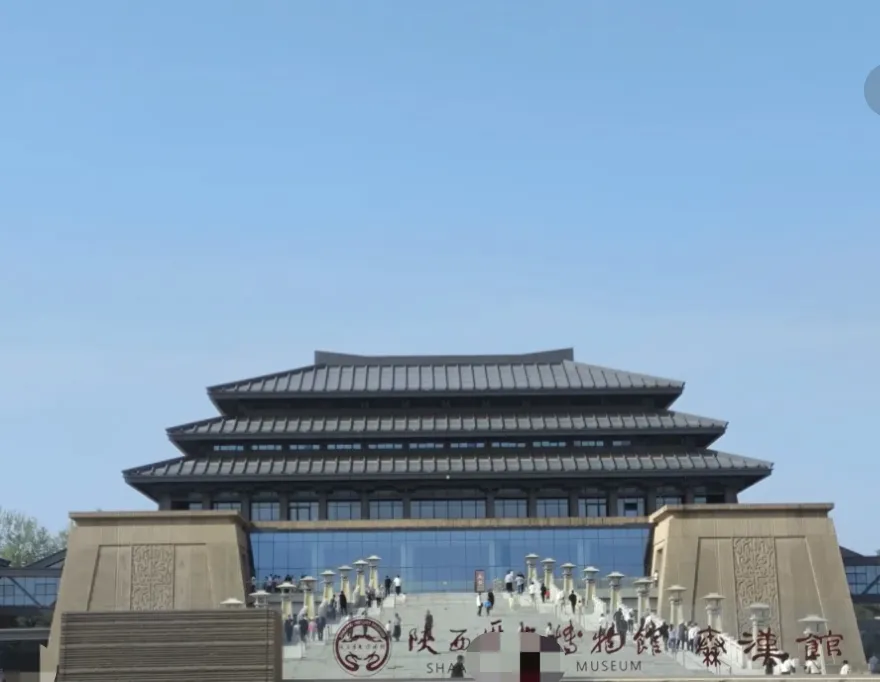
Shaanxi History Museum at a Glance
- What it is: one of China’s top provincial museums, with more than 370,000 artifacts spanning prehistory through the Qing dynasty
- Opened: 1991, in a building modelled on Tang dynasty palace architecture
- Basic exhibition: free, but you must reserve a slot 3-7 days ahead — it sells out constantly
- Special exhibitions: the Hejiacun gold and silver hoard and the Tang mural gallery (both paid)
- Hours: about 8:30-18:00; closed Mondays (except public holidays)
- Metro: Line 2 or 3 to Xiaozhai station, then a 10-minute walk
- Recommended time: 3-4 hours minimum; half a day with the special exhibitions
- Bring: your passport or ID card — you need it to collect the ticket
Why 370,000 Artifacts: The Story of the World’s Biggest City
The building itself announces the museum’s obsession. Designed by the architect Zhang Jinqiu and opened in 1991, it borrows the black roofs, deep eaves and spreading wings of Tang palace halls — not for decoration, but out of loyalty. This is, above all, a museum of the Tang, and the Tang is, above all, a museum of Chang’an, as Xi’an was known then. Between the seventh and ninth centuries this city was the largest on earth: a walled grid of roughly 84 square kilometres sheltering more than a million people, at a time when the grandest cities of Europe counted their populations in tens of thousands.
The permanent exhibition, though, starts much earlier. It opens with the fossil remains of Lantian Man — more than a million years old, found just east of modern Xi’an — then marches through Zhou dynasty bronzes, the Qin unification, the Han, and on to the golden age of the Tang, before closing with the Song, Yuan, Ming and Qing. The whole arc of Chinese civilisation is arranged as one enormous clockwise walk, and the labels are in Chinese and English.
The Tang halls hold the museum’s most famous pieces, and three are so iconic they have become its shorthand. The 镶金兽首玛瑙杯 (agate cup with a gold animal head) is a horn-shaped cup carved from a single piece of banded agate, its spout finished with a gilded animal’s head; nobody knows for certain whether it was carved in Persia and carried along the Silk Road, or made in Chang’an by a workshop copying a Western fashion — either way, it is the object the museum’s own staff point to first. The 皇后之玺 (empress’s jade seal) is a small jade stamp inscribed “seal of the empress,” widely believed to have belonged to the Han dynasty’s Empress Lü Zhi. And the 唐三彩载乐驼 (sancai camel with musicians) is a glazed camel loaded with a band of players — a single object that says everything about how the Silk Road mixed peoples, religions and melodies.
Then there is the hoard. In 1970, construction workers digging a foundation at Hejiacun, in the southwest of the city, broke through to two pottery urns buried in Tang times, sitting underground for more than a millennium. Inside were more than a thousand pieces of gold and silver: bowls, cups, flasks, coins, jade. Scholars suspect the treasure was buried in haste during the turmoil of the eighth century, perhaps as the An Lushan Rebellion shook the capital. Whatever happened to the owner, the hoard survived — the richest single cache of Tang luxury ever found, and the museum’s most magnetic room.
Inside: My Morning Among the Cases
At 8:40 the queue at the entrance was already fifty people long, passports in hand like boarding passes. Inside, the lobby is all stone and shadow and polished floor, air-conditioned to a hush; the first galleries carry that particular museum smell of cool air, old lacquer and dust. The crowd was younger than I expected — students with notebooks, families, a few photographers who had booked the same 9:00 slot I had.
I spent twenty minutes at the sancai camel. The glaze has a wetness to it even after thirteen hundred years — amber, green, cream — and the musicians on its back lean out at improbable angles, one of them singing with his head tipped back. A grandfather beside me was explaining the camel to his grandson in heavy Shaanxi dialect; I could not follow the words, but the pointing and the laughing needed no translation. Later I found the agate cup in its own case: smaller than I had imagined, a horn of cream-and-amber agate tipped with gold, sitting alone under the light like a jewel that had simply never left the eighth century.
Here is the thing about a collection of 370,000 pieces: only a fraction is on display at any one time, and the curators rotate. Standing in the Tang hall, I understood why. One percent of this museum would be the pride of any other city. I had planned ninety minutes and stayed four hours, and I left convinced I had only skimmed it.
Inside the Museum, Hall by Hall
The Permanent Exhibition: Prehistory to Qing
The free core of the museum, spread across two floors. Budget an hour for the Tang rooms alone, and do not rush the first cases: the Lantian Man fossils are the prologue to everything that follows, and the Zhou ritual bronzes are among the finest outside Beijing. The Tang section is where the crowds gather — the sancai camel and the gold and silver objects crowd the cases, and for good reason.
The Hejiacun Hoard (Paid Exhibition)
The single greatest room in the museum. The star is a silver flask shaped like a nomad’s leather bag, stamped with a horse that rears up with a cup in its mouth — a real Tang court entertainment, in which horses were trained to dance and to drink. Around it sit hammer-thin gold bowls, silver cosmetics boxes and medicine jars. The ticket costs extra, and it is worth every yuan; the room is small, so treat it as a highlight rather than a marathon — forty minutes does it justice.
The Tang Mural Gallery (Paid Exhibition)
The most precious and most fragile thing the museum keeps. These murals were painted in the seventh and eighth centuries for the tombs of Tang royalty outside the city — among them Prince Yide and Princess Yongtai — then lifted from the tomb walls piece by piece and remounted here. You swap your shoes for slippers, the room is kept cool and dim, photography is forbidden, and you walk past faces that have not seen sunlight in thirteen centuries: court ladies, eunuchs, foreign envoys, a game of polo. It is expensive, and it is unforgettable. If your budget stretches to only one paid exhibition, the Hejiacun hoard is the safer choice; if you love art, do not skip this one.
Practical Guide: Tickets, Hours & Getting There
Getting the free ticket: reserve 3-7 days ahead on the official WeChat mini-program (search 陕西历史博物馆). Slots are released in batches and vanish quickly, especially on weekends and holidays. The ticket is collected against your passport or ID card at the gate, so bring it. There is no reliable same-day walk-in for the free halls. If the free slots are gone and you absolutely must get in, a ticket for a paid exhibition has historically granted entry to the whole museum — confirm the current policy on the mini-program before you rely on it.
The paid exhibitions are booked the same way, and prices change, so check the official channels. Hours: roughly 8:30-18:00, with entry stopping before closing; closed Mondays except public holidays. Times adjust seasonally, so take the mini-program’s announcement as final.
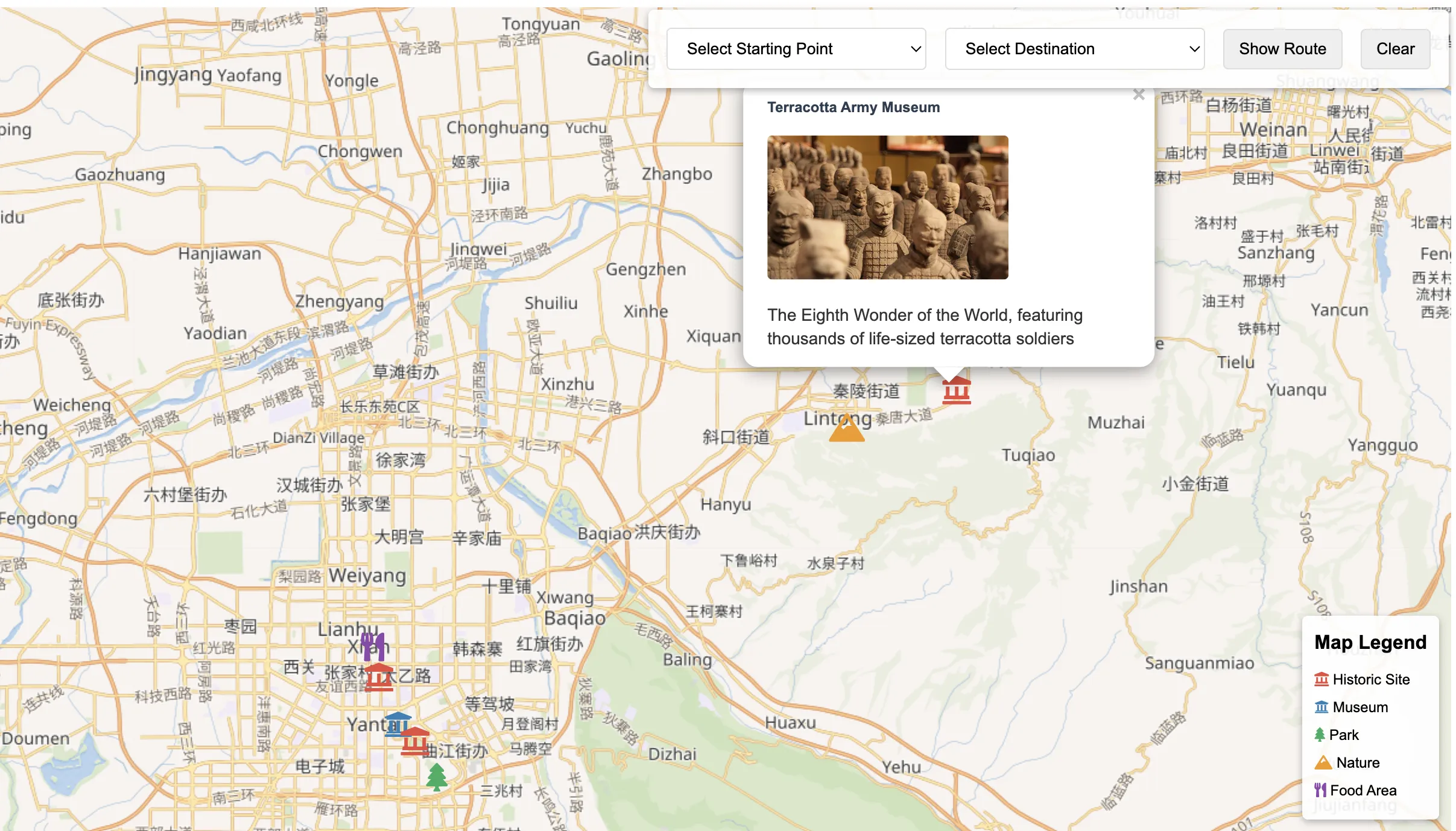
Getting there: Metro Line 2 or 3 to Xiaozhai station, then a 10-minute walk east along Xiaozhai East Road. From the Bell Tower area, a taxi takes about 15 minutes.
Inside: audio guides and human guides are both available at the entrance hall — take one of them, because a museum this dense is exhausting to read standing up. There are lockers for bags. Flash photography is forbidden everywhere, and the guards are quick to remind you. For more general planning, our Xi’an travel tips cover the practical side of the whole trip.
Best Time to Visit
Book the earliest slot you can. The halls are quietest in the first hour, the crowd builds through mid-morning and peaks after 10:00. Weekdays beat weekends, and public holidays are brutal. Because the museum is entirely indoors, the season matters less than the time slot — though in the comfortable shoulder seasons (April-May and September-October) the walk to the Big Wild Goose Pagoda afterwards is genuinely pleasant. Take the earliest slot, work through the permanent halls first, and save the Hejiacun room for when you are warmed up.
Photography Spots
- The building from the front plaza: the Tang-style roofline reads best in the soft light of opening time — stand back far enough to fit the whole roof.
- The agate cup: no flash. Tilt your phone against the glass edge to kill reflections; a low angle avoids the ceiling lights.
- The sancai camel: shoot from a three-quarter angle so the glaze catches the case light.
- The Hejiacun gold: the cases are dim on purpose — brace your hands, hold your breath, and let the exposure take its time.
- The lobby: the high hall and sweeping staircases are quietly dramatic, and nearly empty right at opening.
Where to Eat Nearby
The museum sits at the edge of Xiaozhai, one of Xi’an’s biggest shopping districts, which is excellent news for lunch. The malls around the metro station are packed with food courts, and the streets running east toward the Big Wild Goose Pagoda fill up with small restaurants at midday — the kind of places where the menu is on the wall and the special is whatever is simmering in the pot.
For Xi’an’s famous pair — roujiamo, the pork-stuffed flatbread that predates every hamburger, and yangrou paomo, the lamb and bread soup you tear apart with your own hands — the Muslim Quarter is a straight metro ride away on Line 2. Our Xi’an food guide maps out where to eat both properly.
How to Combine It With the Rest of Xi’an
The museum’s position is a gift. The Big Wild Goose Pagoda is one stop away on Line 3, and its evening fountain show and the neon boulevards of Datang Everbright City are the natural way to end a day of cases and glass. The Small Wild Goose Pagoda and its museum are a few stops in the other direction. If you have several days in Xi’an, keep the museum for one morning and give the Terracotta Warriors their own full day — they sit an hour outside town and pair naturally with the Huaqing Palace, and our day trip guide has the logistics. Start with the Xi’an attractions overview to see how it all fits together.
Common Mistakes to Avoid
- Showing up without a reservation: on most days there is no same-day walk-in for the free halls. This is the one mistake that ends the visit before it starts.
- Forgetting your passport: the ticket is issued against your ID. No ID, no entry.
- Rushing the permanent halls: ninety minutes is not enough. If you only have two hours, skip ahead to the Tang halls and leave the rest for a second visit.
- Using flash: the guards are strict, and flash genuinely damages pigments — in the mural gallery it would be catastrophic.
- Planning a Monday visit: the museum is closed Mondays (except public holidays). Check before you book anything around it.
Frequently Asked Questions
How do I actually get a ticket? Book the free basic-exhibition slot 3-7 days ahead on the official WeChat mini-program. Slots are released in batches and the release time has changed over the years — check the mini-program’s announcement and set an alarm. Paid-exhibition tickets are sold the same way.
Is the basic exhibition really free? Yes — the reservation costs nothing; you just cannot walk in without one. Bring your passport or ID card to claim the ticket.
Are the paid exhibitions worth it? The Hejiacun hoard, absolutely — it is the museum’s crown jewel and the room people remember. The mural gallery is world-class and unforgettable, but pricier and strictly limited in numbers.
Is the museum open on Mondays? No — it is closed Mondays except public holidays. Other days it runs roughly 8:30-18:00.
Do I need a guide? I recommend it — either the audio guide, for a small rental fee, or a human guide at the entrance. Dates and numbers mean little without the stories; a guide turns four hours into the best afternoon of your trip. Chinese-language tours are easy to find; English availability varies, so the audio guide is the reliable English option.
My Verdict
I have stood in museums on four continents, and the Shaanxi History Museum sits in my top handful — not for its size, but for its focus. Every object in it comes from this one place, and this place happened to be the centre of the world at the moment when that mattered most. It is also, stubbornly, a museum that makes you work: the reservation, the queue, the crowds. That work is part of the experience — you earn the eighth century. Go early, and give it the morning it deserves.