I have a theory about the Xi’an City Wall: nobody ever takes a bad photo from it, but almost nobody takes a good one either, because they show up at noon with the light flat and the heat shimmering off the bricks. The first time I walked the wall was a mid-July afternoon and every shot came out looking like a hazy postcard. I nearly wrote the city off as unphotographable. Then I came back for sunset, and I have been coming back for sunset ever since. This is the photo route I follow now — not a list of spots, but a schedule, because in Xi’an the light decides everything.
You do not need a serious camera for any of this. I shot most of these frames on a phone, with one rule: be there at the right hour. Everything else is a bonus.
The City Wall at Last Light
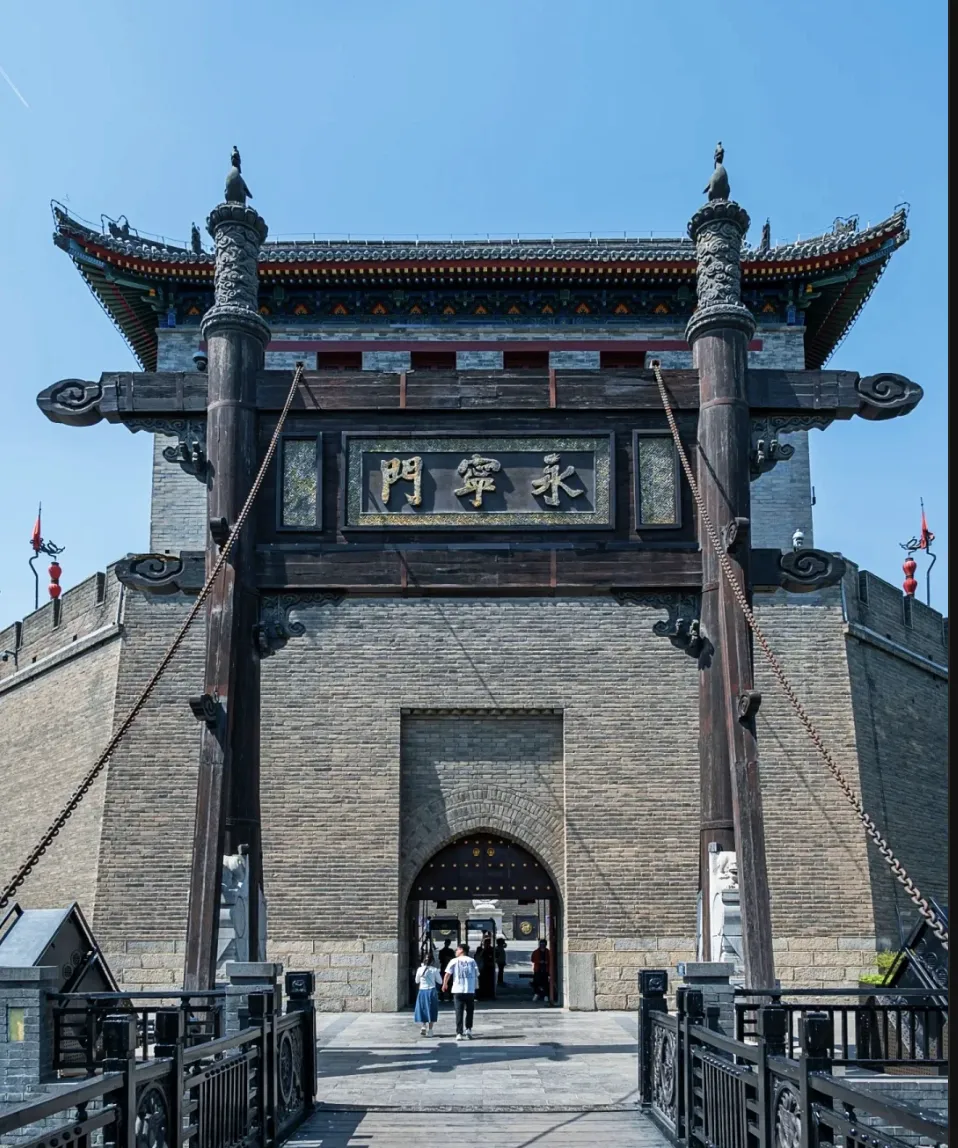
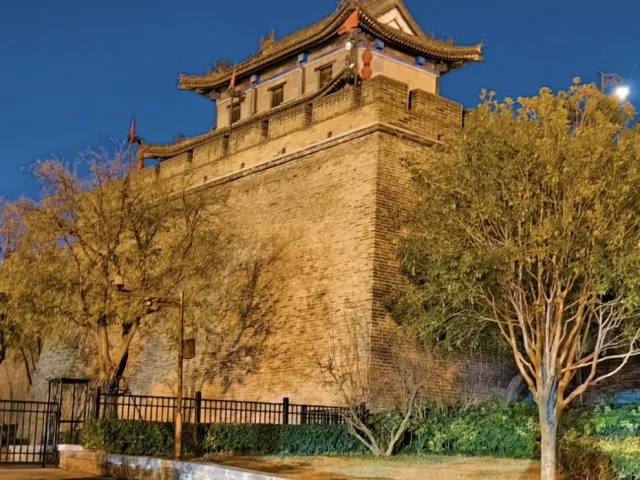
Enter at Yongningmen, the South Gate, around 17:00 in summer or 16:00 in winter, and walk east. The best section runs from Yongningmen to Changlemen, the East Gate — the wall bends gently there, the old rooftops of the Beilin district fill the frame, and the modern towers of the city stay conveniently behind you. Around 18:30 the sun drops behind the Drum Tower and the brick takes on a color that no filter reproduces honestly. The guard towers come alive in the last twenty minutes of light.
If you are on a bike, ride the loop first to find your frame, then walk back to it. The wall is 13.7 kilometers around and bikes rent for about ¥45 for two hours, but the photography is done on foot, slowly.
The Bell and Drum Towers After Dark
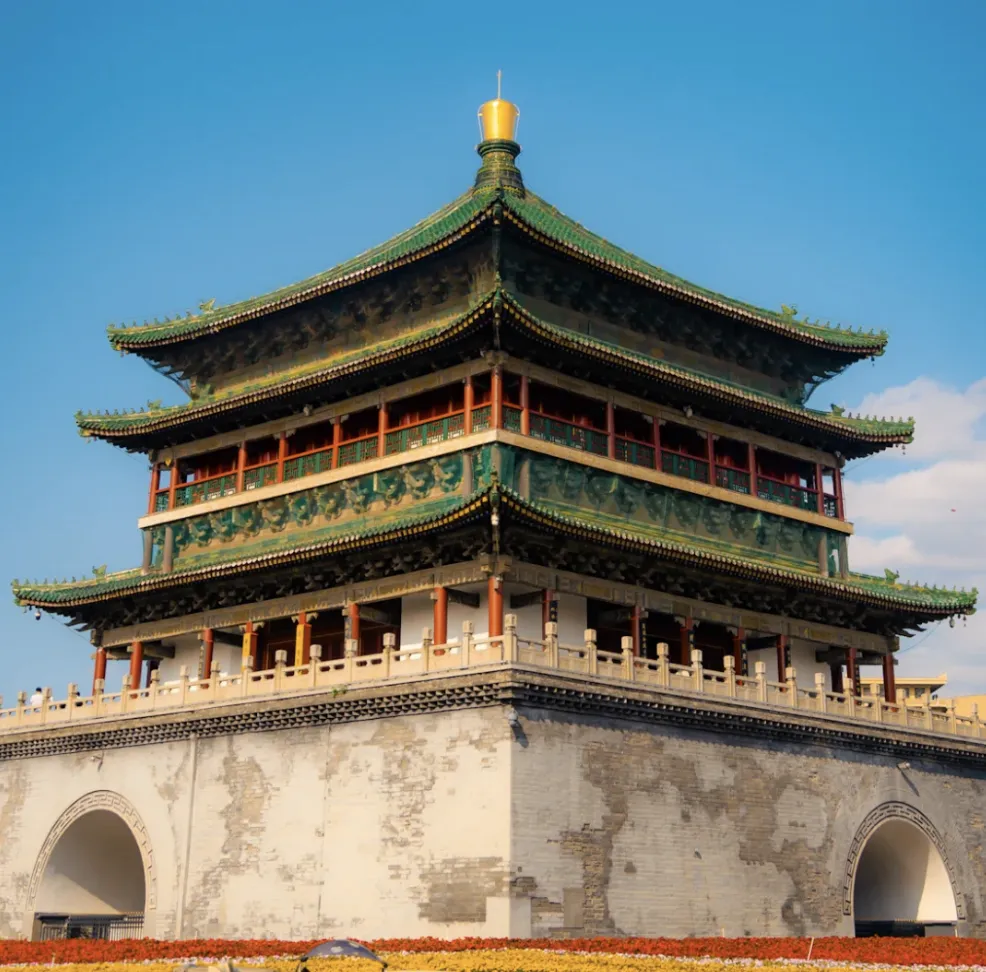
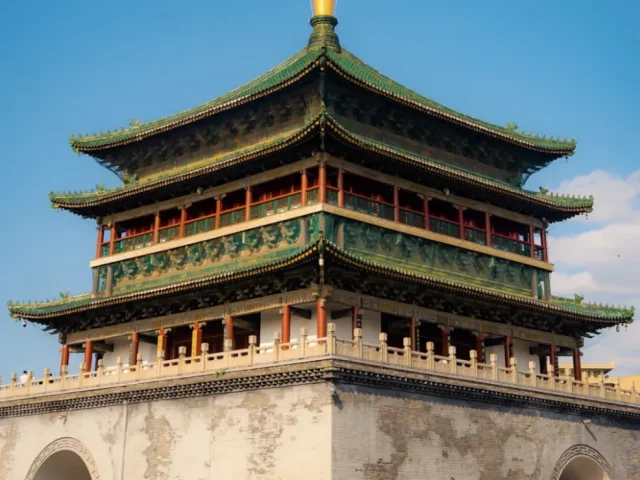
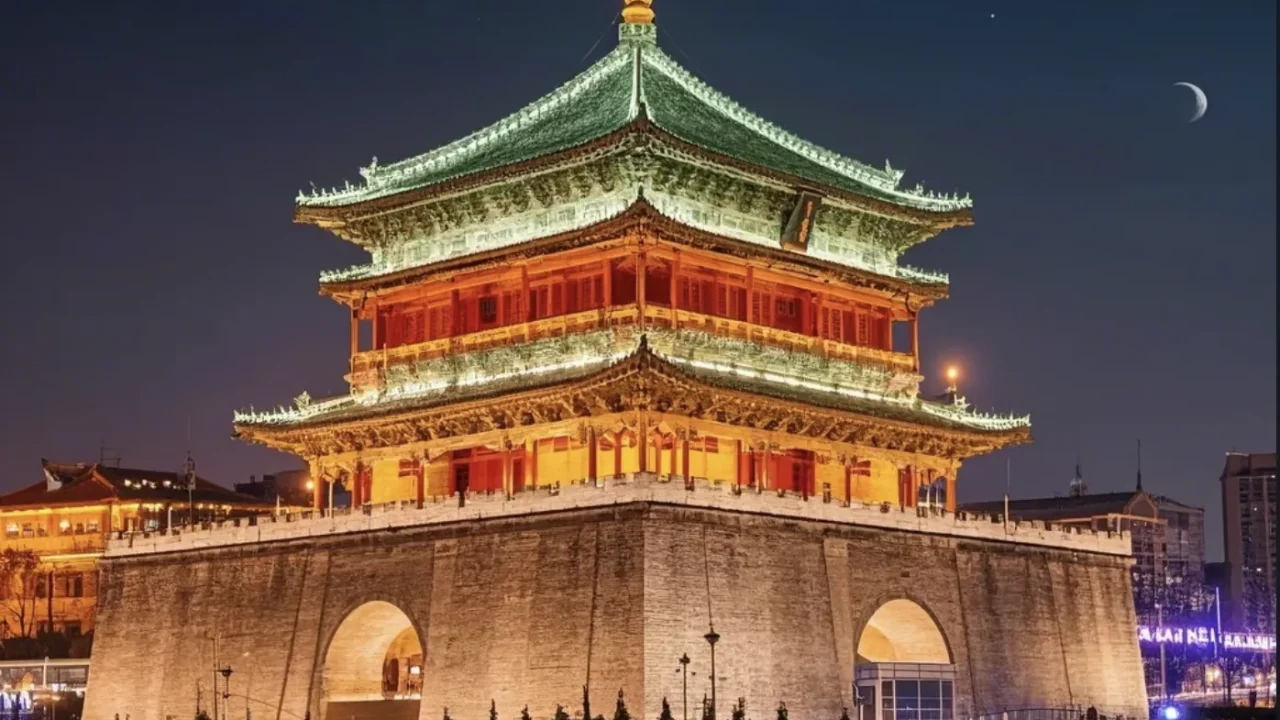
As soon as the towers switch their lights on — usually right at dusk — head to the Drum Tower square and look for the raised walkway on the southwest corner. From there you can line up the Drum Tower on one side and the glowing clock face of the Bell Tower down the boulevard on the other. The towers stay lit until about 22:00, but the traffic light trails are best between 19:30 and 20:30, when the evening rush is still dissolving around the roundabout.
The classic elevated shot of the Bell Tower is taken from the sixth-floor terrace of the Kaiyuan shopping centre, which stays open to the public until the mall closes. Go during a weekday evening and you can have the railing to yourself for the long-exposure money shot.
Datang Everbright City: The Tang Street
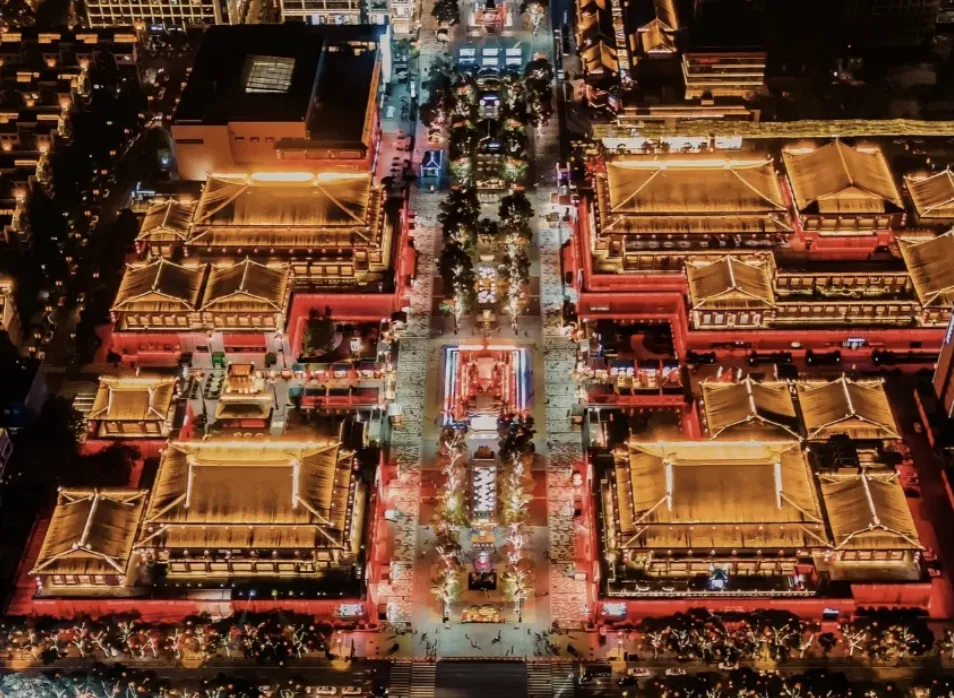
Nothing in Xi’an photographs like the Datang Everbright City pedestrian boulevard at night. The whole street is dressed as a Tang dynasty market street, and between 20:00 and 22:00 the place is a river of people moving under gold light, with performers in period robes handing out free shows. The trick is to shoot with the crowd, not against it: the long perspective down the boulevard toward the Big Wild Goose Pagoda, with people blurred by motion, is the shot that defines the place.
Skip the tripod — the ground here is never still, and the light is bright enough that a phone holds its own. Bring a small light for portraits if you came for people pictures; the white tones of the statues wash faces out.
Big Wild Goose Pagoda from the North Square
The famous reflection shot — pagoda standing in water — happens right after the music fountain show ends, when the spray settles back into the basin. Shows run several times a night; the 21:00 one is the largest, and the square takes about twenty minutes to clear. For the reflection, wait until the crowd thins, then crouch low at the water’s edge. For a different take, cross the street to the southwest corner of the square and let the pagoda tower over the rooftops of the shops instead.
The Warriors, Done Differently
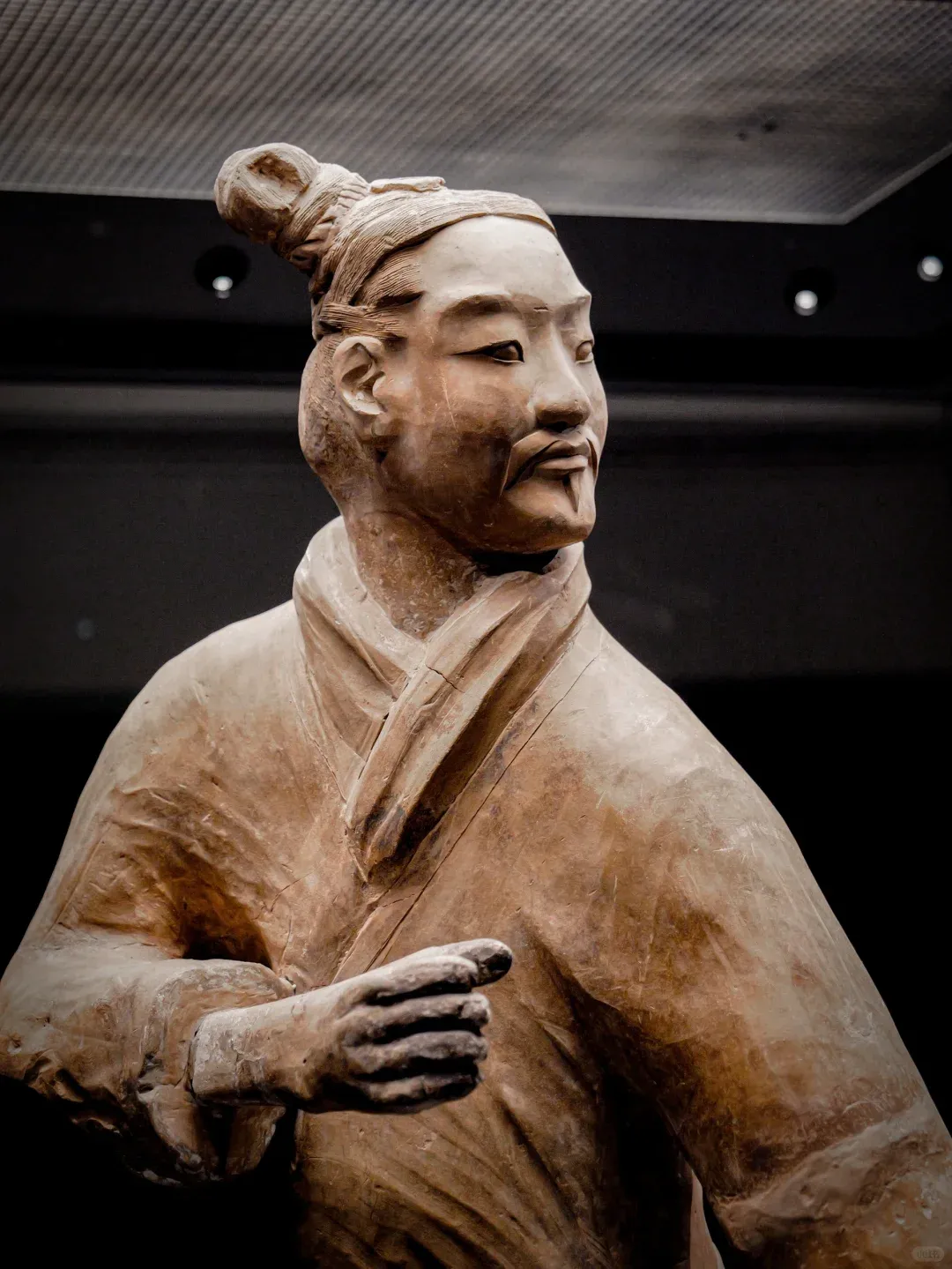
Pit 1 is dim and the glass barriers fight you, and every guidebook photo of it looks the same for a reason. The better work is in the exhibition halls that follow: the kneeling archer and the general, spotlit behind glass with dark backgrounds, where a portrait crop turns a museum case into a proper frame. My habit is to photograph the close-ups first, then go to Pit 1 and take the wide shot from the far end — the long rows of warriors receding into shadow tell the story better than the crowded front railing.
Go for the 08:30 opening if you want light on your side and fewer elbows. By 10:00 the first tour-group wave arrives and the pits become a mosh pit of selfie sticks.
One More Frame: The Muslim Quarter at Dusk
When the photography is done for the night, walk into the Muslim Quarter with nothing but your phone. The alleys — Beiyuanmen, Dapiyuan, Xiyangshi — turn a particular blue-gray at dusk, with steam from noodle cauldrons catching the shop lights. It is street photography, not landscape: the man slapping biangbiang dough, the kid with a skewer, the steam. No compositions, just timing. These are the photos people actually ask me about later.
Practical Notes
- City Wall: about ¥54 entry, bike rental about ¥45 for two hours; open 08:00–22:00, tower lights on around dusk.
- Bell and Drum Towers: combo ticket about ¥50; towers lit until about 22:00.
- Datang Everbright City: free; lights on from about 19:30; the boulevard runs until 23:00.
- Terracotta Army: about ¥120; open 08:30–17:30; the close-up figures are in the halls after Pit 3.
A Few Tips for Better Frames
- Build the day around two light windows — the hour after sunrise and the hour before sunset — and treat midday as museum time.
- Carry a tiny cleaning cloth. Dust in the pits and fingerprints on glass will ruin more shots than any camera setting.
- Shoot vertical for the towers; the street level of Xi’an is crowded, and a vertical crop cuts out the tour groups.
- Use the phone’s night mode on the wall after dark; the lanterns do the work, you just have to hold still.
- Ask before photographing people up close. A quick gesture goes a long way, and performers on Datang Everbright City are used to being asked — most will pose.
Packing the Memory Card
The last time I walked the wall at sunset, a woman from Shenzhen stopped to ask what I was waiting for. “The light,” I said, which is the least useful answer in photography. She waited anyway, and when the tower flared orange she laughed out loud. That is the whole appeal of this route: Xi’an does the heavy lifting, and you just need to be there when it does. If you leave the city with one decent frame of the wall in evening light, consider the trip a success — everything else you shoot is a gift.