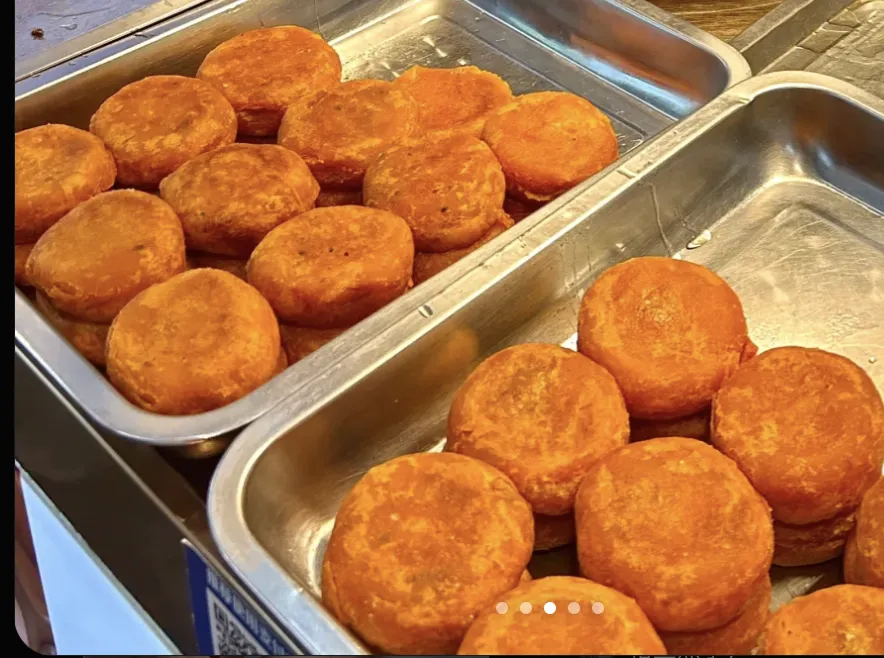
I met shi bing on a Friday afternoon in mid-October, my first trip to Xi’an. Autumn had turned the city golden – ginkgo leaves drifting along the city walls, a clean bite in the air – and I was wandering the Muslim Quarter when a smell stopped me mid-step. It was caramel, hot oil, and something quietly fruity, coming from a small griddle at a street stall. The vendor was flipping little orange discs with a pair of long chopsticks, and every turn sent up a puff of that same scent. The people around me were not browsing; they were buying, two or three at a time, walking off with paper bags. I joined the line, handed over three yuan, and received a cake so hot I had to keep passing it from hand to hand. I ate it standing there on the crowded street, and I understood.
What Exactly Is Shi Bing?
Shi bing (柿子餅) means “persimmon cake”, and the name tells you most of the story. Ripe persimmons are mashed into a puree, mixed with wheat flour and a little sugar, pressed into palm-sized rounds, and pan-fried until both sides turn deep golden. The outside comes out crisp and lightly caramelized; the inside stays soft, almost jammy, with the intense sweetness of very ripe persimmon and a faint tang that keeps it from ever cloying. It is a simple, honest dessert – flour, fruit, sugar, and oil, nothing more – which also makes it a genuinely welcome vegetarian find in a city where so much of the menu is built on meat.
Why Autumn Is Shi Bing Season
Persimmons are native to China, and Shaanxi is one of the country’s great persimmon regions. The most celebrated fruit comes from Lintong, just east of Xi’an: the fire-crystal persimmon (火晶柿), a small, deep-red variety with skin so thin it seems translucent, no seeds at all, and a sweetness locals measure in superlatives. Ask anyone at a shi bing stall which persimmons make the best cakes, and the answer is unanimous – fire-crystal, every time.
The cakes follow the fruit. Persimmons ripen in October and November, and that is exactly when the griddles appear: in the Muslim Quarter, in residential lanes, at the night markets. When the winter winds arrive, the stalls quietly disappear again. Shi bing is not a year-round snack. It is the taste of Xi’an’s autumn, available for one short, sweet window each year.
My First Bite
The vendor warned me it was hot, which was accurate advice I completely ignored. My first bite shattered the caramelized crust – crisp, almost like brittle – and a stream of molten persimmon filling flooded out. The flavor was the ripest persimmon you have ever eaten, concentrated: honeyed, with a bright little sour note at the end that reset my palate for the next bite. I burned my tongue on that first cake, finished it anyway in about four bites, and went back for a second. I remember thinking it was the first thing in my whole trip that tasted purely of the season – you could close your eyes and know exactly what time of year it was.
Where to Eat Shi Bing in Xi’an
In autumn, shi bing is everywhere: follow the smell, and follow the queue. The Muslim Quarter is the easiest place to start – stalls along Beiyuanmen, and deeper in around Sajinqiao and Dapiyuan, usually with a few people already waiting for the next batch off the griddle. Xiyangshi, the market street running through the heart of the quarter, turns up good ones too. At night, the Dongxin Street night market often has a stall or two, and the residential-neighborhood carts can be the cheapest of all. Count on three to eight yuan per cake, wherever you buy.
Before you order, glance at the stall itself: if there is a basket of small, vivid red fire-crystal persimmons out front, you have found the right place.
Famous Shops & Century-Old Names
Most shi bing in Xi’an comes from nameless griddles that follow the season, but a couple of old names have built their whole reputation on this little cake. Two stand out to me.
Lao Xu Jia Huanggui Shizibing (老徐家黃桂柿子餅)
The most famous name is Lao Xu Jia, a century-old stall on Beiyuanmen in the Muslim Quarter — the place everyone points you to when you ask about shi bing. Their specialty is the huanggui version, a whisper of osmanthus (桂花) folded into the persimmon filling that lifts the honeyed sweetness with a delicate floral note. Cakes are griddled to order, batch after batch, and handed over blazing hot. Stand at the counter, pass it from hand to hand until you can bite, and you will taste why this one name has outlasted every seasonal stall around it.
Lintong Persimmon Stalls (臨潼)
Then there is Lintong, home of the fire-crystal persimmon itself, about forty minutes east of Xi’an on the way to the Terracotta Army. The stalls here are not famous for their age but for their position: the fruit barely travels from tree to griddle. If your trip includes the Terracotta Army in October or November, stop for a cake in Lintong town on the way back — the difference that absolute freshness makes is real.
Tips for Eating Shi Bing
Get them fresh off the griddle. The crisp exterior only lasts a few minutes, so ask for the batch that just came up – or time your arrival for the next one.
Go in autumn. October and November are when the persimmons are in season, and that is when the cakes are at their best. Outside those months, quality drops off quickly.
Let the persimmon decide. The fruit quality determines the flavor, so look for stalls using fire-crystal persimmons – the deeper the orange, the better the cake.
Mind the filling. The outside cools fast, but the inside stays molten, so take a small first bite and spare yourself the tongue burn I earned.
Start with one. They are sweeter and more filling than they look. Buy one, taste it, and go back for more only if you want.
My Verdict
Shi bing became my favorite sweet in Xi’an: cheap, honest, and entirely of its season. For three to eight yuan, a small stall compresses the whole persimmon harvest into a few minutes of crisp, warm, jammy happiness. One practical warning, though: this is a seasonal treat. Visit Xi’an in summer and you will very likely miss it entirely. If you can, plan your trip for October or November, and let the smell of caramelized persimmon guide you to the nearest griddle.