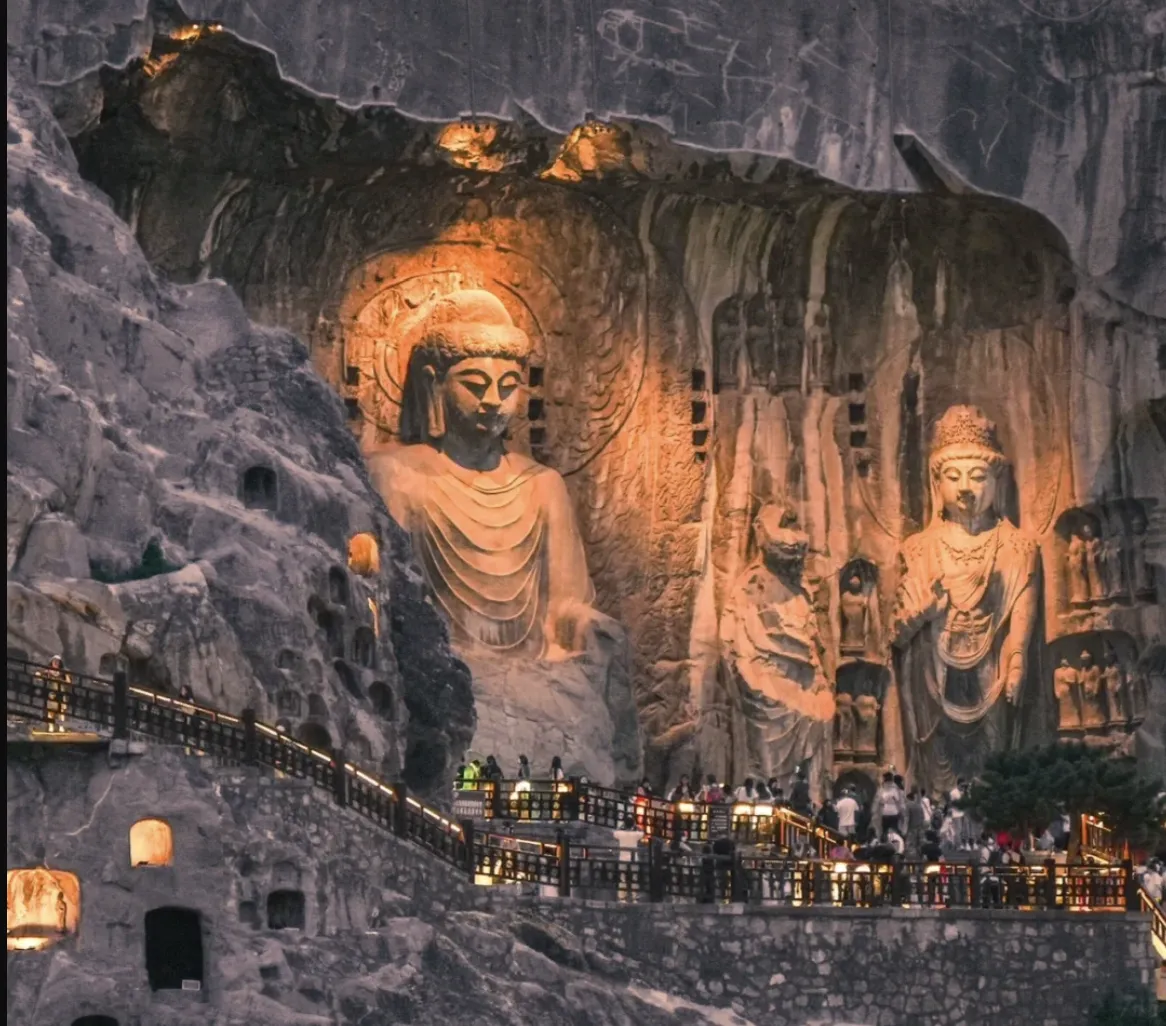
I still remember the exact second I first met the Vairocana Buddha at Fengxian Temple. I had climbed a couple of hundred stone steps, sweated through my shirt, rounded a corner of the cliff – and there he sat: seventeen metres of Tang-dynasty stone gazing down the Yi River valley with an expression I can only call calm beyond all worry. The tour groups, the heat, the noise – all of it simply fell away. That is the moment I think of whenever someone asks why they should trade a day or two of Xi’an sightseeing for a train ride east.
Luoyang & Longmen Grottoes 2-Day Trip: Quick Facts (2026)
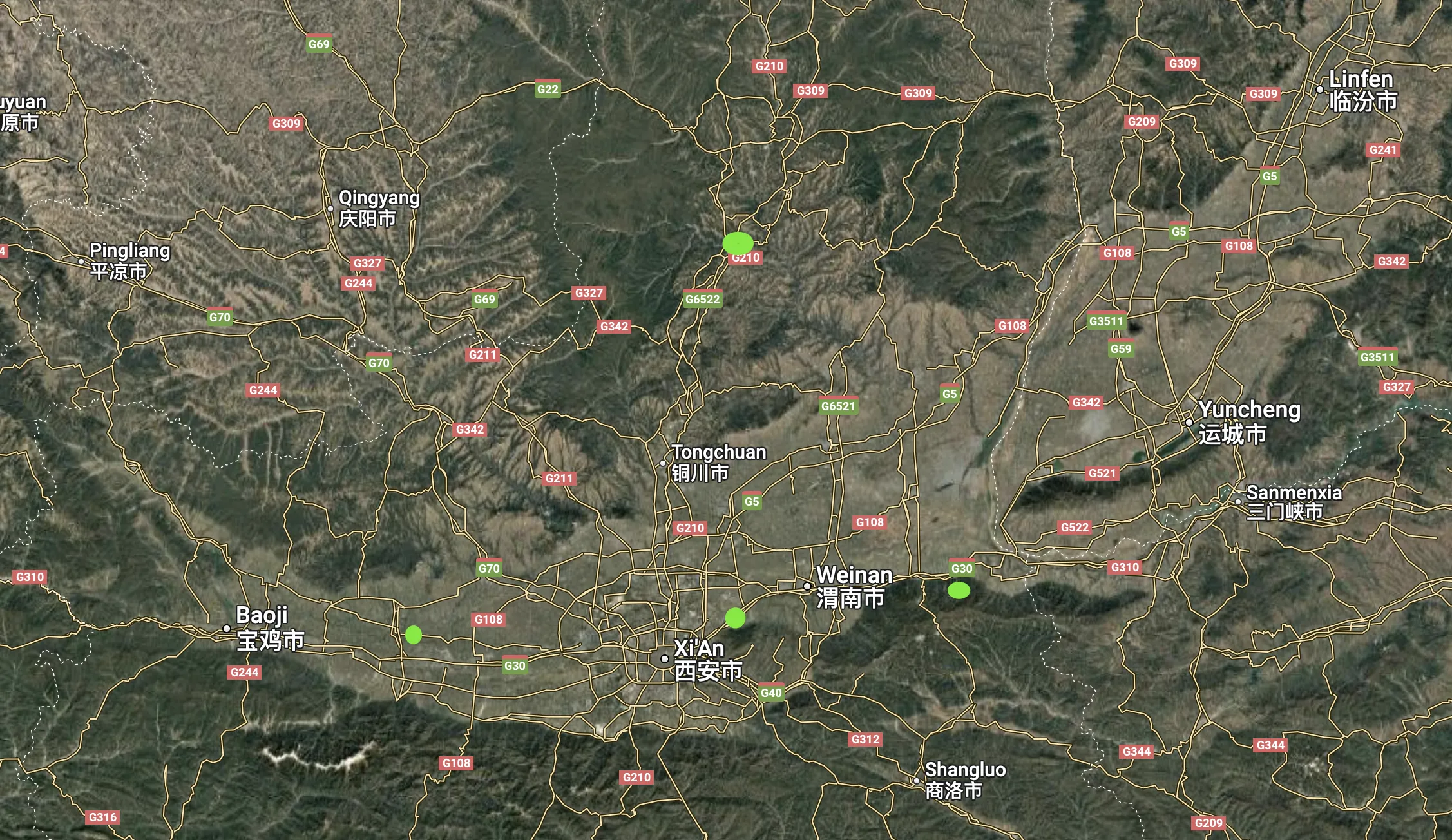
- Location: Luoyang, Henan province – about 380 km east of Xi’an, between the Yi and Luo rivers
- Entrance fees: Longmen Grottoes around 90 RMB, White Horse Temple around 35 RMB; Luoyang Museum free with advance reservation (official prices may change)
- Getting there: high-speed rail from Xi’an North to Luoyang Longmen station, about 1.5-2 hours
- Best season: April for the peony festival; otherwise April-May and September-October
- Recommended time: 2 days including the round trip from Xi’an (3 if you want to slow down)
Why Luoyang: Thirteen Dynasties on the Yi River
Luoyang is one of those Chinese cities where the ground itself feels layered with history. Thirteen dynasties – from the Eastern Zhou, through the Eastern Han and the Northern Wei, to the Sui and the Tang – made it their capital, and for long stretches of Chinese history this city, not Xi’an, was the political and cultural heart of the empire. You feel it the moment you walk the banks of the Yi River: this is an old, old place, and it knows it.
The crown jewel is the Longmen Grottoes, a UNESCO World Heritage Site where more than 2,300 rock niches hold some 100,000 carved statues. Work began in 493 AD, when the Northern Wei moved their capital here, and carried on through the Tang – four centuries of emperors, monks and craftsmen chiselling Buddhas, bodhisattvas and guardians into a kilometre of limestone cliff. It is not a museum; it is a city of stone deities overlooking a river.
And then there is the White Horse Temple, founded in 68 AD and widely credited as the first officially established Buddhist temple in China – the name comes from the white horse said to have carried the sutras from India on its back. If you want to understand how Buddhism reached China, this is where the story begins.
Getting There: The High-Speed Rail Option
The easy way is the high-speed train: Xi’an North station to Luoyang Longmen station takes about 1.5-2 hours, with departures spread through the day. A second-class seat runs around 180 RMB – roughly the price of a modest lunch in Xi’an for a trip across a province – and you can book on the official 12306 app or through your hotel. Fares and timetables do shift, so confirm the latest schedule before you lock in your plans.
Here is the insider detail that shapes the whole itinerary: Luoyang Longmen station is only about 5 km from the grottoes. If your hotel is in the old city, on the other side of town, you are looking at a 30-40 minute ride – so most travellers do the grottoes first, straight off the train, then settle into the city. You can also attempt Luoyang as a long day trip from Xi’an (early train out, last train back), but I would not recommend it. Luoyang deserves a night.
If you are planning a string of escapes from Xi’an, our roundup of Xi’an day trips compares the other one- and two-day options – mountains, temples and mausoleums all within easy reach.
Day 1: The Longmen Grottoes
Give the grottoes a full half-day, and aim for the afternoon. The site sits on both banks of the Yi River, and the classic route starts on the West Hill (Xishan), where the most important carvings cluster. The Binyang Three Caves come early in the walk – three great caverns of early Northern Wei carving – and the finest moment waits at the end: Fengxian Temple, a vast open-air niche cut in 672-675 AD, whose main figure, the Vairocana Buddha, stands over 17 metres tall. Words do not prepare you for it. Cross the bridge to the East Hill (Dongshan) for the classic panorama of the whole cliff-line reflected in the river.
Two pieces of advice. First, take a guide or audio guide – with context, bare stone becomes narrative, and the story of which dynasty carved which cave, and why, is half the value of Longmen. Second, time your walk so you reach Fengxian Temple in the golden afternoon light, when the Buddha’s face catches the sun. If the evening night tour of Longmen (yeyou Longmen) is running during your dates, the second ticket is genuinely worth it: the niches floodlit against the dark hillside, the river sliding past below. Opening dates and hours are set by the site – check the official channels before you plan around it.
Day 2: White Horse Temple, the Museum and the Old City
Start the second morning at the White Horse Temple, about a 40-minute drive east of the old city. Beyond the ancient courtyards and the Qiyun Pagoda, the grounds include a section of Thai, Myanmar and Indian-style temple buildings added in recent decades – a quiet reminder that this one site has become a meeting point for all of Buddhist Asia. Entry is around 35 RMB (confirm the current price before you go).
By midday you will be hungry, and Luoyang eats well. The local canon is beef soup (niurou tang) – a rich, peppery broth with hand-torn flatbread, perfect for breakfast or an early lunch – the “not-turned soup” (bufan tang), a savoury eggy pancake-soup, and the famous water banquet (shuixi), a formal banquet of dozens of small dishes that arrive one after another like a river. You do not need a name-brand restaurant; the small shops around the old city gates do it best. If you are also planning to eat your way through Xi’an, our Xi’an food guide is a good companion.
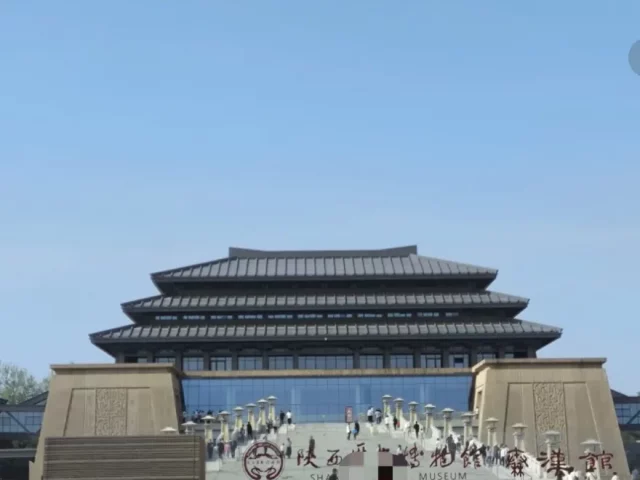
The afternoon belongs to the Luoyang Museum – admission is free, but reserve a slot in advance – where the collection tells the city’s thirteen-dynasty story in bronze, ceramics and Luoyang’s famous tricolour Tang horses. End the day in the Luoyi Ancient City and the old town around Lijing Gate, where the lantern-lit streets and snack lanes come alive after dark. Walking those lanes at night, with the smell of grilled food and the hum of the crowd, is the closest thing Luoyang has to a time machine.
My Two Days in Luoyang
I arrived on a late-morning train, dropped my bag at a hotel near the old city, and was standing at the foot of Fengxian Temple by early afternoon. What stays with me is not the statistics – the 2,300 niches, the 100,000 statues – but the feeling of the place: conversation bouncing off the rock, heat radiating from the cliff, and that enormous Buddha face, weathered and serene, looking straight past the crowds at the river. I sat on a step for a long time. Nothing in Luoyang feels performative in the way some famous sites do; it feels inhabited.
The evening was better still. I joined the night tour – the caves lit from below, the silhouettes of the guardians looming against the dark hillside, the Yi River sliding by inky and quiet – and afterwards ate a bowl of bufan tang at a tiny counter in the old town. The next morning I walked the White Horse Temple grounds at opening hour, incense smoke already threading through the pagoda courtyard, and by late afternoon I was on the train home, watching the plain turn gold through the window.
A Step-by-Step 2-Day Plan (From Xi’an)
- Day 1 – morning: take an early high-speed train from Xi’an North to Luoyang Longmen (about 1.5-2 hours, second class around 180 RMB).
- Day 1 – midday: drop your bags at the hotel (the old city is the best base) and lunch on beef soup and flatbread nearby.
- Day 1 – afternoon: taxi or ride-hail to the Longmen Grottoes; walk the West Hill – Binyang Three Caves, then Fengxian Temple’s Vairocana Buddha – and cross to the East Hill for the panorama.
- Day 1 – evening: if the night tour is open on your dates, stay for the floodlit cliffs; otherwise head back to the old city for dinner among the lantern-lit lanes.
- Day 2 – morning: White Horse Temple (about a 40-minute drive east); walk the courtyards, the pagoda and the international temple zone.
- Day 2 – midday: Luoyang Museum (free, reserve in advance).
- Day 2 – afternoon: Luoyi Ancient City and Lijing Gate; catch a late-afternoon train back to Xi’an and you are home in time for dinner.
Special Situations: Peonies, Families, Photographers
- April peony season: Luoyang’s peony festival falls in April, when the city’s gardens explode into bloom – glorious, and genuinely crowded, with hotels booked out and prices climbing weeks ahead. Reserve early, or shift to late April or early May, when the flowers are still out but the crowds have thinned slightly.
- Families: the grottoes involve real climbing – hundreds of stone steps, some stretches with no shade. Small children will tire fast, so plan breaks on the riverside promenade and carry plenty of water. A stroller will not survive the stairways.
- Photographers: afternoon light is the reason to schedule the grottoes for the first half of your stay; the East Hill across the river gives the best wide shots of the whole cliff-line. For the night tour, bring a tripod or a very steady hand – the light levels are low.
- If you have a third day: add Laojun Mountain, the sacred Daoist peak crowned with golden-roofed temples that have become a fixture of Chinese social media, or Shaolin Temple at Dengfeng – both work as long day trips from Luoyang.
For the packing and booking basics before any of this, our Xi’an travel tips page covers the essentials.
A Note on Timeliness
Ticket prices, high-speed rail fares and the night tour’s opening dates change from year to year. The figures above reflect 2026 conditions – please confirm the latest prices and opening hours on the official Longmen Grottoes, White Horse Temple and China Railway channels before you go.
Frequently Asked Questions
How do I get from Xi’an to Luoyang? High-speed rail from Xi’an North to Luoyang Longmen station, about 1.5-2 hours, second class around 180 RMB; trains run through the day and tickets are sold on the official 12306 app.
How long do I need at the Longmen Grottoes? Three to four hours covers both hills at a relaxed pace; give it half a day if you want the guided tour and the night tour as well.
Where should I stay in Luoyang? The old city around Lijing Gate puts you among the food streets and lantern lanes, with the grottoes a 30-40 minute ride away. Book early if you are coming in April.
Is two days enough? Yes – it covers Longmen, White Horse Temple, the museum and the old city comfortably. Add a third day if you want Laojun Mountain or Shaolin Temple.
When exactly is peony season? Roughly all of April, usually peaking in the middle two weeks. The festival’s exact dates and the gardens’ opening hours vary from year to year – check official announcements before you book.
My Verdict
Luoyang is the best two-day escape from Xi’an, and the high-speed rail makes it effortless. You get a UNESCO World Heritage site that genuinely moves you, China’s first officially established Buddhist temple, a museum that tells thirteen dynasties of story, and food worth the trip on its own – all without the manic crush of some of Xi’an’s most famous sights. Go for the Buddha’s face in the afternoon light; stay for the floodlit cliffs and the old city at night.