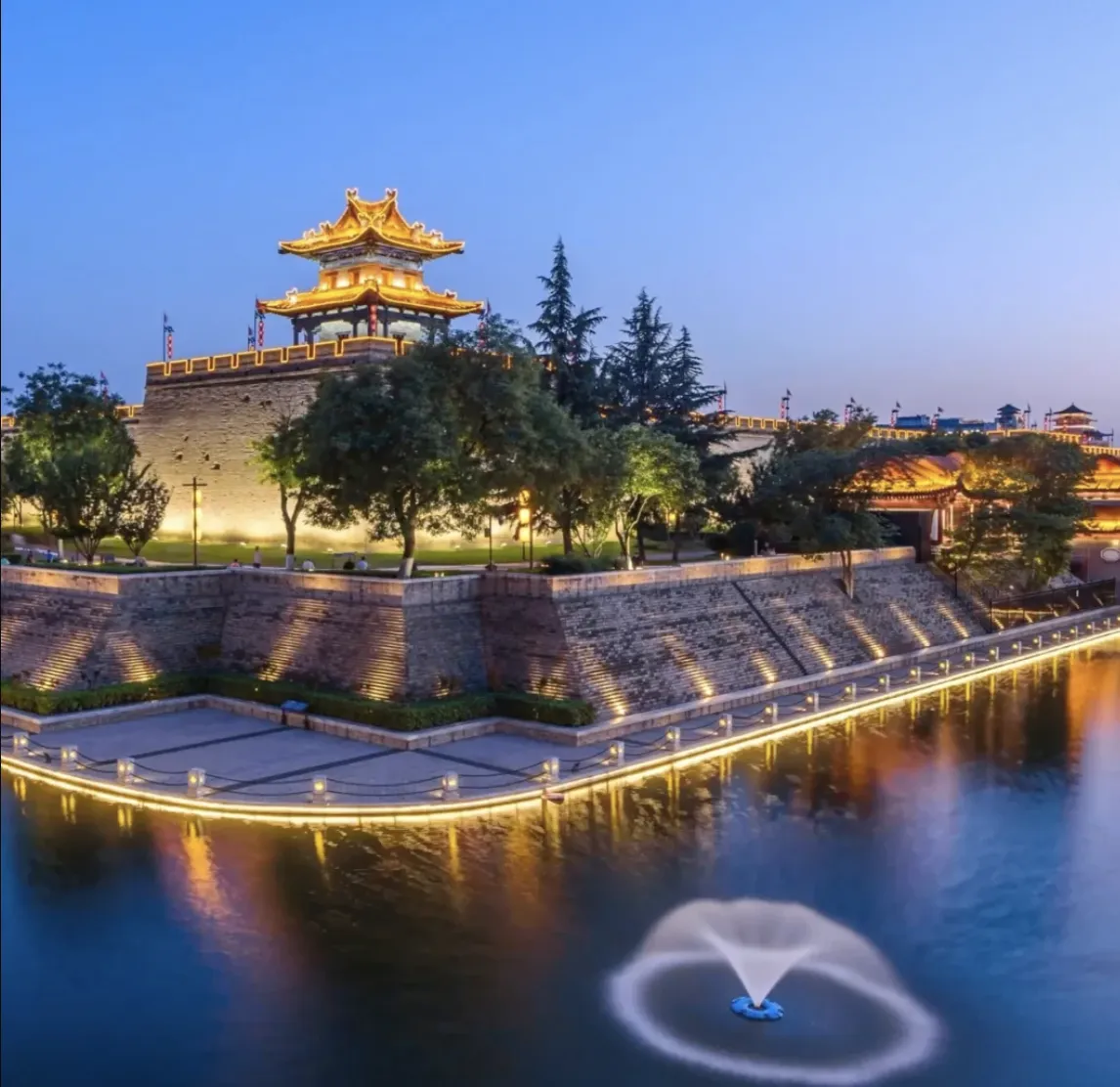
I met shuijing bing on a grey November afternoon in Xi’an, when the first winter chill had emptied the tourist streets and the pastry shops were quiet. I had wandered off the Muslim Quarter’s main drag into a small bakery near Beiyuanmen, pulled by the smell of warm sugar. A white-haired woman was weighing pale golden discs into paper boxes, her fingers moving with the calm economy of someone who has done it ten thousand times. “Take one,” she said, and pressed a cake into my hand. I bit in expecting the usual dry, forgettable snack of souvenir shops. What I got instead stopped me mid-step.
What Exactly Is Shuijing Bing?
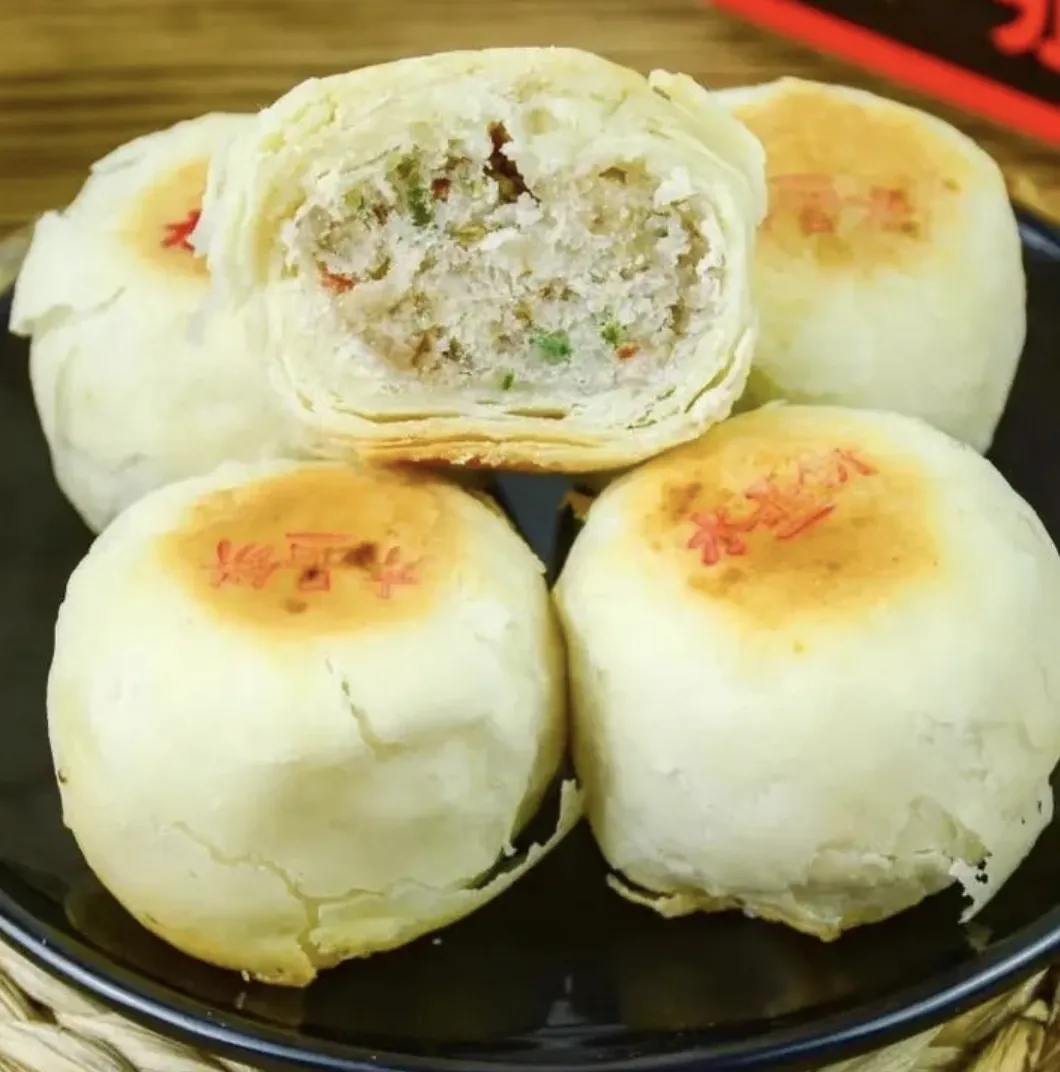
Shuijing bing (水晶饼) means “crystal cake”, and the name comes from the way the filling glistens through the thin pastry shell like glass under water. The crust is fine and brittle – it shatters at the first bite – while the filling is a dense, semi-translucent paste of sugar, finely chopped nuts and rose petals. The rose is the whole point: it gives the sweetness a floral, almost perfumed edge that is nothing like the heavy sugar of most Chinese pastries. Built on sugar, nuts and petals rather than lard or eggs, it is vegetarian to the core, and Xi’aners treat it as tea-time snack, festival gift and civic identity all at once.
A Sweet with Courtly Roots
Xi’an was the capital of thirteen dynasties, and its pastry tradition carries the fingerprints of court kitchens. Shuijing bing is usually described as a “court-style” sweet – a polished, refined kind of confectionery that demands good ingredients and patience, not the rough-and-ready food of the street. Rose petals have been a fixture of Shaanxi sweets for centuries; when Chang’an was the Tang capital, cooks in the palace and the markets alike perfumed their cakes with them, and the habit never really left.
Today the name everyone knows is De Mao Gong (德懋恭), a heritage brand founded in the late Qing dynasty whose crystal cakes have become the default gift for anyone leaving the city with a promise to visit relatives. Walk into almost any Xi’an household and you will find a white box of them somewhere – next to the tea set, in the fridge, waiting for a guest.
My First Bite
The cake the shopkeeper gave me was still warm. The first thing that happened was the crust: a fine, shattering crackle, like biting through brittle toffee – and then the filling, soft, dense and slightly sticky, releasing a burst of rose fragrance so vivid that I looked down at the cake to check I hadn’t been handed a flower. The sweetness was real but restrained, cut by the earthy chew of the nuts. I stood in that shop and ate it in three embarrassed bites while the woman watched, amused. Then I bought a box. The second cake I ate more slowly, and this time I noticed the filling glinting through the thin pastry – the translucency that gives the thing its name – and understood why nobody in Xi’an ever seems to buy just one.
Where to Find It in Xi’an
Crystal cakes are a gift-shop staple, so you will rarely have to hunt: the counters of heritage pastry shops such as De Mao Gong sell them year-round, and nearly every souvenir shop near the Bell Tower stocks boxed versions. In the Muslim Quarter, pastry stalls along Beiyuanmen carry them too, often sold loose by weight. Expect to pay roughly 10-20 yuan for a box – cheap enough that it feels wasteful to travel with only one.
My advice: buy your first box from an old-name shop, then compare a loose cake from a street stall. The gap between a great crystal cake and a merely good one is the rose – you will taste the difference immediately.
Famous Shops & Century-Old Names
De Mao Gong (德懋恭)
De Mao Gong (德懋恭) is the name to start with – a China Time-Honored Brand and a true century-old house, founded in 1872, the eleventh year of the Tongzhi reign of the Qing dynasty. Crystal cakes have been its signature sweet for more than 150 years, and its counters around the Bell Tower, along North Street and at the mouth of the Muslim Quarter are always stacked with plain white boxes – the first-choice Xi’an gift, the box that waits in nearly every Xi’an household.
Muslim Quarter Pastry Shops (回民街點心鋪)
The pastry shops along Beiyuanmen in the Muslim Quarter are another story. Most are old family businesses, some going back a century, and their rose crystal cakes are made fresh and sold loose by weight, so the crust still shatters and the rose comes through far stronger than in any boxed version. It is the same difference I described above: taste a loose cake against a boxed one, and the rose will tell you everything.
How to Eat It Like a Local
Smell it first. A proper shuijing bing announces itself with roses before you bite. If the rose is faint, the cake is old – or the maker cut corners.
Small bites, slow chewing. The filling is dense and sweet; it rewards patience and punishes rushing.
Pair it with tea. Green tea or a light oolong balances the floral sweetness, which is exactly how Xi’aners eat it at home and in teahouses.
Buy it as a gift. Boxed cakes keep well and travel cleanly, and it is the most iconic sweet in the Xi’an pastry canon. Since it is vegetarian, it is a safe gift for almost anyone.
Eat fresh when you can. The crust is at its shattering best within a few days of baking, so keep the box cool and don’t hoard it.
My Verdict
Shuijing bing is not a dramatic food. Nobody writes odes to it the way they do to roujiamo or liangpi, and there are no queues around the block. But it is the taste I carried home from Xi’an, the one that made my mother call to ask where she could buy more. It is a quiet, elegant, slightly old-fashioned sweet – and with tea and a slow afternoon, the whole city makes sense. One practical reminder: buy two boxes. One for the person you love, and one for yourself before the train home.