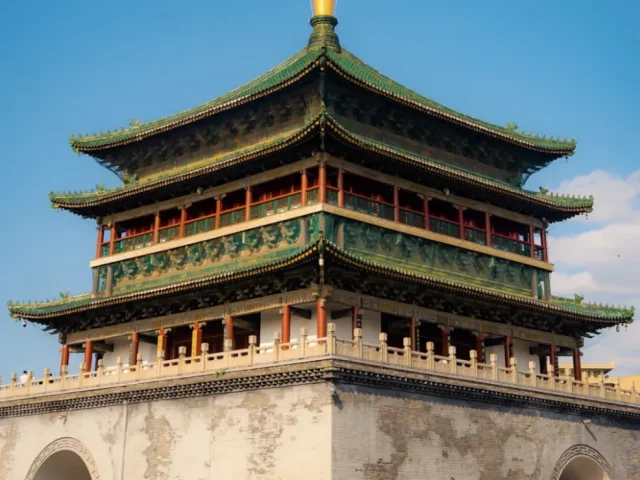
The weekend in question started badly. My flight from Shanghai landed at Xi’an Xianyang at ten at night, the taxi crawled through wet traffic, and by the time I checked in near the Bell Tower it was nearly midnight. I stood at the window anyway, and below me the tower’s red lanterns floated above the roundabout like something out of a paper-cut. That was when I decided the two days ahead would follow one rule: one dynasty per day. Saturday would belong to the Tang — the wall, the towers, the museum, the lantern-lit avenue that recreates Tang-era streets. Sunday would belong to the Qin — the Terracotta Army and the hot springs palace down the eastern line. It is a split that has served every weekend visitor I have sent to Xi’an since, including me, twice.
A quick word on timing before the schedule: the two-day plan assumes you land Friday night and leave Sunday evening, which is how most people actually do it. If you arrive Saturday morning instead, shift the whole thing by half a day — wall on Saturday, east line on Sunday — and accept that the museum will need to drop out if the trains don’t cooperate. Now, the plan.
The weekend formula: Qin on one day, Tang on the other
Xi’an’s greatest hits line up neatly into two geographical days, and the weekend shape follows the city’s own geography. South of the wall, along the old Tang city axis, sit the pagoda, the museum, and Datang Everbright City. Out east, past the city limits, sit the Terracotta Army and Huaqing Palace. Keep the two days separate — nobody wants to shuttle between the far east and the south twice — and each day becomes a straight line instead of a scramble.
Day 1, morning: the wall at 08:30
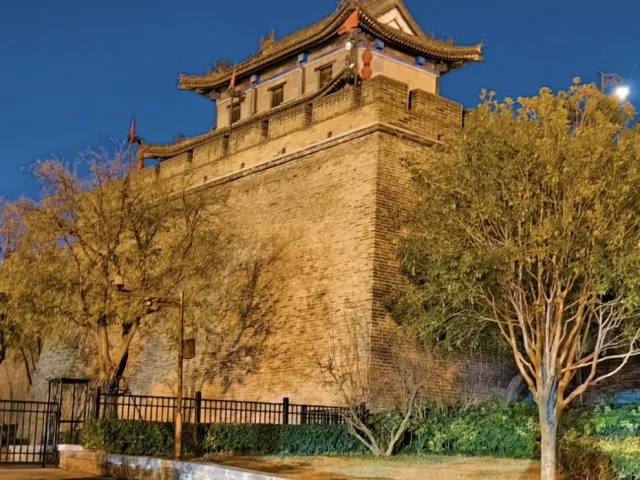
Start at Yongning Gate before the heat and the tour groups build. The wall opens around 08:00 in summer, and the first hour is calm enough that you can hear your own wheels. Entrance is about ¥54, and a bicycle rental is about ¥45 for a hundred minutes; I rode the whole 13.7-kilometer loop in a little under two hours, stopping at the corner towers and leaning over the parapets to watch the hutongs below start their day. If you are not a cyclist, the ramparts are just as good on foot — give yourself three hours for the half-loop instead. This is the morning that makes the weekend, so do not trade it for a lie-in.

Day 1, midday: the towers and the Muslim Quarter
Finish the wall around 11:00 and walk to the Drum Tower, five minutes from the South Gate metro station. The two towers sit within sight of each other across the great roundabout, and a combined ticket costs about ¥50 — worth it once, for the drum performances at the Drum Tower and the view down the old streets from the Bell Tower. Then lunch, and here is where the weekend version beats the rushed version: take your time in the Muslim Quarter. Order yangroupaomo in 大皮院, then wander the lanes for persimmon cakes and a cold glass of sour plum juice. The main 回民街 drag is for first-timers and souvenir shoppers; the parallel lanes are where the people who actually live here eat.
Day 1, afternoon: the Shaanxi History Museum
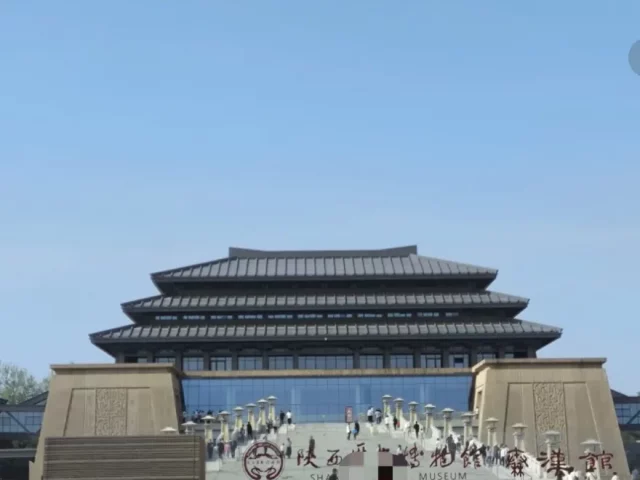
Take metro Line 2 to Xiaozhai and walk to the Shaanxi History Museum, the building that looks like a Tang palace and holds a national collection that punches far above its size. The main galleries are free, but you must reserve a timed slot in advance through the official WeChat mini-program — in 2026 they book out days ahead, especially on weekends, so sort this before you fly. The museum closes Mondays, opens 09:00, and stops letting people in around 16:30; give it ninety minutes minimum, two hours if you linger over the Tang gold and the ceramic army. Plan for this to be your calm, air-conditioned afternoon, because the evening will be loud.
Day 1, night: Datang Everbright City
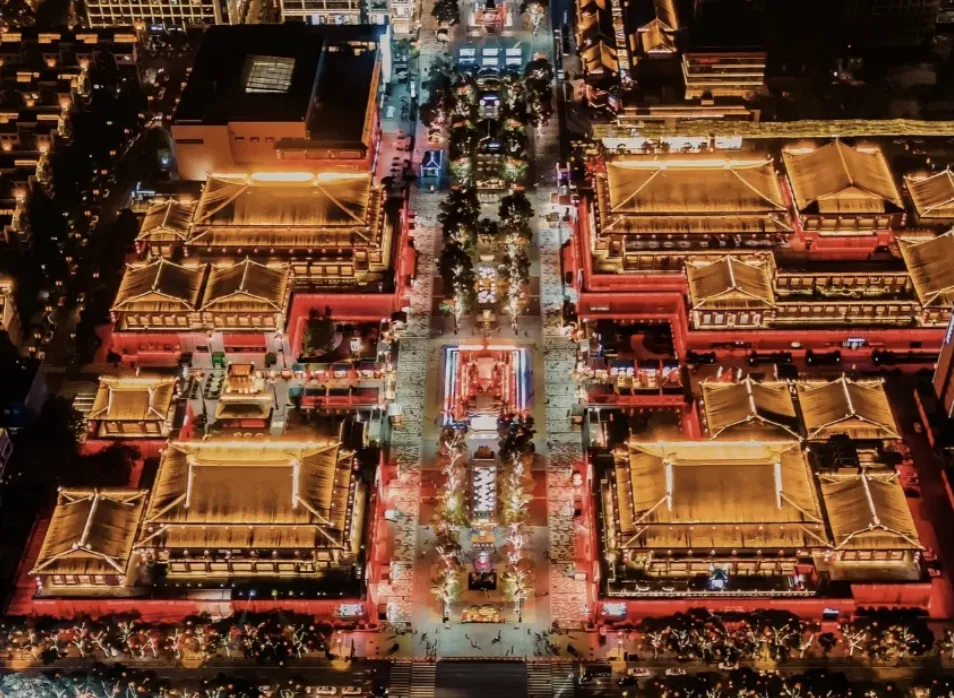
At dusk, ride metro Line 4 to Dayanta station and step out onto Datang Everbright City, the kilometer-long pedestrian avenue styled after the Tang era. The roof lines, the street performers in hanfu, the giant lanterns — it is theatrical in the best way, and free. The music fountain show at the Big Wild Goose Pagoda’s north square usually fires once around noon and again after dark in summer; the night showing is the one to catch. Have dinner at one of the avenue’s food halls or walk back toward Xiaozhai for a proper restaurant. Either way, this is the night scene your photos will actually look good in, so charge the phone before you leave the hotel.
Day 2: the east line — warriors, then hot springs
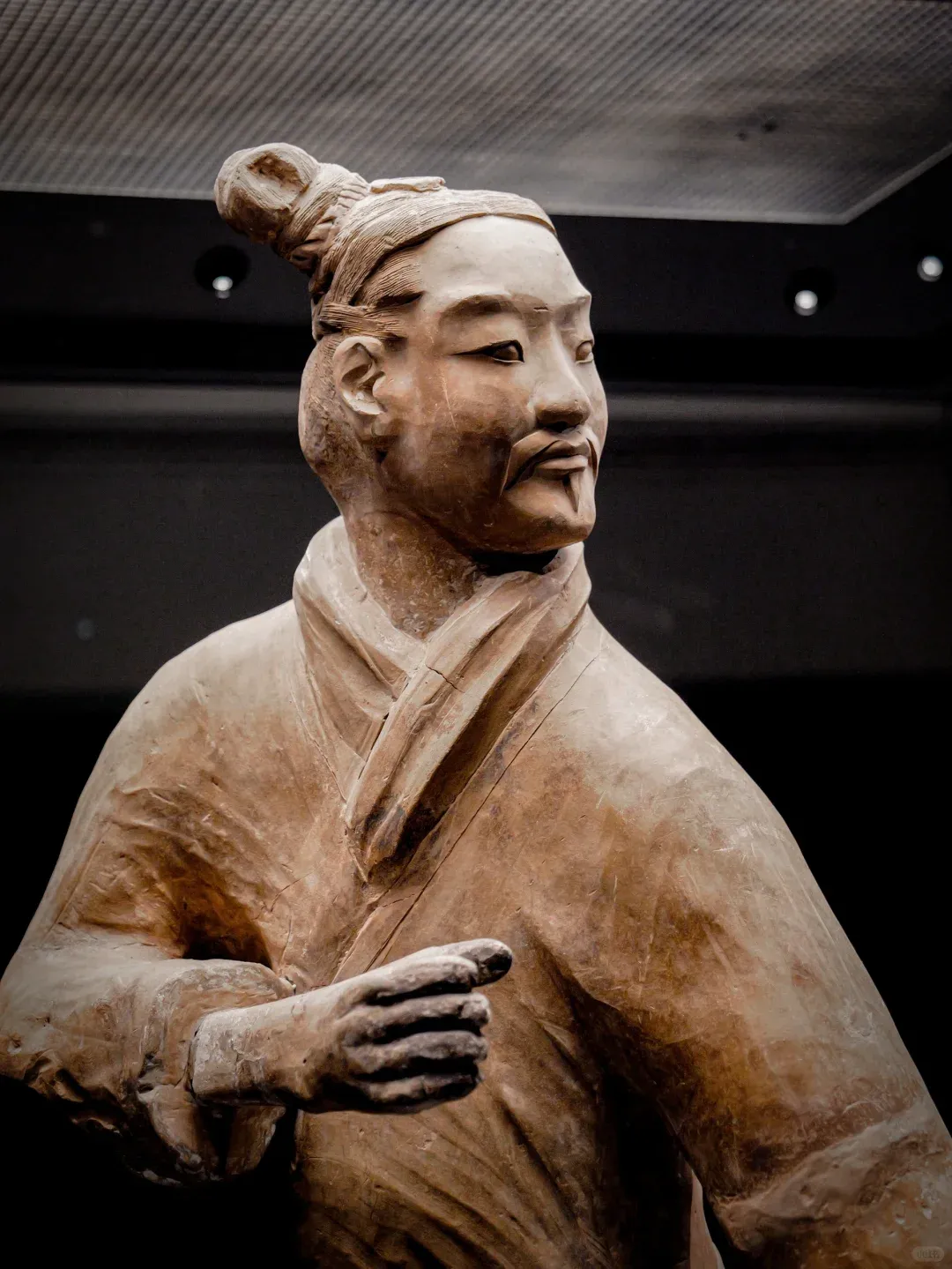
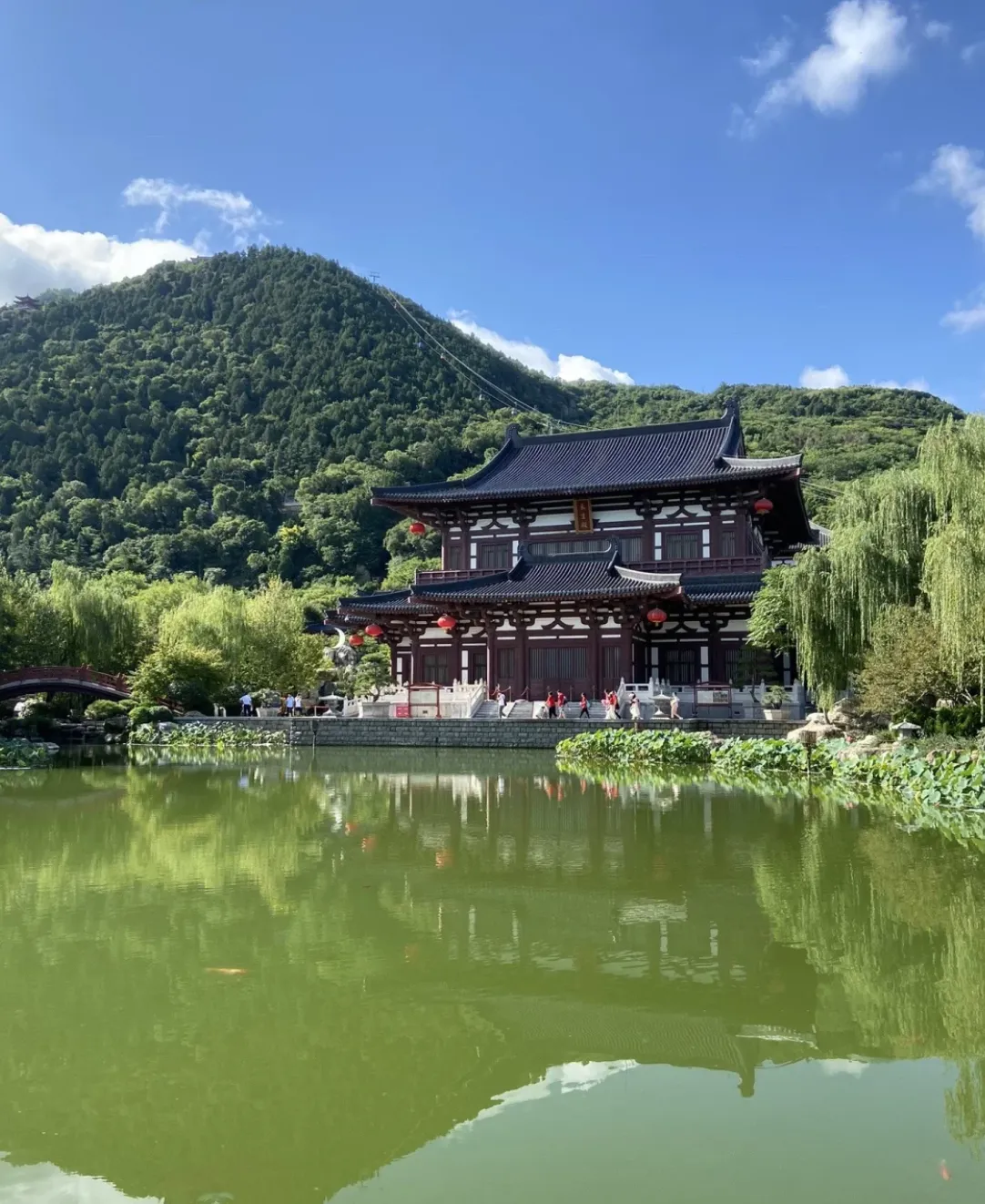
Sunday is the early day. Take metro Line 9 east, about an hour to the Huaqingchi station, and from there a short taxi to the Terracotta Army — or join the tourist coach at Xi’an Railway Station if you prefer a single seat to the gate. The ticket is about ¥120, and being at the entrance for the 08:30 opening means you see Pit 1 before the tour buses rewrite its skyline. Two and a half hours inside, then a taxi back the way you came to Huaqing Palace, the Tang hot-spring resort where the Li Mountain meets the plain. Another ¥120 or so, and it is a different mood entirely: quiet pavilions, the pools where emperors bathed, and the story of the concubine Yang Guifei hanging over everything. In the evening, the outdoor performance “Song of Everlasting Sorrow” (长恨歌) runs against the mountain backdrop — tickets from about ¥300 and worth it if your legs survived the weekend.
If the weather turns
Weekends in Xi’an are usually dry, but a wet Saturday happens. The wall in rain is miserable on a bike, so swap: do the museum and the towers in the morning, the Muslim Quarter under the covered lanes at midday, and the wall on Sunday morning before the east line. Or simply cut Huaqing Palace and give the Terracotta Army a longer, slower look — it rewards an extra hour the way few sites do.
Tips for the two-day version
- Reserve the Shaanxi History Museum before you book the flight, honestly — weekend slots go first.
- Carry passports for the terracotta entry check and for any hotel along the way.
- Ride the wall clockwise in the morning so the sun is at your back on the long straight stretches.
- Sunday night flights and trains are the busiest of the week; book the return ticket before the east line, not after.
- If your return is from the airport, remember the metro Line 14 ride is about an hour — leave the wall with time to spare, not the airport.
- The weekend is two dynasties and no more. Adding Huashan or Famen Temple turns a great two days into a tired blur; save the mountains for a longer trip.
On Sunday evening, back at the airport, I counted the receipts in my pocket: two dynasties, two thousand years, roughly ¥700 all in, and a tan from riding the wall. The flight home was short. The weekend has since become the exact plan I recommend to anyone with two days and a case of wanderlust that needs a deadline. It is tight, it is structured, and it ends exactly the way a weekend should — tired, fed, and already planning the next one.