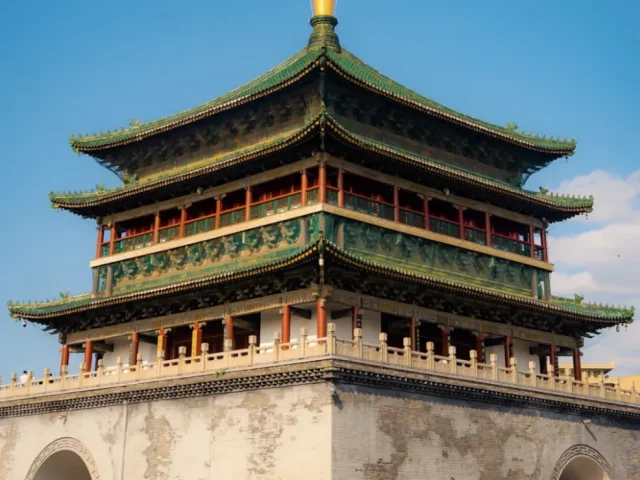
I went back to Xi’an a second time with a list, and my friend Lin, who lives there, took one look at it and laughed. Every line on it was a place she could see from her kitchen window, she said — and then she crossed out half of it and replaced it with a tour I had never seen in any guidebook. That is the thing about a fourth day in Xi’an: the first three days buy you the greatest hits, and the fourth day buys you the city itself. The warriors, the wall, the towers — they stay in the plan, of course. But the version of this itinerary that has made me look good to every visitor since is the one that knows when to step off the main road.
Four days is the sweet spot. Long enough to see the headline sights at a pace that isn’t a sprint, short enough that the city still surprises you on the last morning. Here is how I’d spend them, with the hidden-gem detours marked clearly.
Why a fourth day changes everything
With four days you can stop optimizing and start wandering. The two classic itineraries — east line on one day, downtown on another — get an extra day each to breathe, which means you can do the east line properly (warriors and the mausoleum mound), and you can give the wall a full day instead of a morning. And you get one day for the quieter south: the pagoda most visitors miss, the museum that doesn’t make the top-ten lists, and the park that locals treat as their backyard. That’s the day the trip turns from a tour into a stay.
Day 1: land, then eat where the tourists don’t
Arrive, check in, and do nothing but eat — that is the whole first evening, on purpose. Skip the main 回民街 drag at dinner and head for 洒金桥, the lane the taxi drivers will know even if the guidebooks don’t. It is a working street: butcher shops closing up, old men playing cards under the trees, and food stalls that answer to no one. Try the roujiamo from the window with the longest line — in this neighborhood, the line is the review — and finish with a bowl of liangpi, cold noodles with vinegar and chili, about ¥15. By the time you walk out onto the bright lights of the Bell Tower roundabout, you will feel like you already have a secret.
Day 2: the east line, done properly
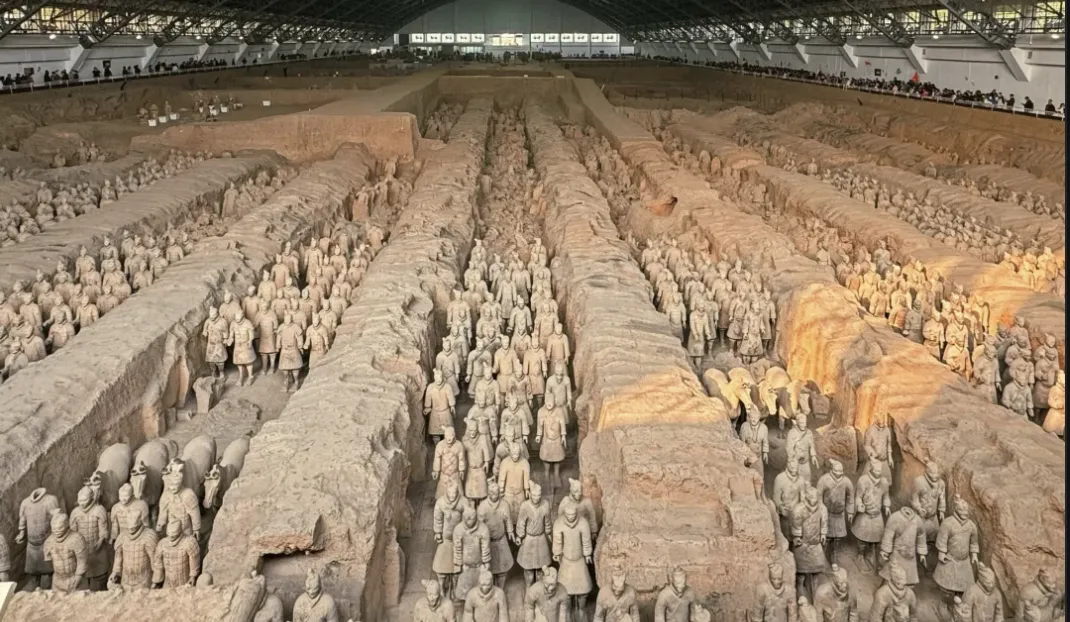
This is where the fourth day earns its keep, because you are going to do the Qin day the slow way. Metro Line 9 east, a taxi to the gate, and the Terracotta Army at the 08:30 opening — about ¥120, e-ticket in advance, passport in hand. The crowds build fast, but here is the move: after Pit 1, take the free shuttle to the mausoleum mound of Qin Shi Huang himself. The actual tomb has never been excavated — out of caution, and because no one is sure what traps and tunnels lie under it — so what you get is a wide green hill, a path, and a silence that sits on you like the gravity of history. Most one-day visitors never make it out here. Stand at the foot of that mound, and you will understand why the museum people tell you not to rush.
Back in the city by late afternoon. If your legs agree, the evening is a low-key Muslim Quarter crawl; if they don’t, order room service and call it a night. The east line is the one day in Xi’an that should never be followed by plans.
Day 3: the wall, the Stele Forest, and the scholars’ quarter
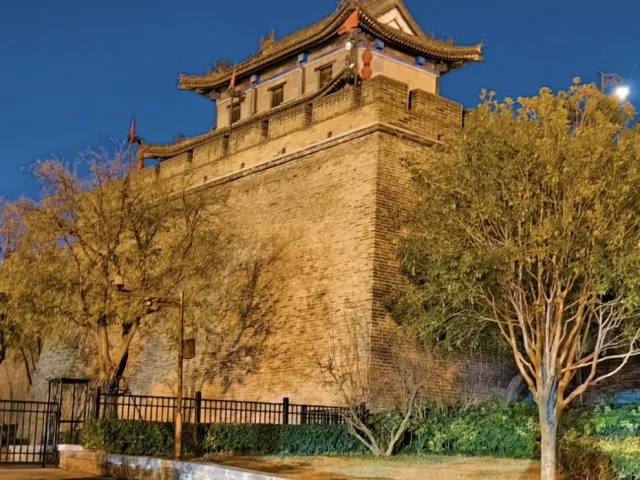
Give the wall the whole morning. Rent a bike at Yongning Gate — about ¥54 entrance, ¥45 for the bike — and ride the full 13.7-kilometer loop at a pace that lets you stop at every gate: Changlemen to the east, Anyuanmen to the north, Andingmen to the west, and back to the South Gate. From the wall, drop down into 书院门, the street of calligraphy brushes, ink stones, and paper that runs off the South Gate’s east side — a scholars’ quarter that has been selling writing tools for centuries, and still feels like it.
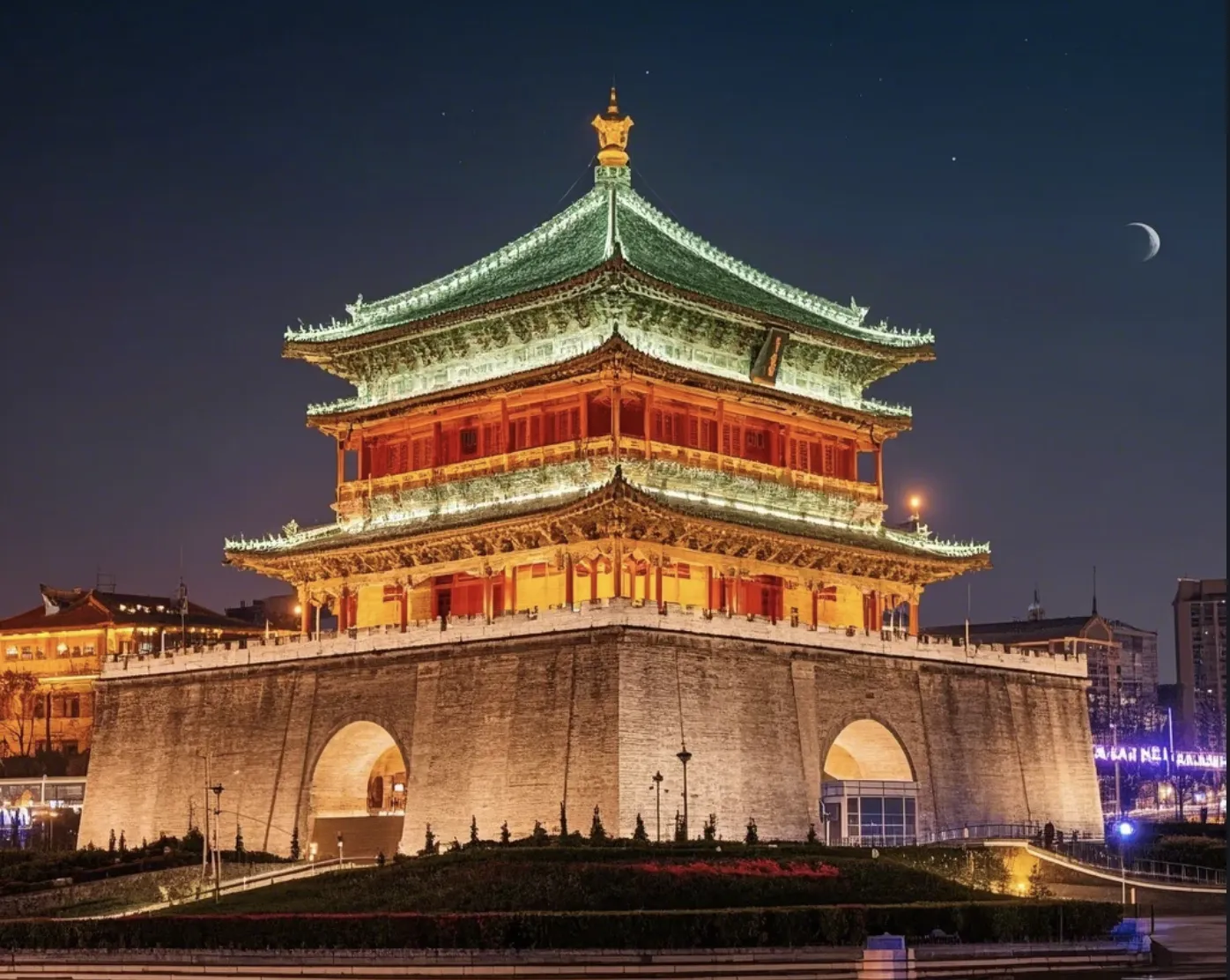
The afternoon belongs to the Beilin Museum, the Stele Forest, tucked behind the south wall — about ¥60, and the most underrated museum in the city. It is a courtyard of stone tablets: Confucian classics, calligraphy carved into monuments, a forest of text that predates printing. Even if you read no Chinese, the sheer weight of it — history written in stone, literally — lands harder than any display case. End the day back on the wall for the sunset, because the light over the old rooftops at 19:00 is the best photograph you will take in Xi’an, and it costs nothing.
Day 4: Qujiang and the quiet pagoda
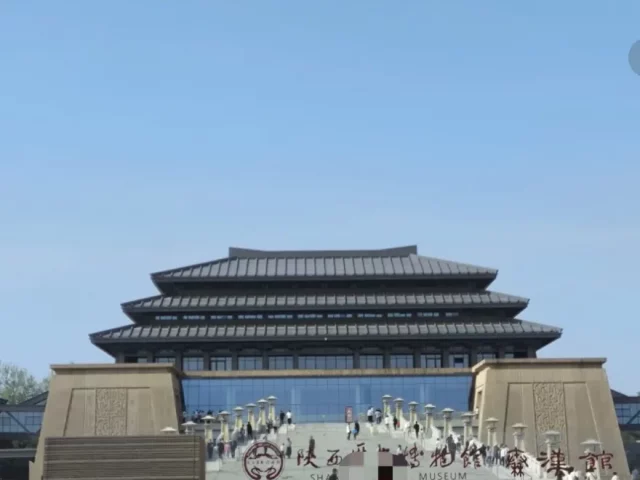
The last day goes to the south side, but not the crowded version of it. Start at the Small Wild Goose Pagoda and the Xi’an Museum around it — the pagoda most visitors skip, because it sits behind the Big one. The complex is free with an advance reservation (closed Tuesdays), and where the Big Wild Goose Pagoda is a monument, this one is a place: brick, slender, a thousand years old, with a bell that you can strike once for a small fee. The museum’s collection tells Xi’an’s story without the queues of its big sister.
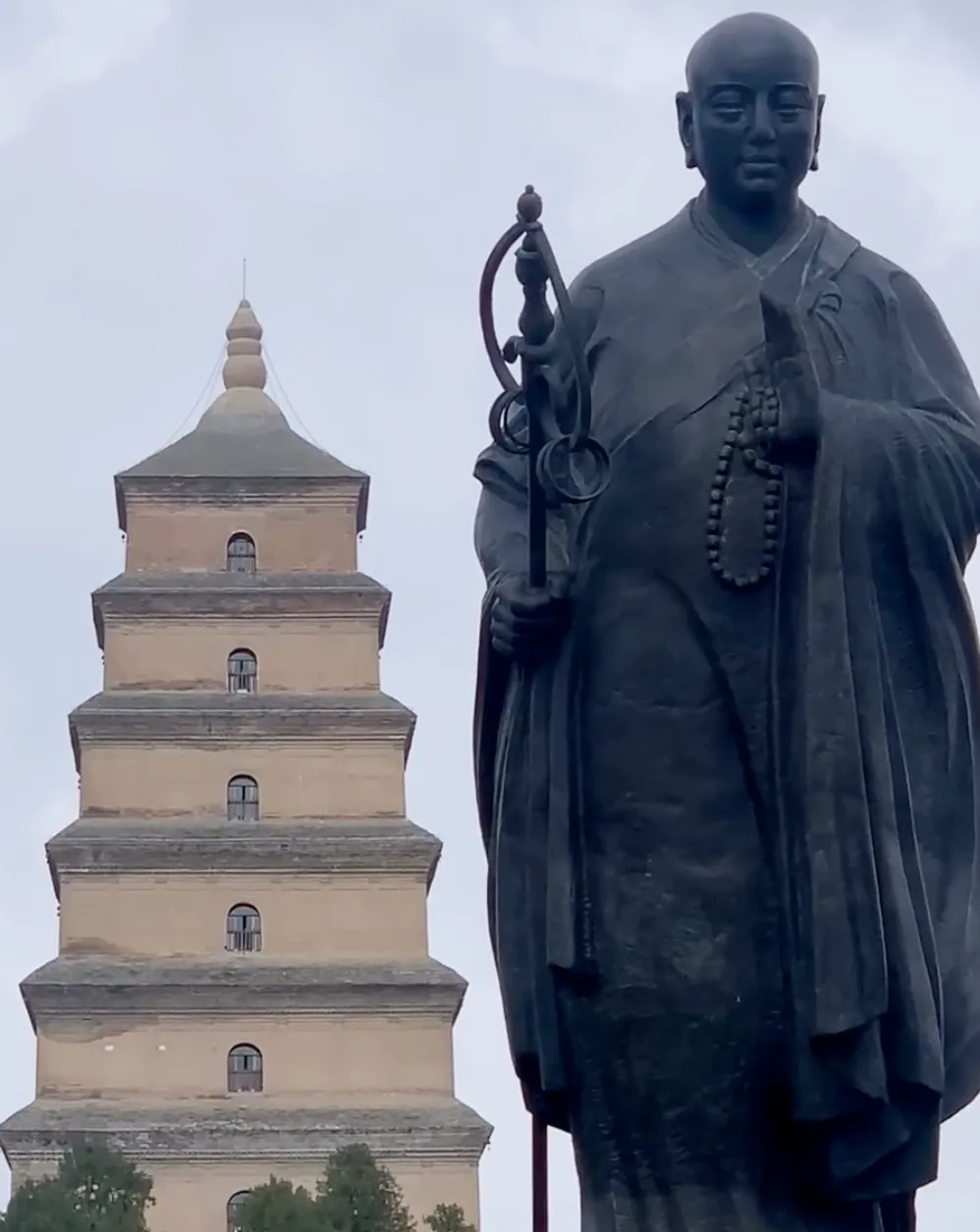
Midday, move toward Qujiang proper. If you have not had enough pagoda, the Big Wild Goose Pagoda’s temple grounds are a short metro ride away; if you have, wander the Qujiang New District, the landscaped lake and parkland that the Tang city’s wealthy once called home. As the sun goes down, consider Tang Paradise, the full-scale Tang garden complex on the lake — about ¥120, with a large evening show, and the single most theatrical sunset in the city. Or skip it, take a seat at a lakeside tea house, and watch Datang Everbright City light up from a distance. Both are right. The fourth day is the one where you are allowed to choose.

Where to stay for four nights
For four days, the hotel location matters more than the hotel. The South Gate (Yongning Gate) area is my pick: the wall out your window, the metro at your feet, and the Muslim Quarter a fifteen-minute walk north. The Bell Tower area is more central and more touristy — great if you want everything a door-step away. Qujiang is the calm, leafy option for the last nights, at the cost of being farther from the east-line departure. Mid-range hotels run roughly ¥400–600 a night in 2026, more for a view of the wall.
Tips for the four-day version
- Book the Xi’an Museum reservation for day 4 early — free slots fill, and it closes Tuesdays.
- Do the mausoleum mound before the museum fatigue sets in; it is quiet, but it is also a mile of walking in the open.
- Carry cash as well as Alipay — the 洒金桥 stalls and the pagoda bell-keeper are the two places it still matters.
- Keep day 2 empty of evening plans. The Qin day is the long one; the rest of the trip is better for it.
- Take the wall ride clockwise in the morning and counter-clockwise at sunset; the light is the whole difference.
- Skip nothing on the list above, but treat day 4 as permission to wander. The best hours in Xi’an are the unplanned ones.
On that second trip, I ended the fourth day exactly where Lin had predicted I would: on a bench by the lake in Qujiang, watching the lanterns come on across the water. I had seen the army, the wall, the stone forest of the Beilin, and a pagoda most people never reach, and none of it felt rushed. Four days is not the shortest way to see Xi’an, and it is not the longest. It is simply the amount of time the city needs to stop being a checklist and start being a place you live in for a little while.