When my mother told me she was finally coming to China, I did what any sensible person does in that situation: I stopped her from booking two weeks and gave her four days. Then I sat down and built the route I’d have wanted on my own first trip — the one that assumes you know nothing about Xi’an, that doesn’t require a tour guide, and that still lets you say you saw the city.
The result became this plan. It’s the route I’ve now walked with three different first-timers, and it’s survived every test: jet lag, a heatwave, a closed museum, one very confused taxi driver. The shape is simple — a three-day loop built around the four anchors of Xi’an: the City Wall, the Terracotta Army, the pagoda district, and the Muslim Quarter. Nothing is more than a metro ride from anything else.
What the Classic Route Is (and Isn’t)
This is a first-timer’s route, which means it deliberately leaves things out. No Huashan — save the mountain for a second trip or an extra day. No Famen Temple, no Beilin, no day trips. What it does instead is stack the five things every first visit needs, in an order that minimizes backtracking and crowds: the old city center, the east line, and the Tang-era south. Three days, three zones, zero wasted mornings.
The Loop in Three Days
Day One: The Center
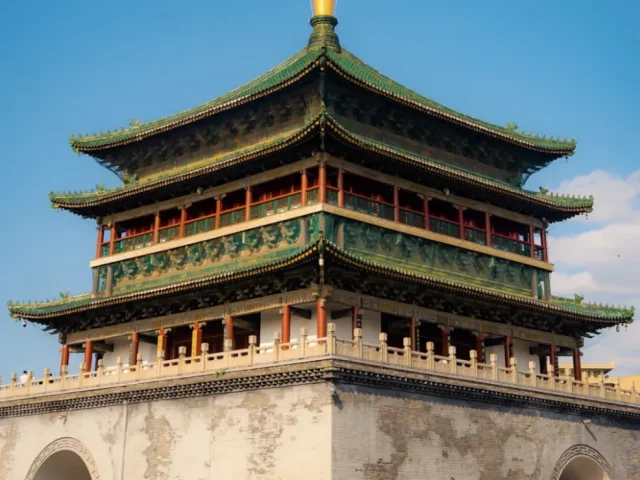
Start where the map starts, at the Bell Tower. It’s about ¥35 to go up, the Drum Tower next door is the same, and the combined ticket is about ¥50 — worth it once, mostly for the view down the four avenues that radiate from the center of the old city. Eat lunch behind the Drum Tower in the Muslim Quarter; the main drag of Beiyuanmen is fine, but one block over on Dapiyuan the same lamb paomo is quieter and cheaper, about ¥30–35.
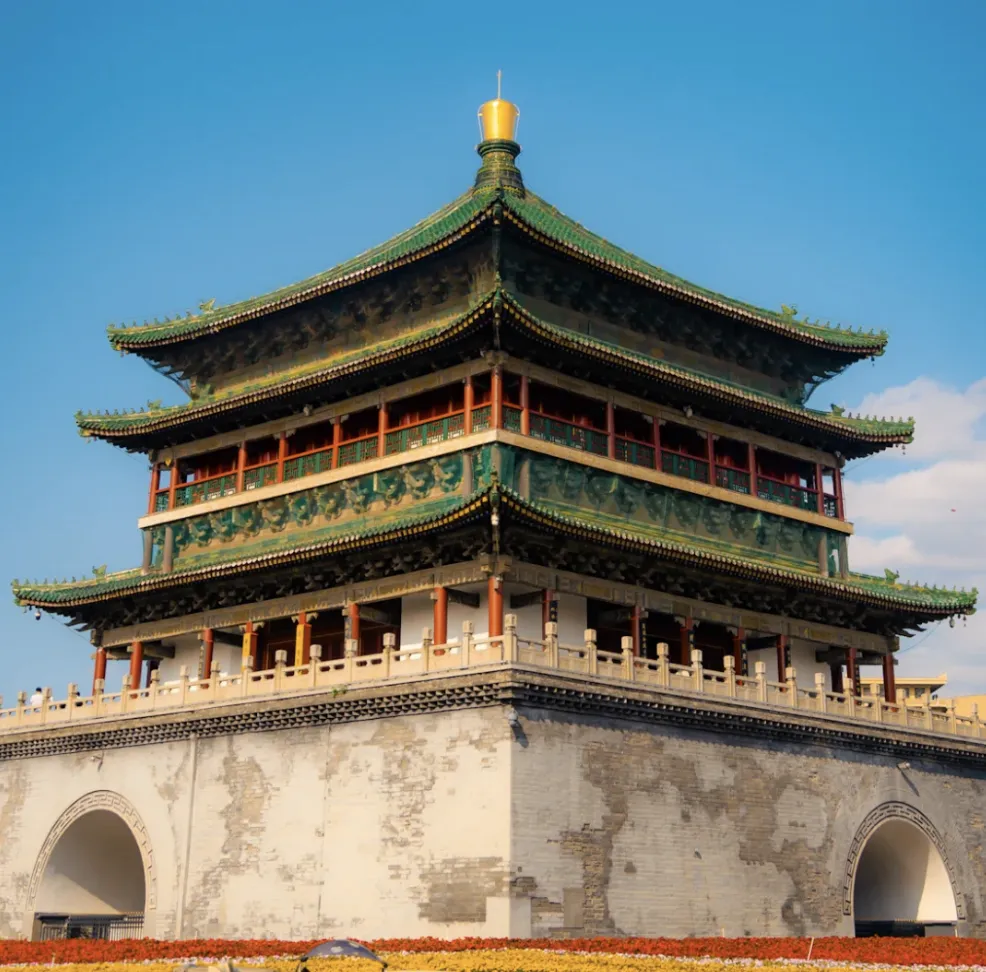
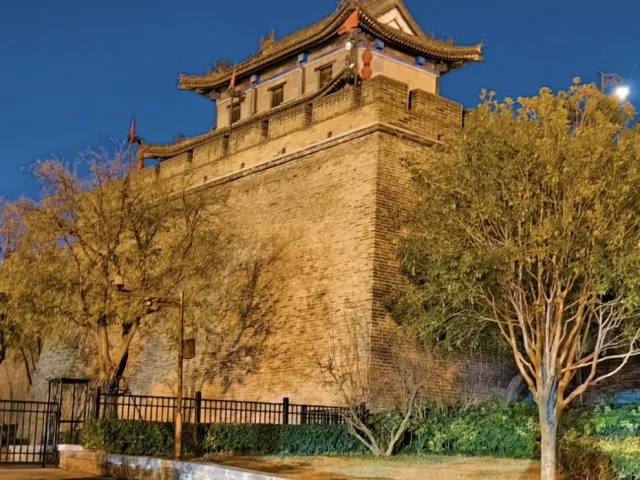
Spend the late afternoon on the City Wall. Entry is about ¥54 at Yongning Gate, the South Gate; rent a bike for about ¥45 and do a full loop — 13.7 kilometers, about 90 minutes if you stop for photos, which you will. Stay up there for sunset. It is, with no competition, the best hour of the whole trip.
Day Two: The East Line
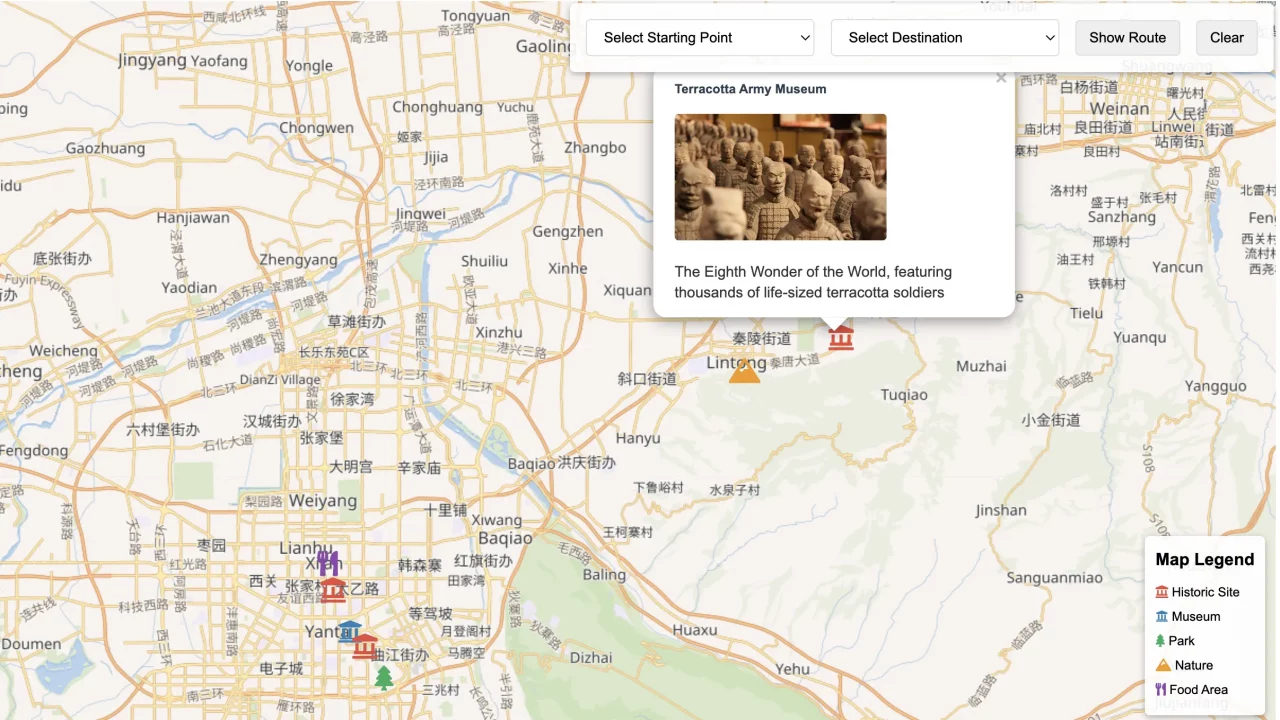
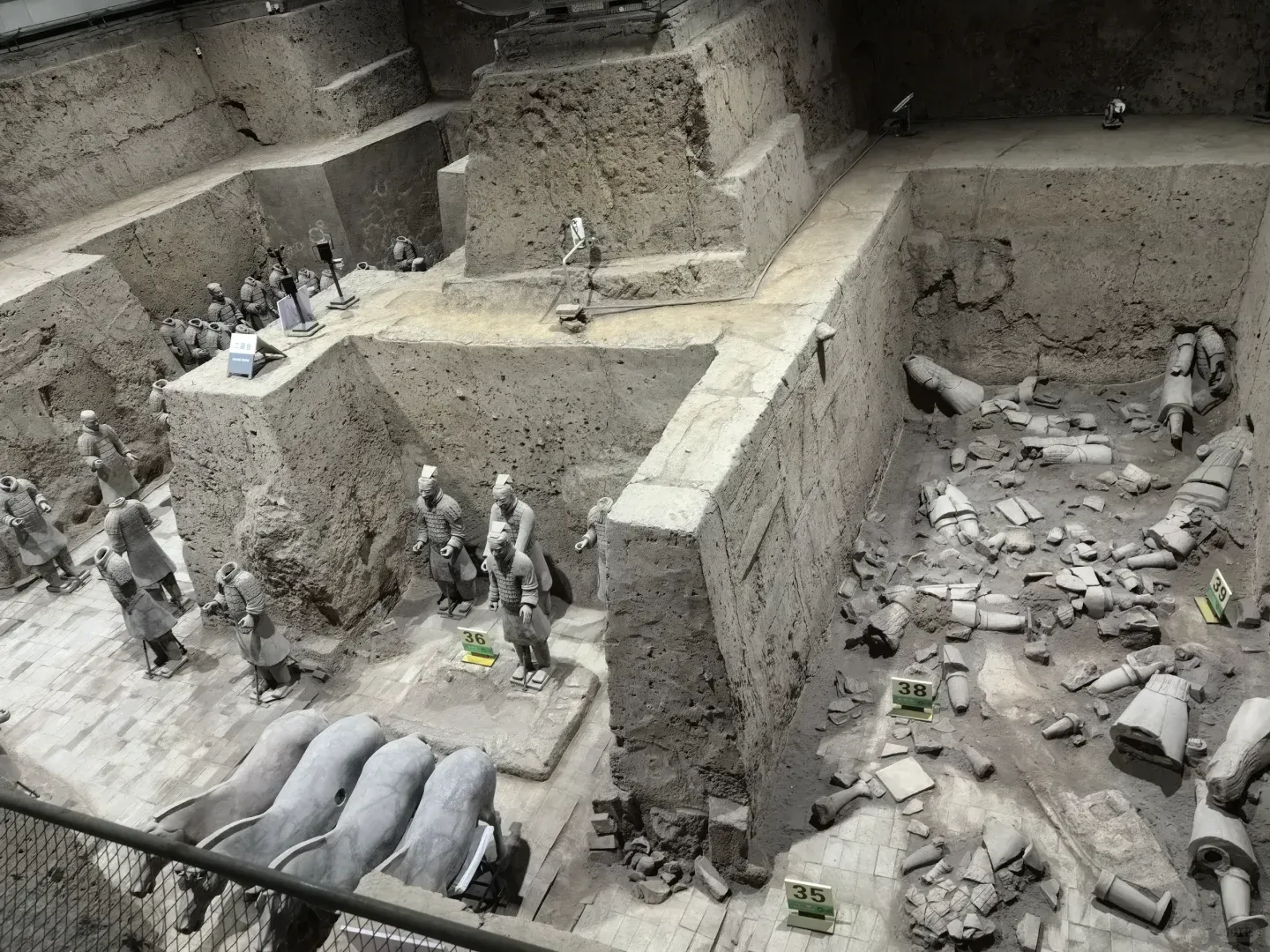
This is the day you came for. Two ways to get out there: the tourist bus 306 from outside Xi’an Railway Station, about ¥10, or Metro Line 9 to Huaqingchi and a short hop from there. The Terracotta Army costs about ¥120, opens at 08:30, and deserves three hours — Pit 1 first while the light is good, then Pits 2 and 3, then the mausoleum mound, which is included and always nearly empty.
Huaqing Palace, about ¥120, sits one stop back toward the city and is a natural afternoon — hot springs, Tang pavilions, Lishan behind it. If you’re flagging, skip the palace and nap on the train home; the next day starts early too.
Day Three: The Pagoda District
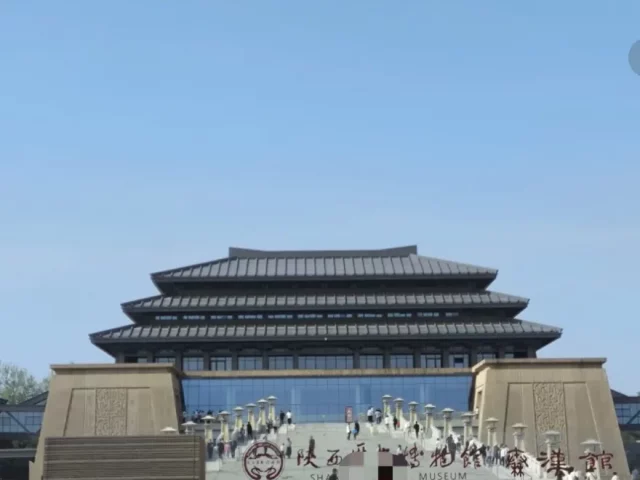
Reserve the Shaanxi History Museum for the morning — free basic galleries, but the reservation is the hard part, and you’ll need your passport at the door. It sits at Xiaozhai on Line 2/3, a short walk north of the station. Give it two hours, then head to the Big Wild Goose Pagoda: about ¥50 for the Daci’en Temple grounds, about ¥30 more to climb the pagoda. Climb it. The view over the old city is the payoff.
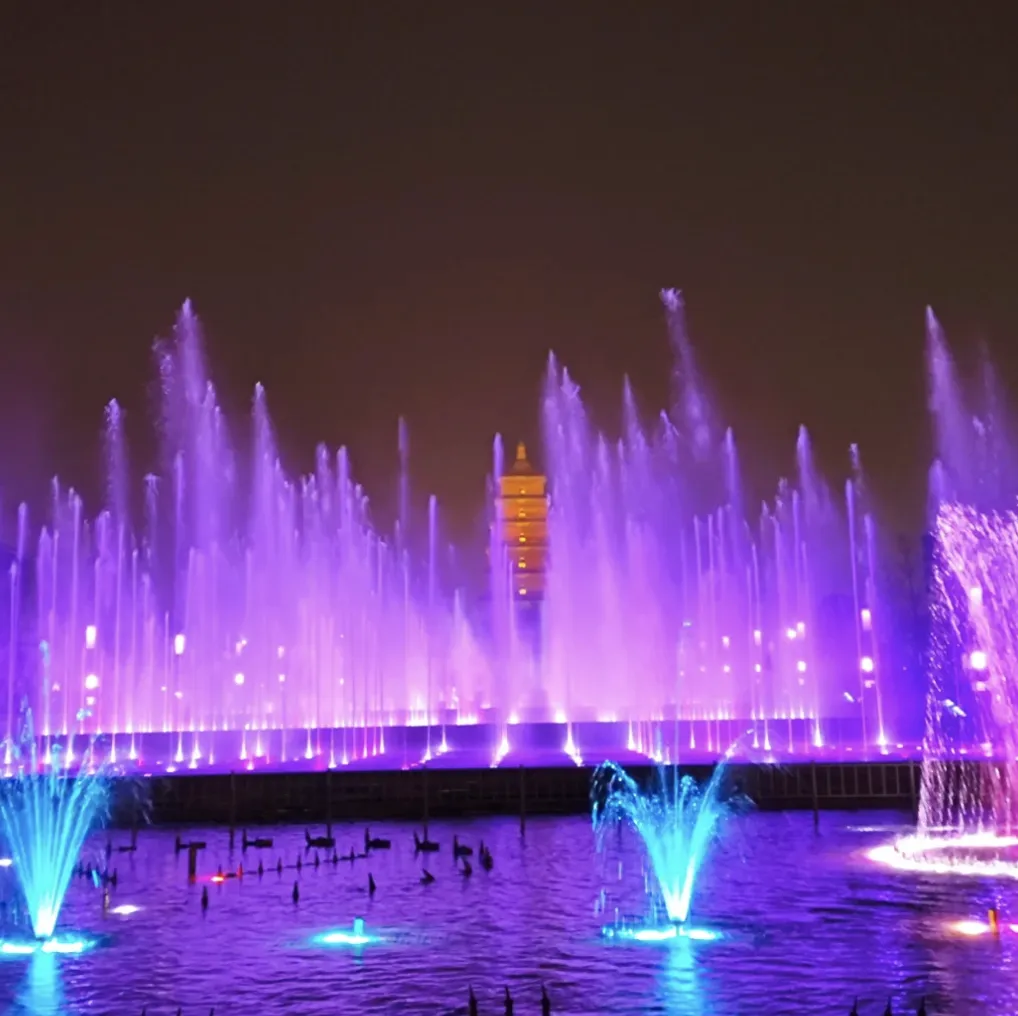
End the trip the way the route intends: Datang Everbright City after dark. It’s free, it’s a fifteen-minute walk south of the pagoda, and the crowds in Tang costume, the fountain shows, and the food stalls turn the street into a stage. Get there around 19:00 and let it run late.
When to Run It
March to May and September to November are the months — the wall and the east line are both brutal in July, and the museum queues shrink once the school groups go home. Avoid the first week of October (National Day) and the Lunar New Year week if you can; both are the year’s peak, and the Terracotta Army becomes a contact sport. If you’re coming in high summer, flip the days: museum in the morning, wall after 18:00.
Getting Around the Loop
This route is built on the metro. Line 2 is the north-south spine under the Bell Tower; Line 4 runs east of it down to Tang Paradise and Qujiang; Line 3 crosses at Xiaozhai and Dayanta for the pagoda district; Line 6 cuts east-west through the center; Line 9 handles the east line. Fares run about ¥2–8. Taxis are cheap by western standards, but during rush hour the metro is faster and the walk to the platform is shorter than the wait for a cab.
What It Costs
- Bell Tower and Drum Tower: about ¥50 combined
- City Wall: about ¥54, plus about ¥45 for a bike
- Terracotta Army: about ¥120 (mausoleum included)
- Huaqing Palace: about ¥120
- Shaanxi History Museum: free basic galleries with reservation
- Big Wild Goose Pagoda: about ¥50, plus about ¥30 to climb
- Datang Everbright City: free
- Food: figure about ¥100–150 a day if you eat well and often
Total: roughly ¥700–800 per person, not counting the hotel and the flights. For the price of a single day at most theme parks, you’ve done the whole classic Xi’an.
Booking the Essentials
Two bookings matter, and both go through official channels with your passport number. The Terracotta Army opens tickets online about a week ahead, on the official site and its WeChat mini-program — book it the minute your dates are fixed, because weekends go first. The Shaanxi History Museum releases reservations in batches and they disappear fast; there’s no walk-in lane. The wall, the pagodas, and the towers you can buy at the gate, but they all want the passport too, so keep it in your day bag.
Tips
- Do the east line early and the wall late. Both are better that way, and neither is negotiable.
- At the Terracotta Army, walk past the first hundred meters of Pit 1 — the back corners have the space and the silence.
- Paomo is a process, not a dish: tear the bread, hand it back, wait. It’s worth the wait.
- Bring one jacket even in spring; the wall is exposed and the evening wind finds you.
- If the museum reservation fails, don’t panic — the Beilin and the Xi’an Museum are both walkable fallbacks with real content.
- WeChat Pay and Alipay are everywhere; cards are not. Set one of them up before you land.
My mother finished Day Three at Datang Everbright City, standing under the giant pagoda-shaped lanterns, and she turned to me with the look people get when a place exceeds the brochure. Four days earlier she’d asked me what was worth seeing in Xi’an. By then she knew the answer without asking, which is the best thing I can say about this route.