My best trip to Xi’an was the one where I planned almost nothing for the last day. The first three were the usual business — the army, the wall, the pagodas — and I kept Thursday empty on purpose, because every guidebook I had read warned me to slow down and every trip I had ever taken proved them right. I woke up late, ate a breakfast of oil-slicked flatbread and a boiled egg in a shop off Beiyuanmen, and spent the morning drifting. That unplanned day became the favorite of the whole trip. This is the four-day version, built around that discovery: the classics, done comfortably, with room left over for the city to surprise you.
Four days is the point where Xi’an stops being a sprint and becomes a proper visit. You see everything a shorter trip would, but you also get evenings, a lie-in, and a day trip west to Famen Temple. Nothing needs to be rushed, and nothing needs to be sacrificed.
Day One: Arrival and the Drum Tower Quarter
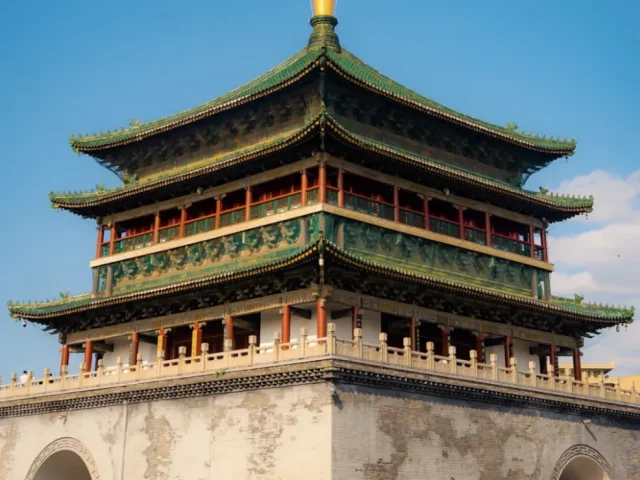
Land in the afternoon, drop the bags at a hotel near the Bell Tower or the South Gate, and let the first evening be soft. Walk to the Drum Tower around dusk, when the square fills with kite sellers and the tower lights switch on, then let dinner be the Muslim Quarter — entering from the Drum Tower side, past the tourists, onto Dapiyuan for a bowl of yangroupaomo. The first night is not for ticking boxes; it is for the city’s smell of cumin and charcoal to get into your clothes.
Day Two: The Terracotta Army and Huaqing Palace
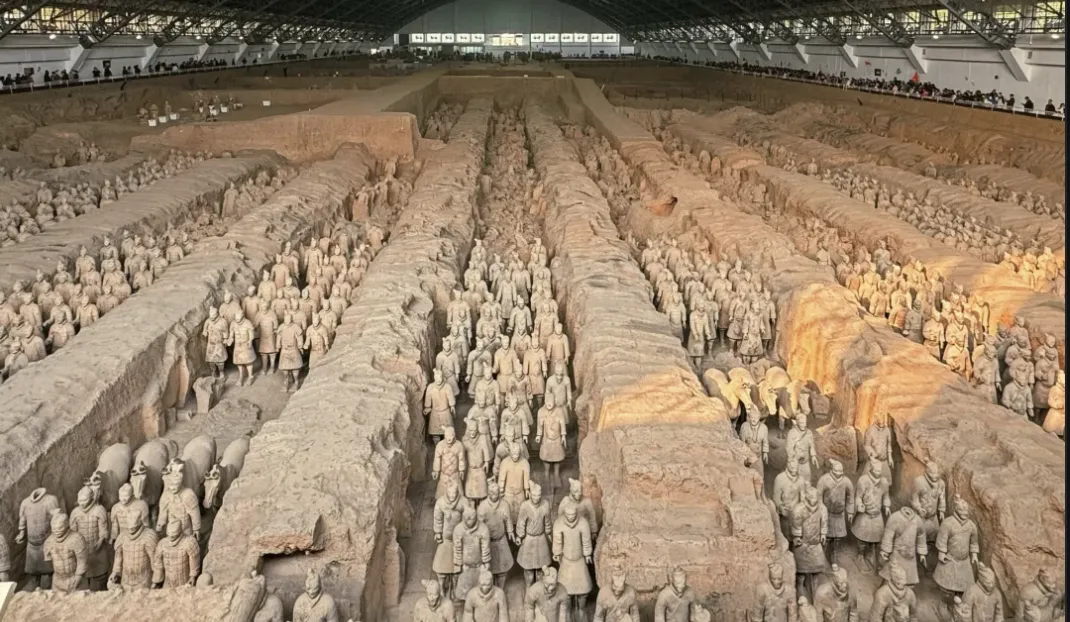
The big day, and the reason most people come. Take the metro — Line 1 or 6 east to Fangzhicheng, transfer to Line 9, ride to Huaqingchi — and reach the gate for the 08:30 opening. Tickets are about ¥120, and the first hour in Pit 1, before the tour buses arrive, is the hour you will remember: thousands of warriors standing in formation, each face different, each one built to serve an emperor for eternity. The exhibition halls with the kneeling archers and the general are worth as much time as the pits themselves.
In the afternoon, let Huaqing Palace be the comedown. It is about ¥120 more, a twenty-minute taxi from the army, and a completely different register: Tang dynasty bathing pools, gardens running up the base of Lishan Mountain, the love story of Emperor Xuanzong and Yang Guifei. Two hours here and you have seen the two sides of Shaanxi — the imperial project and the imperial pleasure. Dinner back in the city, and an early night; the next day is a museum day, and museums need rested legs.
Day Three: Museums, Qujiang, and the Tang City
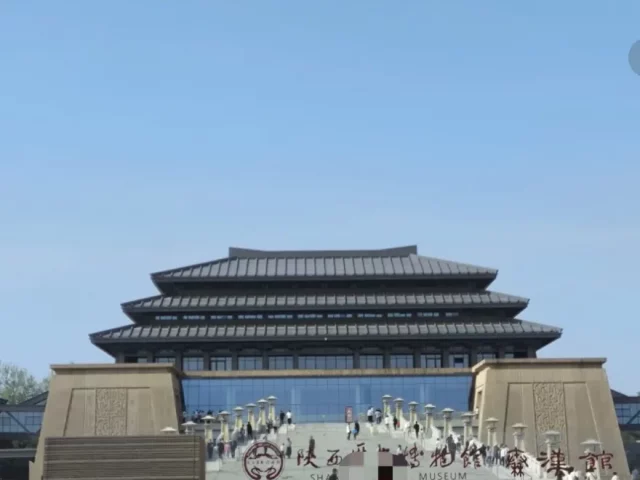
Morning: The Shaanxi History Museum
Reserve a morning slot at the Shaanxi History Museum three or four days ahead — the main galleries are free and the demand is enormous — and give it a full two hours. The Tang dynasty hall alone justifies the trip: the gilded silver ewer with the dancing horse, the three-color glazed camels, the court life in miniature. If no free slot appears, the paid special exhibitions, about ¥30, are a reliable backup.
Afternoon: The Big Wild Goose Pagoda
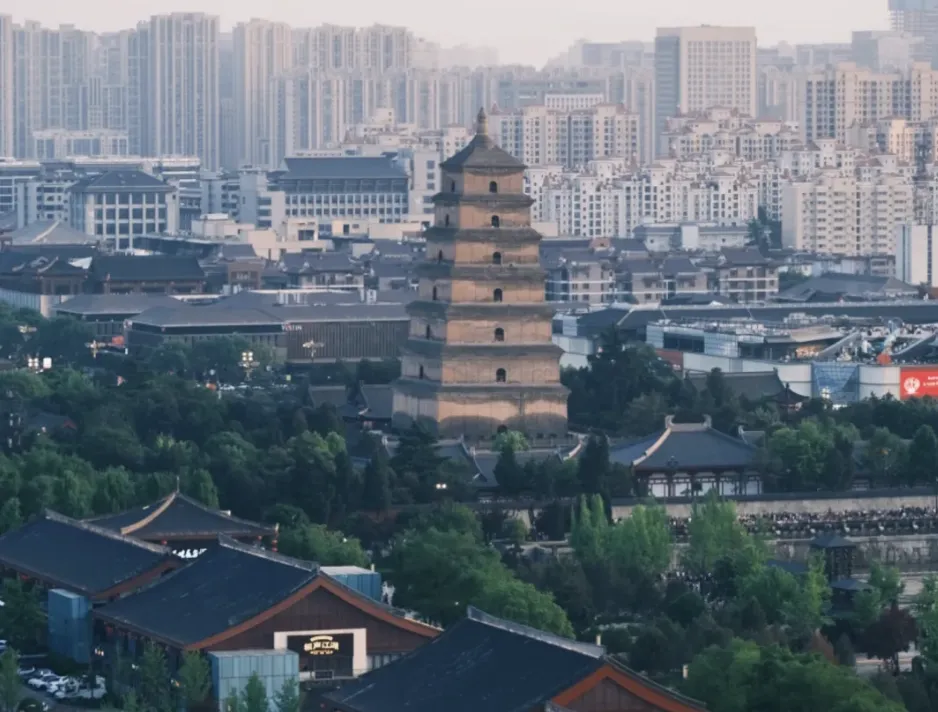
From the museum it is a short metro hop on Line 3 to Dayanta, and the afternoon belongs to Da Ci’en Temple and the Big Wild Goose Pagoda — about ¥50 for the temple, about ¥30 to climb. The stairs are steep and the top is crowded, but the view across Qujiang is the best in the district, and the temple garden below is the most peaceful corner of this part of the city. If the museum ran long, skip the climb and keep the courtyard; the pagoda photographs just as well from below.
Evening: The Golden Street
Let the evening be the street outside the pagoda. Datang Everbright City, the pedestrian boulevard dressed as a Tang dynasty market street, lights up around 19:30 and runs until about 23:00 — free, golden, and crowded in the best way. The performers work the crowd all night, the fountain square puts on its big show around 21:00, and you can end the night with a bowl of liangpi at one of the food corners. This is the night the trip photographs itself.
Day Four: Famen Temple, or the Wall at Night
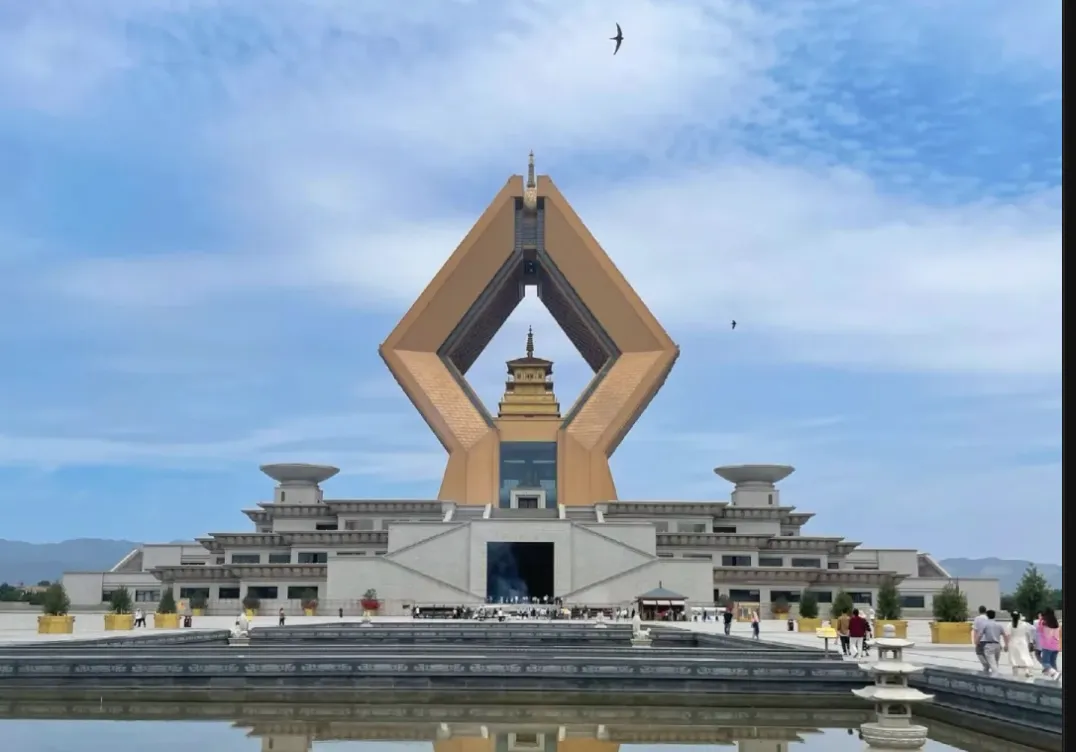
Now the day I saved for nothing. If you have the energy, take the day trip west to Famen Temple — about two hours each way, entry about ¥100 — where a Tang dynasty underground palace was found in 1987 holding a finger bone relic of the Buddha and a hoard of gold that made the archaeologists’ hands shake. The treasure museum is the real attraction; the modern temple hall is for pilgrims. It is a long day and worth it, but only if you genuinely have the energy.
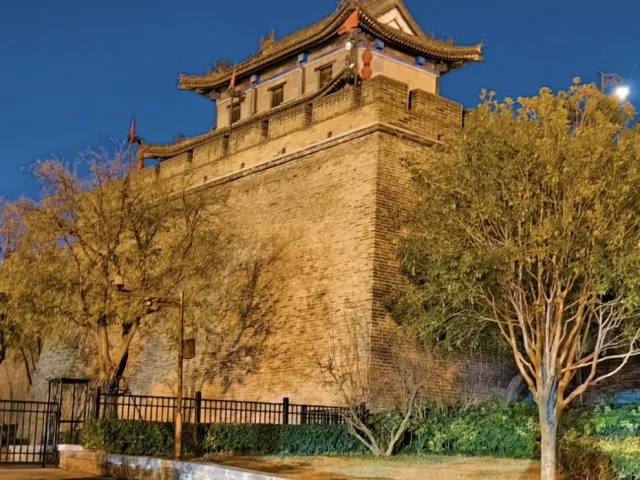
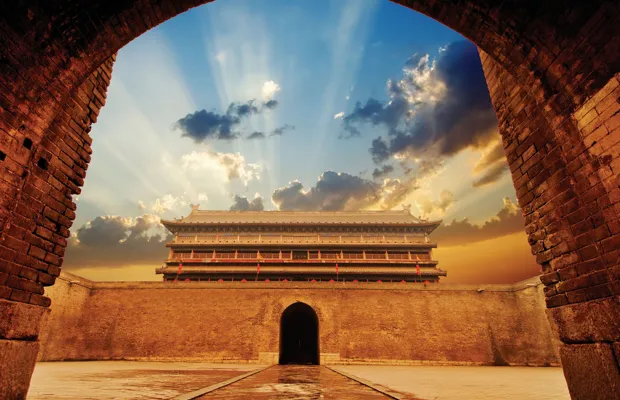
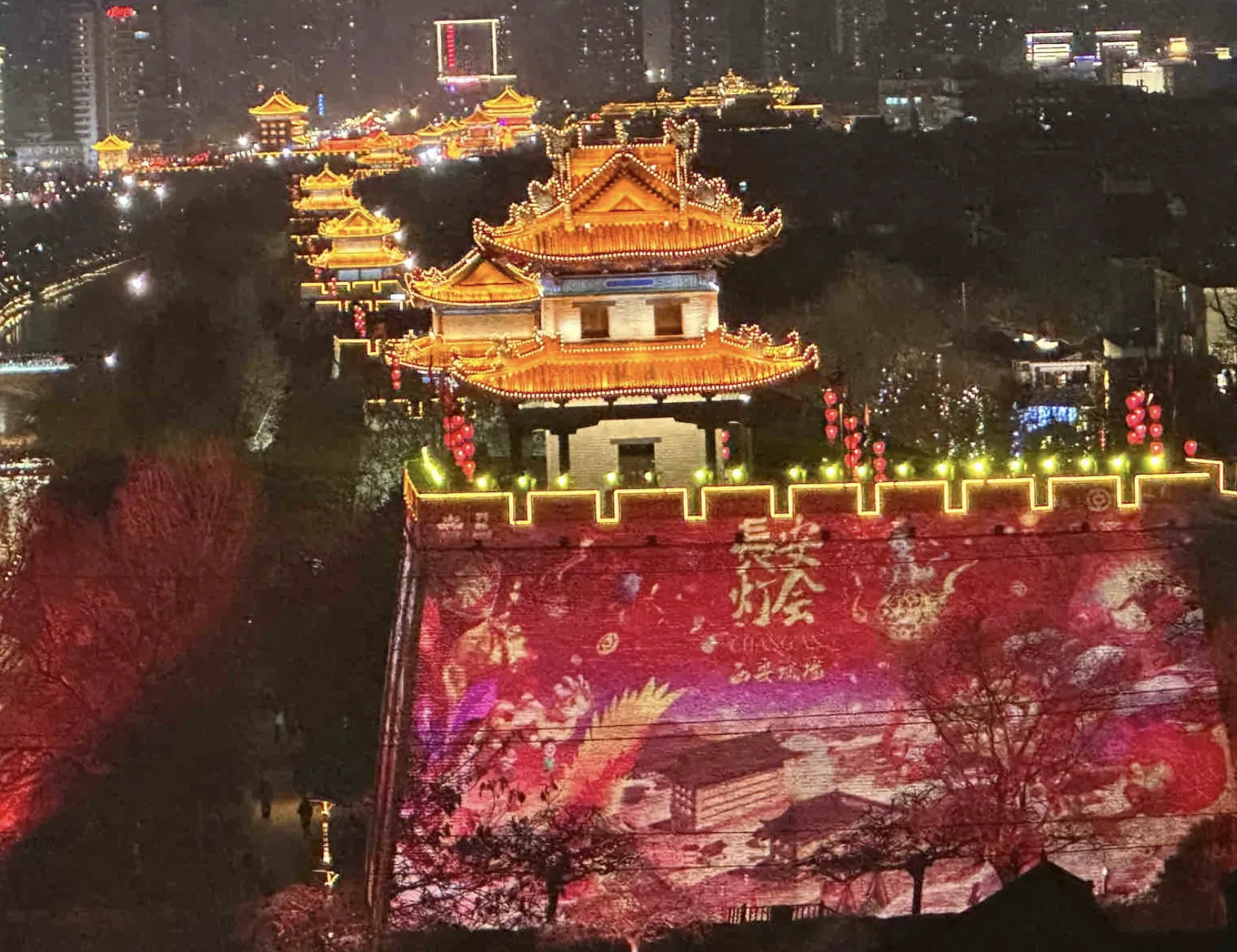
The quieter option is the one I took: a late breakfast, a wander through the lanes north of the Drum Tower, and the City Wall at night. The wall keeps different hours after dark — about ¥54 entry, and the ramparts are lit with lanterns along the south section. Walking the wall under the lights, with the city humming below, was the single calmest hour of my four days. If you can only choose one, choose this.
Practical Details
- Terracotta Army: about ¥120; open 08:30–17:30; metro Line 9 to Huaqingchi.
- Huaqing Palace: about ¥120; open 08:00–18:00.
- Shaanxi History Museum: free main halls with reservation; special exhibitions about ¥30; closed Mondays.
- Big Wild Goose Pagoda: temple about ¥50, climb about ¥30; open 08:00–17:30.
- Datang Everbright City: free; lights from about 19:30 until 23:00.
- Famen Temple: about ¥100; about two hours west by coach or taxi.
- City Wall: about ¥54; open 08:00–22:00, night lights on the south section.
Tips for a Comfortable Four Days
- Book everything you can the night before — Terracotta tickets, the museum slot, the airport transfer. A comfortable trip is a prepared trip.
- Split the heavy days: metro-and-hiking on day two, museum-and-strolling on day three. Your feet will thank you.
- Keep one meal entirely unplanned. Xi’an’s best food is found by walking into the shop with the longest local queue, and no app can predict that.
- Take the night wall walk at least once, even if you did the day loop. It is a different city up there.
- If you fly out on day five, keep day four small; a 22:00 Datang Everbright City followed by a 07:00 airport bus is the classic beginner’s mistake.
The Empty Day
I never did make it to Famen Temple that trip — the lie-in won, and I have no regrets. What I remember instead is the wall at night, and the breakfast shop where the owner’s grandmother, seeing me point at the menu in confusion, walked me to the next stall and ordered for me. Four days in Xi’an is long enough for the city to stop being a list of sights and start being a place. Save one day for that, and the other three will mean more than they otherwise would.