It rained for the first time in two weeks the day I finally got into the Shaanxi History Museum. My Terracotta Army plan had dissolved in the drizzle, and the museum was the backup I had been putting off — too obvious, too popular, too much like homework. I stood in the ticket queue at 08:45 with wet shoes, ready to be underwhelmed. Three hours later they had to ask me to leave, and I spent the walk back to Xiaozhai mentally rebooking my whole itinerary around museums, temples, and pagodas. This is that rebooking.
The cultural side of Xi’an doesn’t compete with the imperial sights — it outlasts them. The Terracotta Army is a single tomb’s guard. The city’s museums hold thirteen dynasties’ worth of leftovers. If you have two days and an appetite for the long view, this route strings together the four places that made me understand why Xi’an still calls itself the ancient capital.
Why Two Days in the Museum Quarter
Everything on this route sits inside a rough triangle in the south of the city, and the metro ties it together: Line 2 for the museum district, Lines 3 and 4 for the pagodas. That means no early bus, no tour coach, and a pace where you can actually stop reading labels. Two days is enough for the headline acts without the rush that ruins most first visits.
Day One — Shaanxi History Museum, the Big Wild Goose Pagoda, and Datang Everbright City
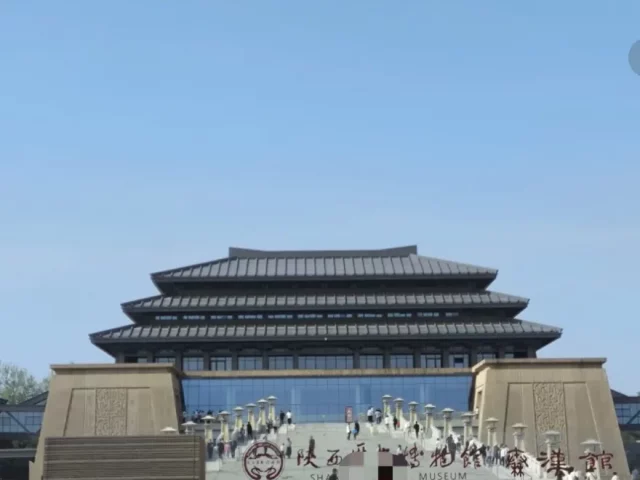
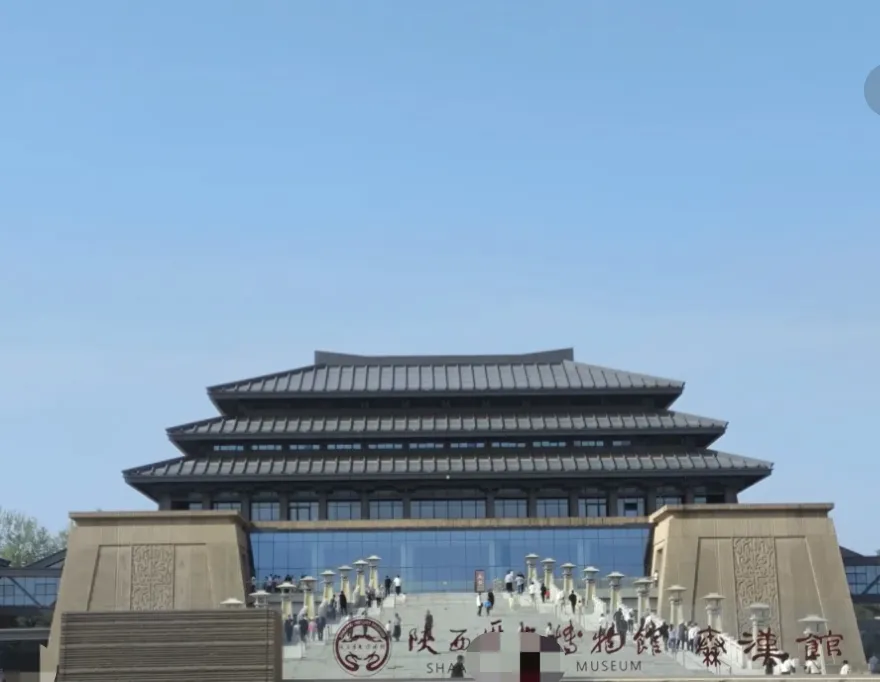
Morning: Shaanxi History Museum
Book before you leave home. The main galleries are free, but entry runs through the museum’s official WeChat account, which opens reservations about a week ahead, and the weekday slots vanish by the weekend. Closed Mondays. With a booking, line up at the south gate before 09:00 and you’ll have the Tang galleries almost to yourself for the first hour.
Give it two and a half hours minimum. The chronology runs from stone tools to the Qing, but the Tang rooms are the reason the queue exists: the silver sachet inlaid with grapes and birds, the gold and jade belt fittings, the mural panels taken from the tomb of a Tang prince. If the main halls feel like a marathon, pay about ¥30 for the Tang Treasures gallery, which is the greatest hits in one climate-controlled room.
Afternoon: Daci’en Temple and the Big Wild Goose Pagoda
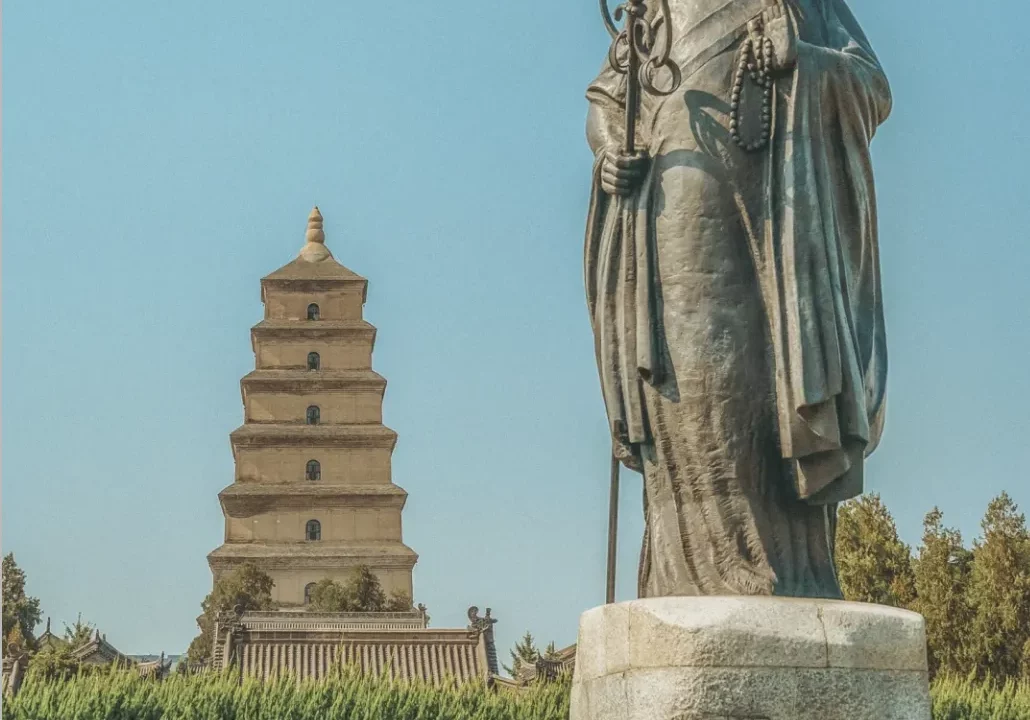
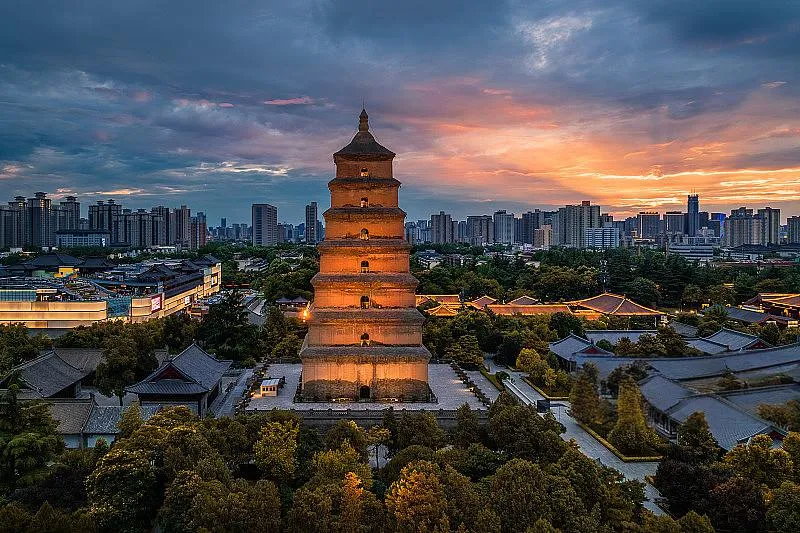
Walk or take Line 3 one stop to the Dayan Pagoda station, and you’re at the gates of Daci’en Temple, the monastery the monk Xuanzang returned to after his seventeen-year journey to India. The temple itself is about ¥50, and the extra ¥30 to climb the pagoda is worth it once — the stairs are a spiral of dark, worn brick, and the view from the top is the whole south of the city laid flat. Go on the way up, come down, then sit in the courtyard for ten minutes and watch the pigeons work the tiles. This is the version of the pagoda most people photograph and never actually enter.
Evening: Datang Everbright City
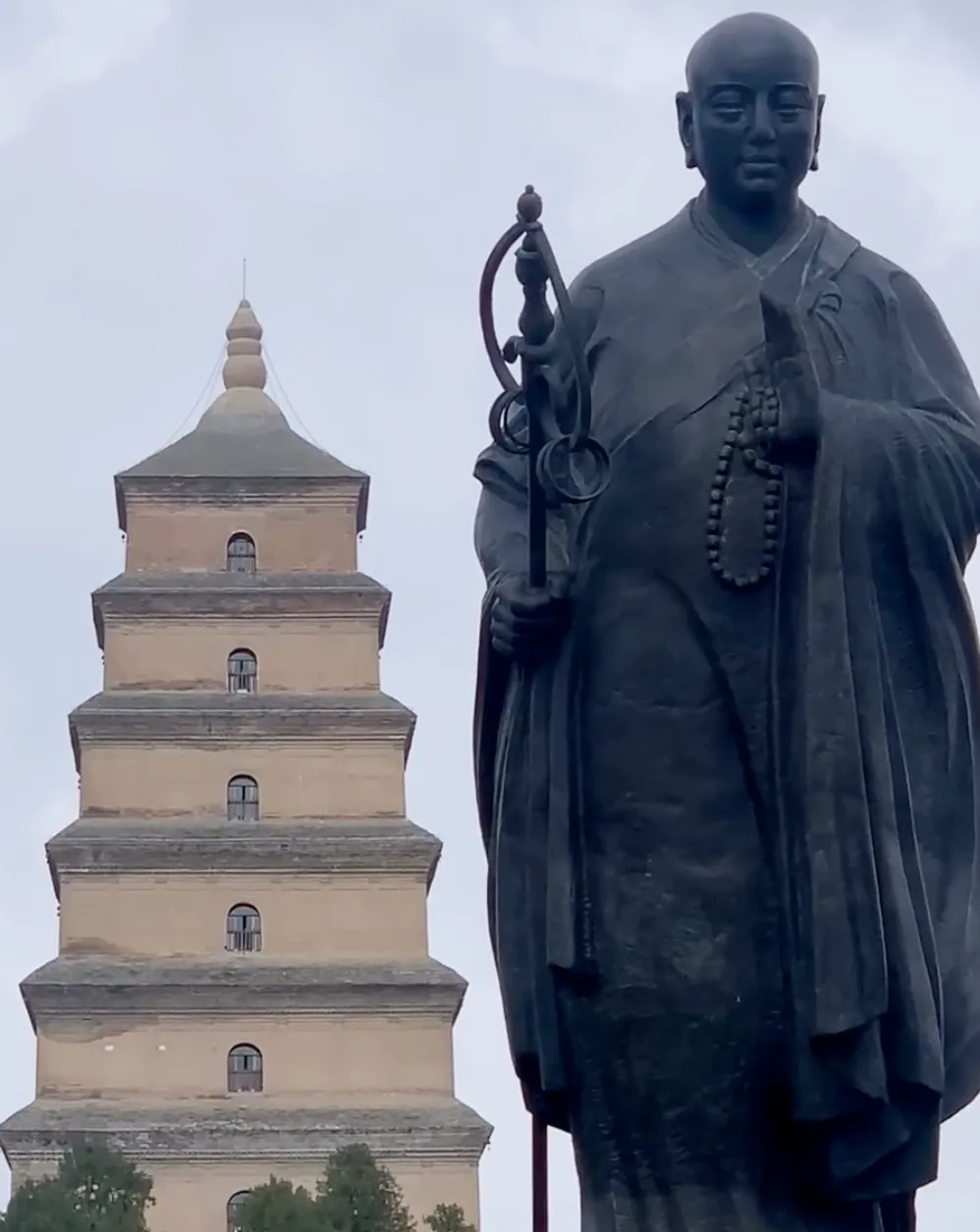
When dusk hits, walk out of the temple gate and the street ahead transforms. Datang Everbright City is a full block of Tang-dynasty-styled architecture, open to the street and free to walk, and it lights up as the sun goes down. The north square fountain show runs a few times in the evening — roughly 19:00 and 21:00 — and the giant bronze statue of Xuanzang stands in front of the pagoda, staff in hand, facing the direction he walked. Grab a skewer from a stall, find a spot on the steps, and let the crowd do the rest.
Day Two — The Southern Corner of the Old City
Morning: Xi’an Museum and the Small Wild Goose Pagoda
Start the second day quietly, with the city’s other pagoda. The Small Wild Goose Pagoda sits inside what is now the Xi’an Museum complex, and the building has a party trick: it survived the 1556 earthquake that leveled much of the region, and locals insist its base split in the tremor and closed back over itself. The story is disputed; the building, leaning slightly like a man standing into wind, is not. The museum grounds are free with the same kind of advance reservation, closed Mondays, open 09:00–17:00 with last entry at 16:00.
Afternoon: The Great Mosque and the Muslim Quarter
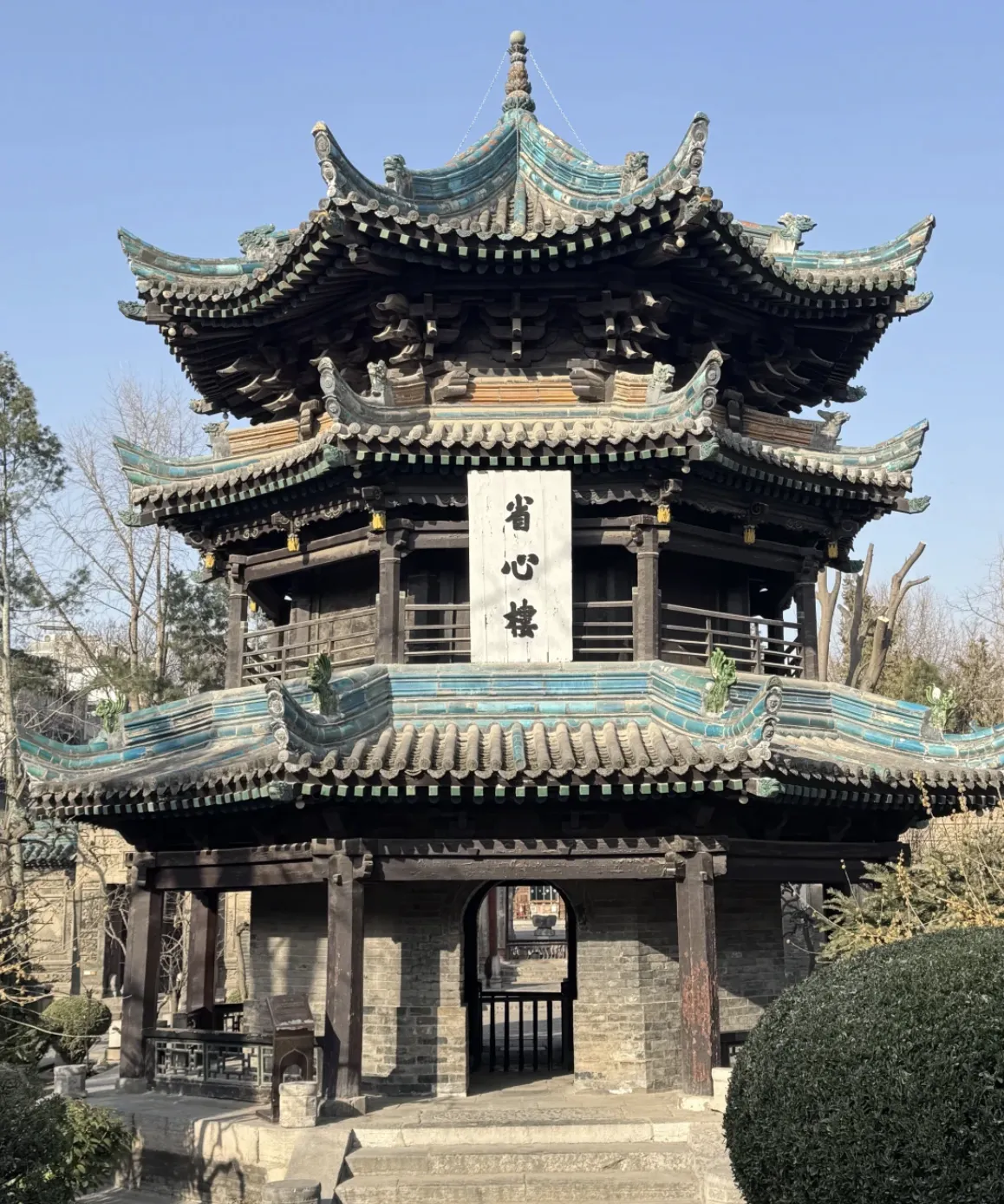
From the pagoda, take Line 2 north to Zhonglou and walk into the Muslim Quarter on foot. The Great Mosque hides a few minutes inside the alleys, through a gate that looks like a shop front. The ticket is about ¥25, and the courtyards are the surprise — Ming-dynasty pavilions, cypresses, and an entire garden where the call to prayer comes only in whispers of the architecture. The mosque has stood here, in one form or another, since the Tang trade routes brought Islam to Chang’an, and it is the quietest place within a kilometre of the Drum Tower.
Afterwards, do what everyone does and eat. The alleys off the main drag — Dapiyuan, Sajin Qiao, Beiyuanmen — are where the locals actually line up, and a bowl of lamb paomo at a busy shop near the Drum Tower costs about ¥30 and will occupy you for a satisfying hour of tearing flatbread.
Evening: Drum Tower or the City Wall
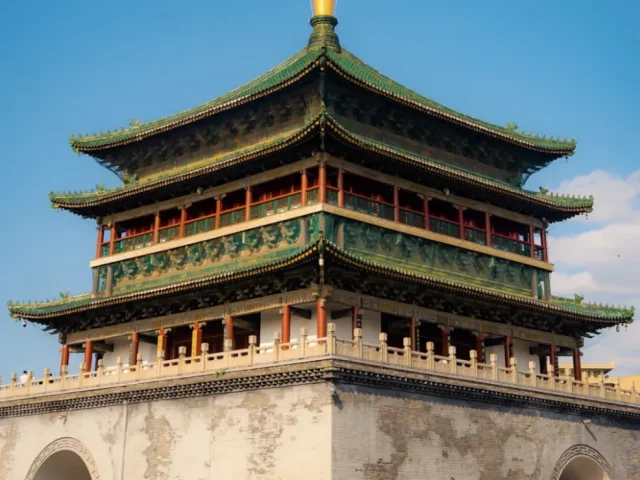
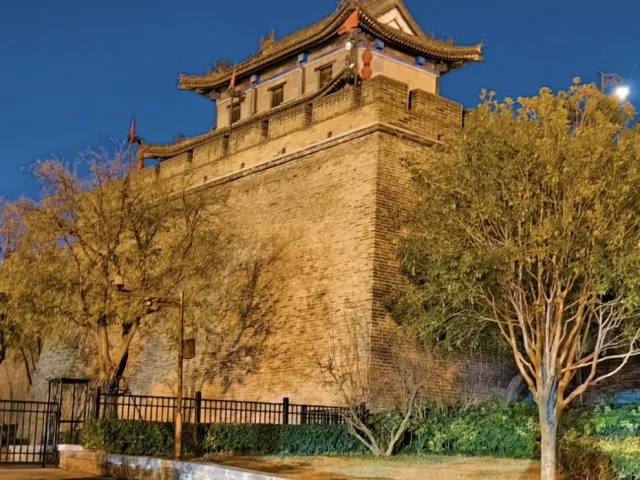
Close the route with the skyline. The Drum Tower is about ¥30 to enter, or ¥50 combined with the Bell Tower, and its blue hour — the twenty minutes after sunset, when the sky goes deep and the lights come on — is the version of Xi’an that stays with you. If you’d rather walk, Yongning Gate on the City Wall is a fifteen-minute stroll south, about ¥54, and open until 22:00. Either way, end the day looking down at the old town from above, the way every dynasty that governed from here would have done.
Practical Details
- Shaanxi History Museum and Xi’an Museum: free main galleries, both closed Mondays, both require advance booking with your passport number via their official WeChat accounts.
- Daci’en Temple: about ¥50; climbing the Big Wild Goose Pagoda is about ¥30 extra.
- Great Mosque: about ¥25, open 08:00–18:00; dress modestly and keep your voice down in the prayer halls.
- Datang Everbright City: free; fountain shows roughly 19:00 and 21:00, heavier on weekends.
- Metro: Line 2 for the museums and the old town; Line 3 for the Big Wild Goose Pagoda.
Tips
- Book both museums the moment you lock your dates — same-day walk-ins for the free galleries are essentially gone in high season.
- Museum lockers are small and fill fast; travel light for day one.
- Bring your passport, not just a photo of it; some ticket windows still ask to see the physical document.
- Go to the Shaanxi History Museum at opening and leave by 11:30, before the tour groups take over.
- Skip the museum audio guide if you’re on a budget — the free app covers the main halls well.
- Friday and Saturday nights in the Muslim Quarter are elbow-to-elbow; Tuesday and Wednesday are the sweeter evenings.
Back in that rain, I’d nearly skipped the museum because it felt like the safe choice. The safe choice turned out to be the right one, and it rewired how I see the city: Xi’an isn’t a monument with a museum attached. It’s a museum that happens to still be inhabited.