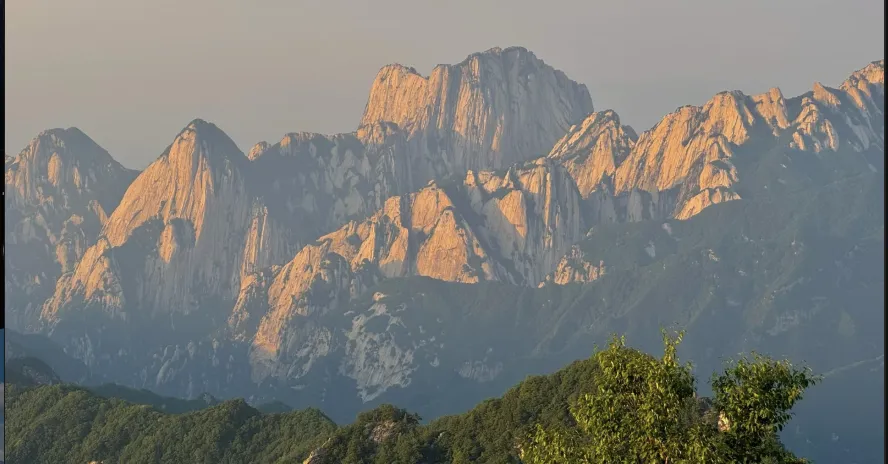
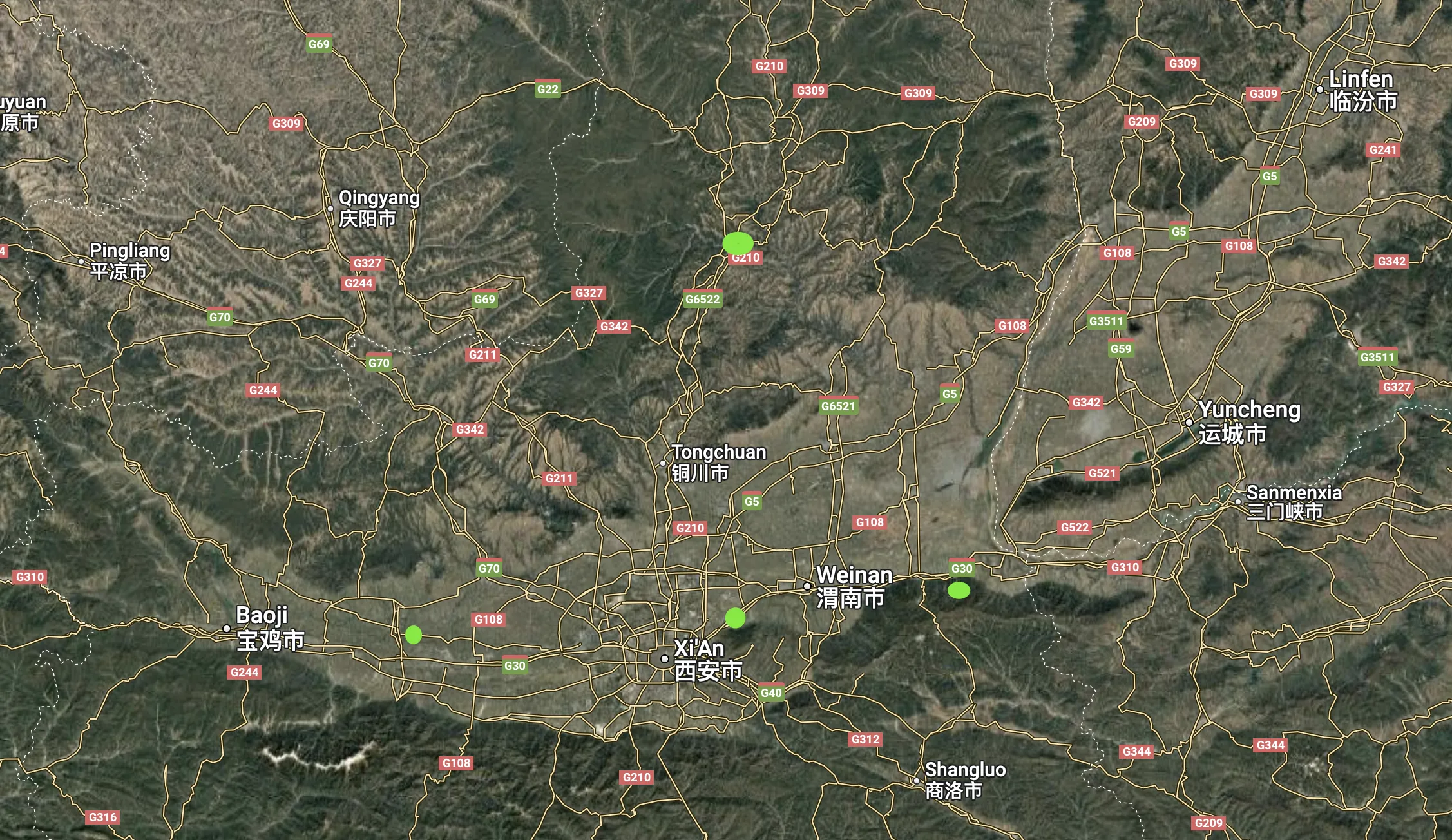
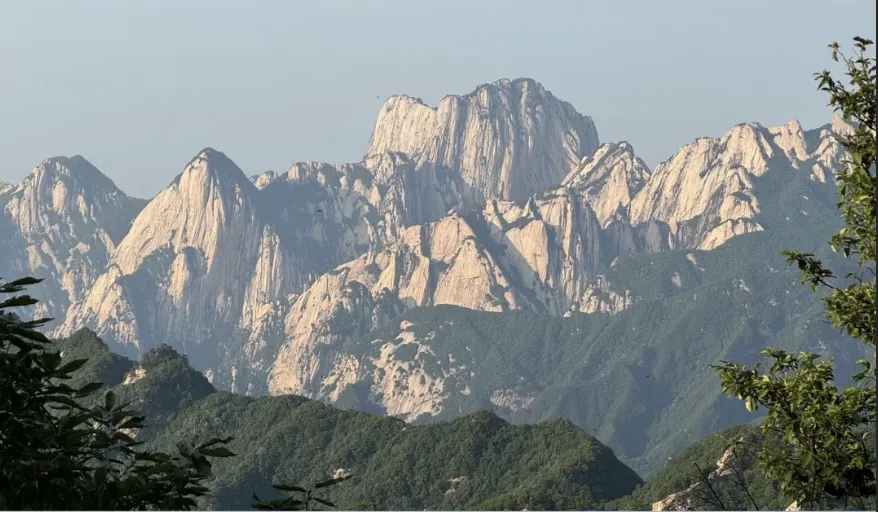
The high-speed train slid out of Xi’an North Station at 06:40, and thirty minutes later I was watching the gray dawn stack up against a wall of rock that rose out of the plain like it was in a hurry to leave it. Mount Huashan does that — it doesn’t sit on the horizon, it dominates it: five granite peaks that have drawn pilgrims and thrill-seekers for centuries, connected by ridges that narrow to the width of a path and a chain. My plan was simple. Up by cable car, across the summit ridges, down by a different cable car, and back in Xi’an in time for dinner.
It worked, but only because I made the decisions in advance. Huashan in a day is a race against the afternoon, and the race is won before you board the train — in the ticket you buy, the cable car you choose, and the route you commit to. This is the full breakdown of how to do it without turning the day into a disaster.
Getting there
Trains leave Xi’an North Station for Huashan North roughly every half hour from about 07:00; the trip takes about 30 minutes and costs about ¥55 one way. At Huashan North station, a free shuttle runs to the visitor center, where you buy your entrance ticket (about ¥160 in high season) and board a ¥20 shuttle bus to your chosen cable-car base. Trains back run until the evening, but the last comfortable one leaves around 19:00 — plan your whole descent around it, and give yourself an hour of buffer at the bottom for queues. On weekends, buy the morning outbound ticket a day in advance; the 07:00–09:00 departures sell out.
West Peak cable car or North Peak?
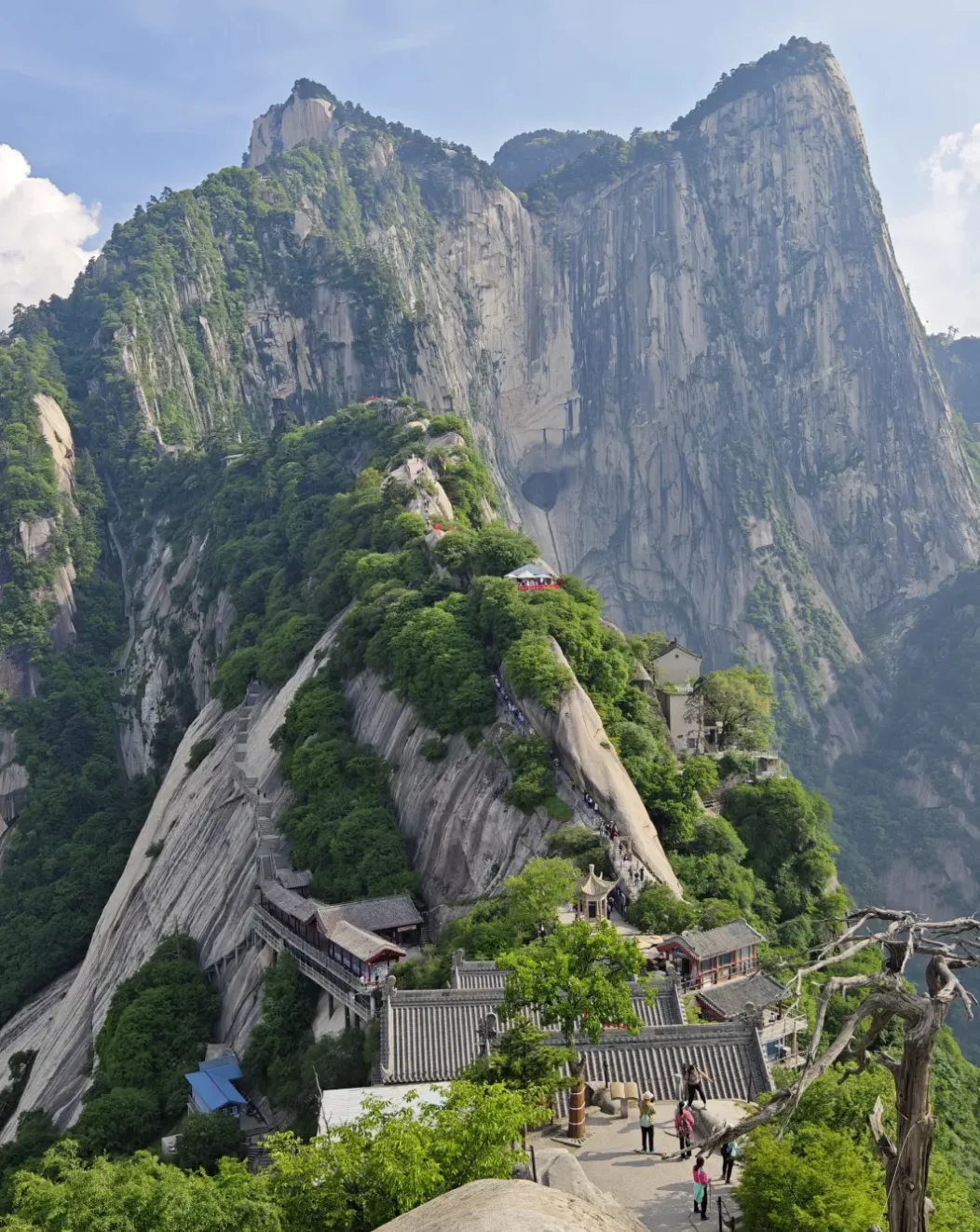
This is the one-day trip’s crucial decision, and most people make it by whichever queue is shorter. Don’t. The West Peak cable car (西峰索道) is the long one — about ¥140 one way, twenty minutes, floating you across two valleys before it delivers you near the summit ridge at over 2,000 m. The North Peak cable car (北峰索道) is cheaper at about ¥100, but it drops you at the foot of a long stair climb through the famous 千尺幢 (Thousand-Foot Precipice), and you earn every meter the mountain gives the West car for free. For a single day, go up West and down North: you buy the altitude, save your legs for the ridge traverse, and end at the North Peak base, which is closest to the shuttle back to the station.
A sensible one-day route
Ride the West cable car up, then follow the ridge path east: West Peak (西峰) first, then South Peak (南峰), the highest at about 2,155 m, then East Peak (东峰) and its sunrise-viewing platform, even though you won’t be there for the sunrise. Between South and East you’ll pass the 长空栈道 (Long Plank Walk) — a ledge bolted to a vertical cliff, about ¥30 in cash at the gate — and, closer to East Peak, the 鹞子翻身 (Eagle Flips Over) descent, a short vertical drop on chains that feels twice as long as it is. From East Peak, drop north toward the North Peak cable car. The whole traverse takes five to seven hours with stops, and the narrow sections — single file, chains on both sides, drops that make your knees remember their job — are the reason people come to Huashan at all.
What it costs
- Train, Xi’an North ↔ Huashan North: about ¥55 each way
- Entrance ticket: about ¥160 (high season)
- Shuttle buses: ¥20 each way
- West Peak cable car: about ¥140 up; North Peak: about ¥100 down
- Plank walk: about ¥30, cash, at the gate
Rough total for the day: about ¥600. Bring your own food and water and the mountain’s overpriced noodle stand won’t touch your budget.
When to go
Aim for a clear weekday between May and October. The ridge is completely exposed, and the summit areas on a weekend in high season are shoulder-to-shoulder in a way that slows the traverse to a crawl. Check the forecast the night before: if the peaks are forecast to sit in cloud, the whole day is a gamble you’ll likely lose, because the views are the point — the walk itself is just a very long set of stairs with an attitude. Summer sun is brutal on the open ridge, so start as early as your train allows. And note that the plank walk and the Eagle Flips Over descent both close in high wind, so ask at the visitor center before you buy anything extra.
What to carry
Light is right, but a few things are non-negotiable: a liter of water per person (there are refill points near the summit lodges), a pair of gloves for the chains — the coarse rope is rough on bare palms — a warm layer even in summer, because the ridge wind at 2,000 m bites through a t-shirt, and cash, because the plank walk and some kiosks don’t take cards or QR codes. Sunscreen and a hat. Nothing else; the mountain does not reward weight.
Tips
- Buy train tickets a day ahead; the 07:00–09:00 departures sell out on weekends.
- Take the West cable car first, even if the North queue looks shorter — the queues only grow, and the West car is the one that saves your legs.
- Skip the plank walk if you’re scared of heights. Nobody will judge you, and the ridge path past it is a fine alternative with the same view.
- Keep an eye on your watch at South Peak: it’s the halfway point of the traverse, and the North Peak cable car queues after 16:00 can stretch to an hour.
- If you’re catching a plane or a late train afterward, book the return for at least 20:00. The mountain writes the schedule, not you.
Back in the city
I was back at Xi’an North by 18:30, legs buzzing, and I had a plate of biangbiang noodles in front of me within the hour. Huashan in a day is not a gentle plan — it’s a long, committed, occasionally terrifying walk with a cable car on each end. But it’s also one of the great single-day trips on the planet, and the dinner afterward tastes like the summit at sunrise. Worth every step, and every yuan.