I’d been to Xi’an twice before — once for 48 hours on a work trip, once for a long weekend — and both times I left with a list of things I’d promised myself to see next time. The shadow puppetry I’d walked past. The drum music I’d read about and never heard. A proper afternoon in the Beilin. A week was the only honest answer, and it turns out the city fits one surprisingly well.
This itinerary is that week. The famous sights are here, spread out enough to see with rested legs, and the back half goes places most visitors never reach. I walked it in late April: good weather, reasonable crowds, and one rainy morning that turned out to be the best day of the lot.
A Week Is Not Too Much
Xi’an’s problem for travelers is that its headline sights are great and genuinely spread out — the Terracotta Army is 40 kilometers east, Huashan is two hours away by train, Famen Temple is to the west. Squeeze them into three days and you spend your trip commuting and queueing. Give the city seven and the same list becomes comfortable, with room left for the stuff no one tells you about: a workshop where someone shows you how the puppets are jointed, a meal where you’re the only foreigner in the room.
The Route at a Glance
- Days 1–3 — the wall, the east line, and the Tang-era district
- Days 4–5 — Huashan and the Buddhist line west
- Days 6–7 — crafts, the food crawl, and the loose ends
Days 1–3 — The Familiar Sights, Done Properly
Day 1: Arrive, climb the wall, eat late
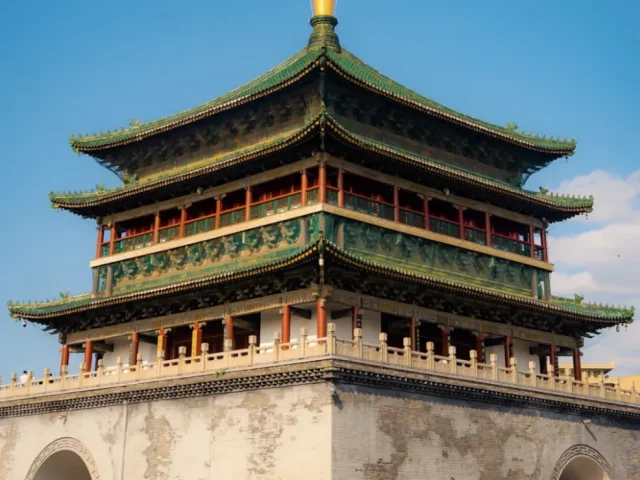
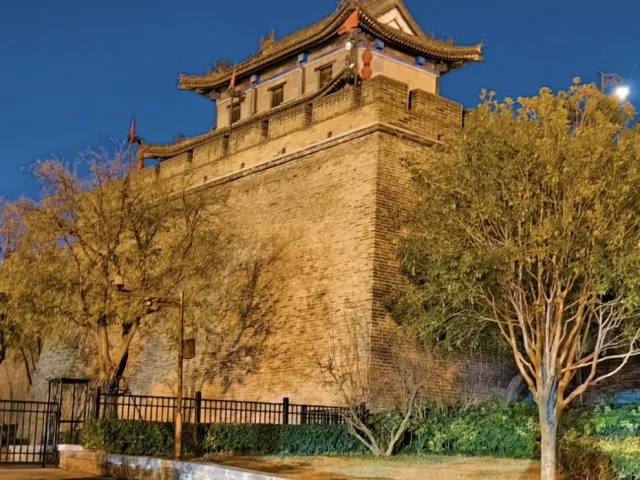
Land, drop your bag near the Bell Tower, and go straight up Yongning Gate. The wall ticket is about ¥54 and the South Gate entry stays open until 22:00. Walk a stretch, then point yourself at the Muslim Quarter: the main drag of Beiyuanmen is for tourists, but one lane over, on Dapiyuan, the lamb skewers come off the grill in waves. Two skewers and a bowl of biangbiang noodles, and you’re set for bed.
Day 2: The Terracotta Army and Huaqing Palace
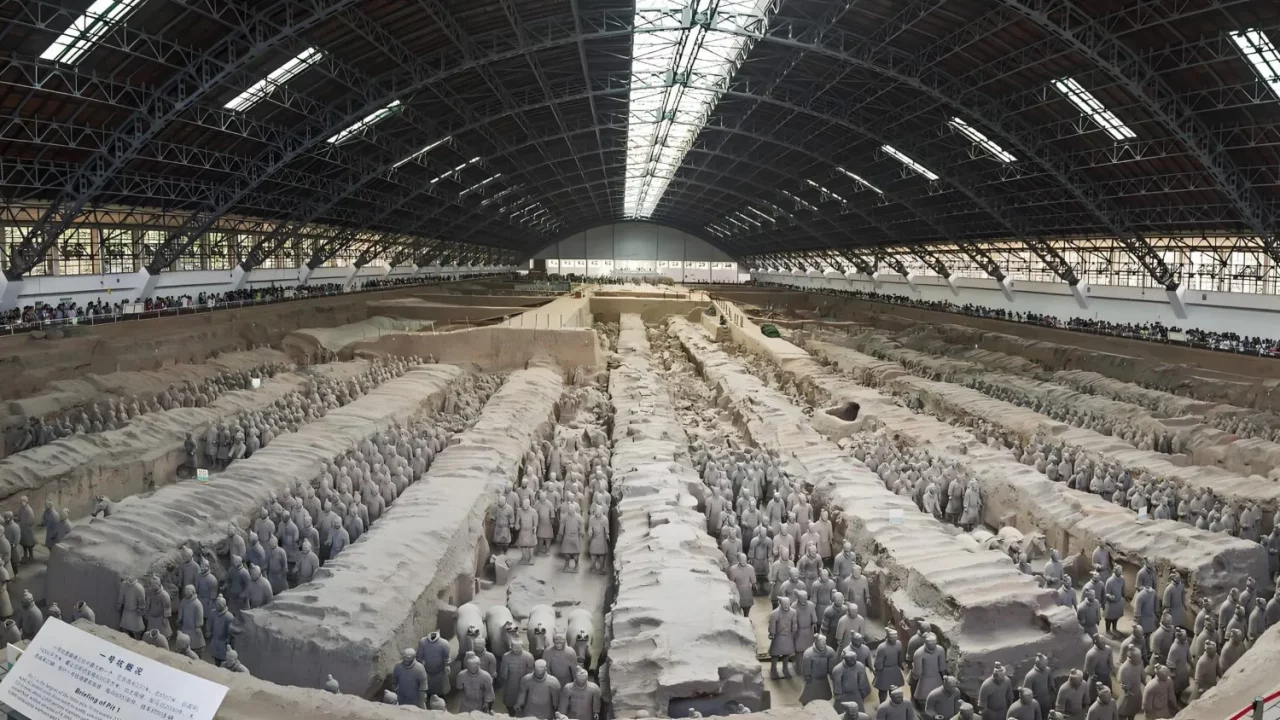
Start early. Metro Line 9 to Huaqingchi, then a short ride to the gate; entry is about ¥120, gates open 08:30. The crowd arrives around ten, so the first hour in Pit 1 is the one you’ll remember. Get close enough to see the individual faces, then stand at the back rail and let the scale of it land. The mausoleum mound is included in the ticket — take the shuttle, it’s a strange and quiet place after the pits.
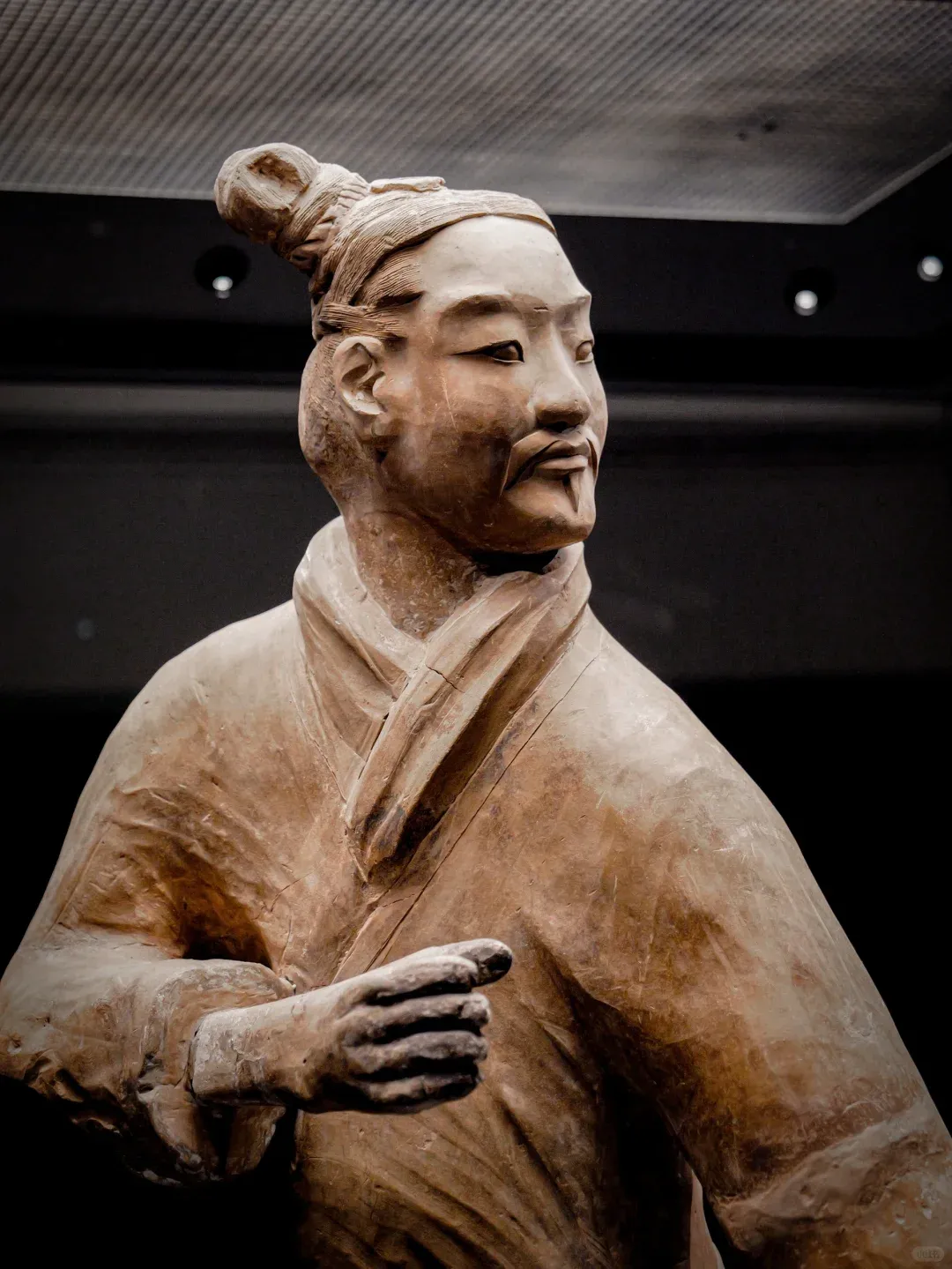
By mid-afternoon you’ll be ready for Huaqing Palace, one stop back on the same line. About ¥120, open to around 18:00. The Tang hot springs and the foothills of Lishan are a proper rest after the morning. If you’re here between April and October, the lakeside Song of Everlasting Sorrow performance starts after dark; tickets from about ¥260.
Day 3: Museums and the Tang district
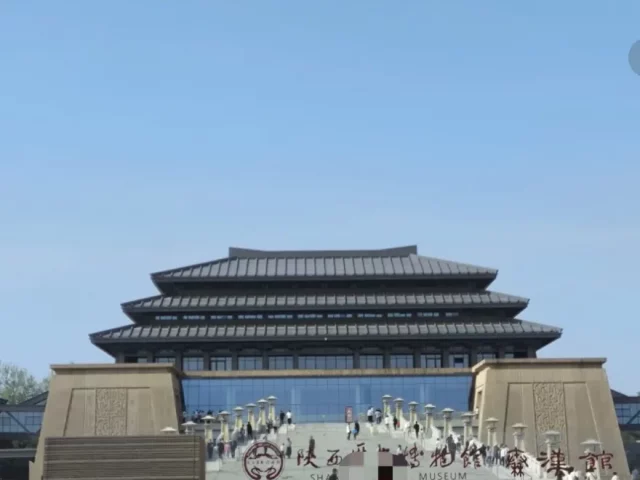
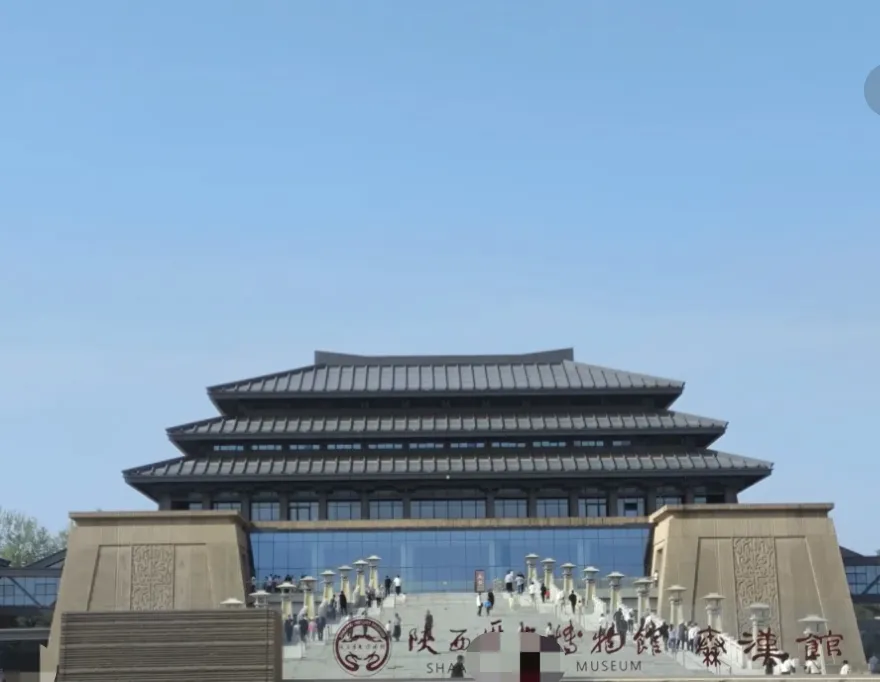
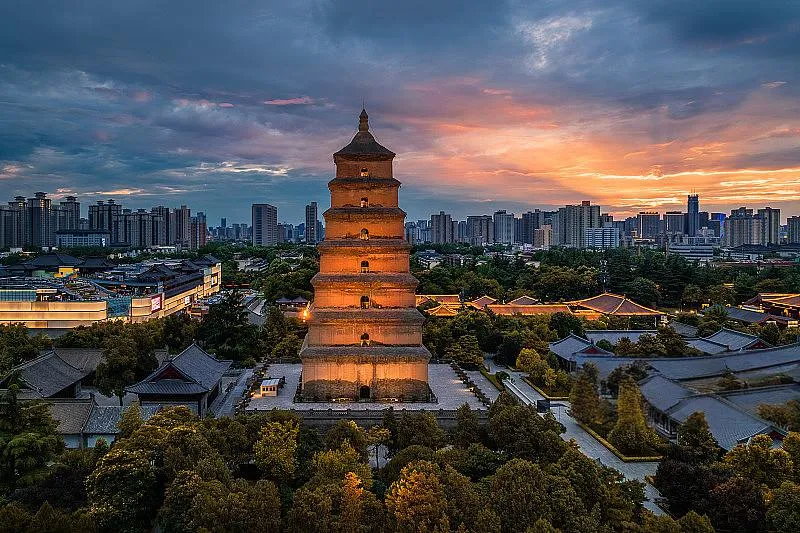
The Shaanxi History Museum opens its reservation window early, so book before you leave home — basic galleries are free with a reservation, and your passport is the ticket. Two hours in, then a short ride to the Big Wild Goose Pagoda (about ¥50 for the temple, about ¥30 to climb). Stay into the evening: the north square fountain runs around 19:00 and 21:00, and Datang Everbright City does its best work after sunset.
Days 4–5 — Leaving Town
Day 4: Mount Huashan, with opinions
Huashan deserves its own day, or at least a clear one. Trains from Xi’an North reach Huashan North in about 30 minutes (about ¥55); entry is about ¥160 and the cableways are extra — about ¥140 on the West Peak line, about ¥80 on the North Peak line. The classic loop: cable up West, walk South to see the plank walk, drop through the middle peaks, and cable down North. The reverse works too; doing both directions on foot in one day is for people built differently than I am. Sunrise from the East Peak means staying on the mountain overnight — more on that in the hiking guide on this blog.
Day 5: The Buddhist line west
Two options, both good. Famen Temple, 90 minutes west, costs about ¥100 and houses a relic said to be the Buddha’s finger bone, shown on certain days. Or stay in town for the smaller Buddhist sights: the Great Mosque off Huajue Lane (about ¥25), and the Small Wild Goose Pagoda, whose grounds are free and whose peace is worth a slow hour. On my April trip it rained that day, and the small pagoda’s dripping, empty, half-millennium-old courtyard beat every museum on the list.
Days 6–7 — The Slow Finish
Day 6: Crafts, drum music, and the food crawl
This is the day the trip stops being tourism. In the alleys around the Muslim Quarter you can find shadow-puppet carvers who will show you how the joints work, and paper-cutting artists who work with scissors the size of your palm. A half-day cooking class runs about ¥250–300 if you want to learn yangroupaomo at home. And if you can time it, the Tang court drum music staged around the Small Wild Goose Pagoda compound is worth a ticket of roughly ¥100 — you’ll hear drumming with an unbroken lineage to the eighth century.
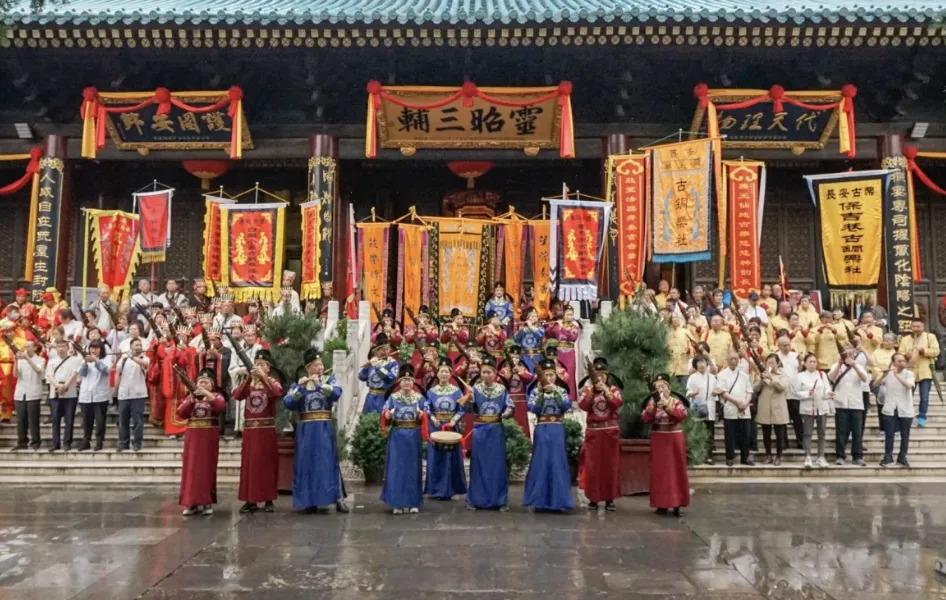
Finish the day as a food crawl should be: Sajinqiao for lunch, Xiyangshi for snacks, and Yongxingfang near Zhongshan Gate for the evening — rebuilt, yes, but the stalls are real and the crowd is local.
Day 7: The Beilin, shopping, and the airport
Start at the Beilin Museum, the Forest of Stone Steles, about ¥70 — an entire hall of calligraphy carved into stone, most of it a thousand years old. It’s the most underrated museum in the city. Then the last errands: tea on the way out, one final roujiamo, and Metro Line 14 from Xi’an North to the airport, about 40 minutes.
Where to Base Yourself
For a week, the Bell Tower area is the practical choice — Lines 2, 4, and 6 cross under it, and you’ll use all three. The Muslim Quarter puts you in the middle of the food; the streets are loud until late. The Qujiang district, south of the pagoda, is calmer, at the cost of a ten-minute metro ride to everywhere else. Dorms from about ¥70, doubles from about ¥250, and for a week I’d happily pay more for a window that faces anything but a wall.
Practical Details
- City Wall: about ¥54, South Gate open until 22:00
- Terracotta Army: about ¥120, 08:30–17:30, mausoleum included
- Huaqing Palace: about ¥120; evening show from about ¥260 (April–October)
- Shaanxi History Museum: free basic galleries, reservation required
- Big Wild Goose Pagoda: about ¥50 plus about ¥30 to climb
- Great Mosque: about ¥25; Beilin Museum: about ¥70
- Huashan: about ¥160 entry, cableways about ¥80–140 one-way
- Famen Temple: about ¥100
Tips
- Book the Terracotta Army, the Shaanxi History Museum, and Huashan online with your passport details — all three sell out on weekends.
- The east-line day (Day 2) works best early; the site is genuinely different before 10:00.
- Rain is an excuse, not a problem: the Small Wild Goose Pagoda grounds, the Beilin, and the museum are all better empty.
- Bring a jacket even in summer — the wall and Huashan are both windy, and the museum air conditioning is aggressive.
- Do the food crawl in the right order: paomo early, skewers after dark, and leave room for the suanmeitang (sour plum juice) cart.
On the morning of day seven I walked back to the Small Wild Goose Pagoda one last time, mostly to hear the wind in the bell tower. I’d come to Xi’an twice before and left early both times; a week was finally long enough to let the city slow down to my pace. I don’t know when I’ll be back, but the list is finally empty.